✓Add income beyond dispensing, since independent gross margin fell to 19.7% in 2023 per NCPA.
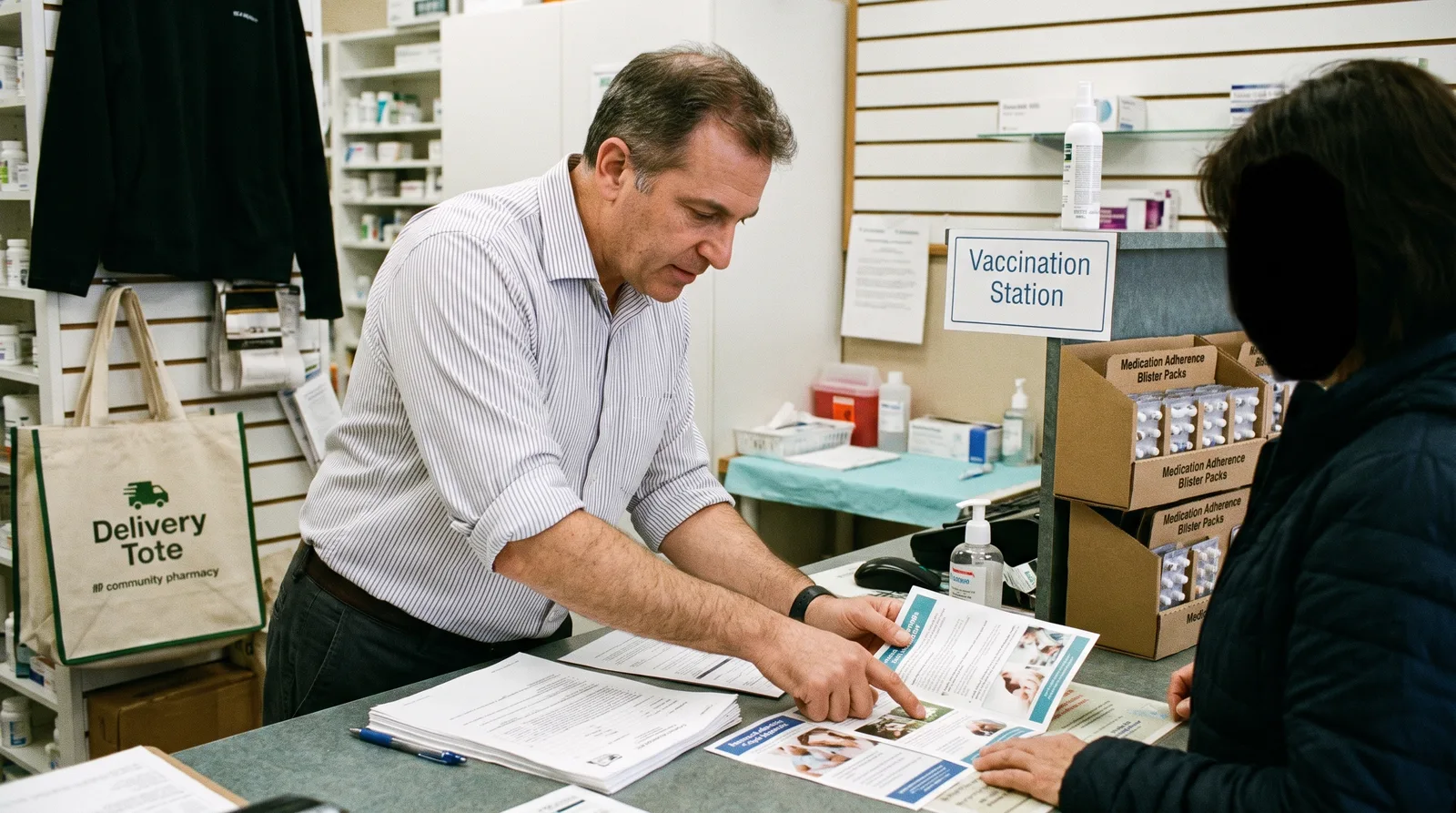
✓Start with MTM and immunizations, which use your pharmacists' existing licenses and need little equipment.
✓Treat compounding, long-term care and pet medications as year-two lines that need licensing, contracts or veterinarian relationships first.
✓Use delivery, med sync and adherence packaging to turn one-time fills into predictable monthly volume.
✓Launch one stream per quarter and set a 90-day break-even review before adding the next.
✓Build a web page, Google Business Profile entry and review request for every new service at launch.
Pharmacy revenue diversification matters because dispensing alone no longer carries the store. According to , gross profit margin across a $94.9 billion independent marketplace fell to 19.7% in 2023, the lowest in ten years.
Build the presence your community trusts
Let us be your first step. Get in touch with our team today.
That's not a problem you discount your way out of. It's a revenue mix problem, and RevealSite's pharmacy marketing services help independents make new income lines visible. When reimbursement you don't set drives most of your profit, one contract change can decide your year.
This guide ranks pharmacy revenue diversification ideas, from clinical services to compounding, long-term care and pet medications. It also shows how to pick and sequence them so each new line has time to pay off.
Why Does Pharmacy Revenue Diversification Matter Now?
Pharmacy revenue diversification matters now because dispensing margins keep shrinking while reimbursement stays outside your control. Adding services, product lines and recurring programs spreads income across more sources, so one PBM contract change or payment rule no longer decides whether the store stays profitable.
The numbers explain the urgency. NCPA counted 18,984 independent community pharmacies in June 2024, down from 19,432 a year earlier. That's more than one closure per day.
The FTC staff report on pharmacy benefit managers found the three largest PBMs control nearly 80% of prescription claims, which gives them real pricing power over what you're paid.
Cash flow adds a second squeeze. Starting January 1, 2024, CMS moved Medicare Part D DIR fees to the point of sale, so reductions that once arrived months later now hit each claim.
The National Rural Health Association reported that 80% of rural independents were reimbursed below their acquisition and dispensing costs.
Reimbursement pressure: payers set the price on most of your volume.
Cash-flow timing: point-of-sale fees reduce each fill immediately.
Concentration risk: a few payers can account for most of your gross profit.
Try one exercise this week. List last year's gross profit by payer and by service. If your top three payers carry more than half, diversification isn't optional. And if one service line already outperforms the rest, that's your template for the next one.
Which Clinical Services Add the Most New Revenue?
Medication therapy management, immunizations and point-of-care testing add the most new revenue for most independents because they use your pharmacists' existing licenses and training. NCPA reports 81% of independents already offer MTM, so the question is depth and consistency, not whether to start.
Immunizations show the demand. The CDC reports pharmacies were the top setting for adult flu shots (48.0%) and updated COVID-19 vaccines (71.5%) in the 2023-2024 season. Retail pharmacies administered about 36.31 million adult flu doses in 2024-25.
Testing is growing too: the Journal of Managed Care & Specialty Pharmacy found 52% of pharmacies with a lab offer point-of-care testing, led by influenza (58%), blood glucose (46%) and HbA1c (40%).
Sequence these by how much new equipment each needs:
MTM and medication reviews. Little equipment, mostly scheduling and documentation.
Immunizations beyond flu. Shingles, RSV and pneumococcal visits fill slower months.
Picture a three-pharmacist store that adds a Tuesday and Thursday vaccine block plus a monthly MTM review day. Neither needs a build-out. Both fill hours the pharmacy already staffed. Pick one and run it for a full quarter, because services rarely pay off in the first three weeks.
Can Compounding, Specialty, Long-Term Care and Pet Medications Offset Thin Margins?
Yes, for pharmacies with the staffing and compliance setup to support them. Compounding, specialty, long-term care and pet medications earn income from clinical skill rather than commodity dispensing, but each needs licensing, equipment or contracts first, so they suit stores ready to commit real time.
Pet medications and compounding turn clinical skill into a new income line.
Compounding and specialty
Specialty is already a large channel. Drug Channels estimates US specialty pharmacies dispensed $265 billion in specialty drugs in 2024, up 8.0% year over year.
Compounding is established too: the Alliance for Pharmacy Compounding's 2023-2024 Snapshot surveyed more than 11,400 compounders across 529 facilities. Compounding means USP standards, training and equipment, so budget for compliance before revenue.
GLP-1 demand shows both the upside and the shifting rules, which is why our GLP-1 marketing guide covers compliance first.
Long-term care
Long-term care pharmacy means serving assisted living and skilled nursing facilities, usually with adherence packaging, scheduled deliveries and a defined emergency process. Volume is steadier than walk-in traffic because facility census changes slowly. But contracts take months to win, and the first one is the hardest.
Pet medications
Many pet owners ask veterinarians for medications a pharmacy can compound into a flavored liquid, a chew or a transdermal gel, since cats and small dogs resist tablets.
State boards and the FDA treat animal compounding differently from human compounding, so confirm your state's rules first. Then build relationships with local veterinary clinics. One clinic that likes your turnaround can send steady volume.
How Do Delivery, Med Sync and Adherence Programs Create Recurring Revenue?
They create recurring revenue by turning one-time fills into predictable monthly volume. Delivery removes the trip, med sync aligns refills to one date, and adherence packaging keeps patients on therapy, which raises fills per patient without adding a single new customer to your roster.
Adherence is the engine. A peer-reviewed analysis on PubMed Central estimates roughly 50% of patients with chronic conditions don't take medications as prescribed. Pharmacist-led refill programs help: the American Journal of Managed Care reported community pharmacy trials where the share of adherent patients rose from 73.6-76.4% to 77.5-83.6%.
Med sync: one pickup date per month replaces the five or six separate trips a patient on several medications might otherwise make.
Adherence packaging: multi-dose packs suit patients on several medications.
Retention compounds the benefit. A patient who syncs, gets delivery and earns rewards rarely drifts away, and our pharmacy loyalty program guide shows how to structure it.
Want new services to show up when patients search?
RevealSite builds the service pages, refill reminders and local campaigns that help new pharmacy revenue lines get found. Request a free demo and see how it works for your store.
The lines worth adding are those that match what your patients already ask for, such as wellness products, durable medical equipment and CBD where state law allows. Start with one category, track margin per shelf foot, and drop it quickly if it stalls instead of letting inventory sit.
A curated front end of wellness and medical equipment fits what patients already ask for.
Patient experience is the opening. J.D. Power's 2024 US Pharmacy Study found brick-and-mortar satisfaction fell more than 10 points, with long waits and trust the leading drivers. A curated front end and fast service answer both.
Independents also have an edge here, since your pharmacist can explain a product in ways a chain aisle can't.
Wellness and supplements: choose products your pharmacists will personally recommend.
Durable medical equipment and home health: pairs with discharge and caregiver conversations.
CBD and hemp products: check state law and FDA guidance before stocking.
Seasonal and gift items: low-effort tests that show what your community buys.
Here's a practical test before you order anything. Ask your pharmacists which product they'd recommend to their own families and which question patients raise most at the counter.
Those answers beat any catalog trend report. Order small, tag the category in your POS system, and review sales and margin at 60 days.
Keep your claims modest. General education about a product is fine. Promising results isn't.
How Do You Choose and Sequence Pharmacy Revenue Diversification Ideas?
Choose by scoring each idea on setup effort, staffing, compliance load and time to first revenue, then launch one stream per quarter. Pharmacy revenue diversification works when each line reaches break-even before you add the next, so your team never spreads thin.
The table below gives a general comparison. Your state rules, staffing and local demand will shift these ratings, so treat it as a starting point.
Revenue stream
Setup effort
Staffing need
Compliance load
Time to first revenue
MTM and immunizations
Low
Pharmacist time
Low
Weeks
Point-of-care testing
Medium
Trained staff, supplies
Medium
1-3 months
Delivery and med sync
Low to medium
Driver, workflow change
Low
Weeks
Wellness and DME retail
Medium
Buyer, floor space
Medium
1-3 months
Pet medications
Medium
Compounding, vet outreach
Medium
2-4 months
Human compounding
High
Equipment, training
High
3-6 months
Long-term care
High
Contracts, packaging, drivers
High
6+ months
Then work through a simple plan:
Audit twelve months of gross profit by payer and service line.
Pick one low-effort clinical or recurring-revenue line first.
Set a break-even target and a review date at day 90.
Add a second line only after the first meets its target.
Reserve one higher-effort line, such as compounding or long-term care, for year two.
How Do You Market a New Revenue Stream So Patients Know About It?
You market it through the places patients already look: Google Business Profile, your website and reviews. A new service nobody can find earns nothing, so each line needs its own web page, a matching Google service entry and one clear call to action patients can follow.
Each new service needs its own page, Google listing entry and reviews.
Make the service easy to find
Local visibility carries real weight. Semrush's local SEO research found businesses in Google's 3-pack get 126% more traffic and 93% more calls, clicks and direction requests than those in positions 4-10.
A dedicated page for each service, with FAQs patients actually ask.
Google Business Profile services, posts and categories that match the page.
Use reviews to build confidence
BrightLocal's 2024 survey found 88% of consumers will use a business that responds to all reviews, versus 47% for one that ignores them.
Ask for a review at the end of each completed service visit, while the experience is fresh, and reply to every one you get.
Reach current patients by text and email
Refill texts reach patients at the moment of a fill, so mention the new service when it's relevant. Email gives you room to explain a service, share a booking link and reach caregivers who manage a parent's prescriptions.
Send one short announcement at launch, then a reminder when the season fits, such as shingles or travel vaccines in spring.
Keep it compliant. Email only people who gave you their address for pharmacy communications, include an unsubscribe link, and leave individual health details out of the message.
One idea matters more than the rest. Launch the stream and its marketing together, because a service that opens without visibility looks like a failed idea when it's really a missing launch plan.
Where Should You Start With Pharmacy Revenue Diversification?
Start with the one stream your pharmacists can deliver this quarter with the least new equipment, usually MTM, immunizations or delivery with med sync. Set a break-even target, build its page and marketing together, and review results at 90 days before you add anything else.
Stores that stall usually try three new lines at once and finish none. So choose one, name an owner, and give it a launch date.
Pick your first stream this month, set a 90-day target, and build the page that supports it. Pharmacy revenue diversification starts with one line done well.
Ready to grow beyond dispensing?
Talk with RevealSite about the website, local SEO and campaigns that put your new pharmacy services in front of patients.
It means earning income from more sources than prescription dispensing alone. Common additions include clinical services like MTM and immunizations, compounding, delivery and adherence programs, and retail lines. The goal is to reduce dependence on reimbursement you don't control.
Which new revenue stream should an independent pharmacy start with?▼
Most independents start with MTM or immunizations because they use existing pharmacist licenses and need little equipment. NCPA reports 81% of independents already offer MTM, so depth and consistent scheduling matter more than simply launching the service.
Is compounding a good way to diversify pharmacy revenue?▼
It can be, but it needs USP-compliant equipment, training and a clear plan before the first sale. Plan for three to six months before revenue, and confirm your state board's rules first. It suits stores ready for a larger commitment.
How do pet medications fit into pharmacy revenue diversification?▼
Pet medications let you compound dosage forms, such as flavored liquids or transdermal gels, that animals tolerate better than tablets. Rules differ from human compounding by state and FDA guidance, so confirm requirements and build relationships with local veterinary clinics first.
How long does it take to add a long-term care line?▼
Expect six months or more. Long-term care means winning facility contracts, setting up adherence packaging and scheduling deliveries. The first contract is the hardest, but facility volume tends to be steadier than walk-in traffic once the relationship is established.
How should a pharmacy market a new service line?▼
Give each service its own web page, a matching Google Business Profile entry, a review request and refill text mentions. Semrush found 3-pack businesses get 126% more traffic than positions 4-10, so local visibility directly supports new service revenue.