Pharmacy Travel Health Services: A Practical Launch Guide
RevealSite Team
September 15, 2026 · 10 min read
Key Takeaways
✓Travel health services cover destination-specific risk, not a general vaccine schedule, which is what separates them from routine immunization
✓Non-vaccine services like malaria prophylaxis, diarrhea kits, and multi-dose packaging for travelers often generate more repeat visits than vaccines alone
✓Yellow fever vaccination requires separate registration as an official vaccination center; most other travel vaccines fall under existing pharmacist immunization authority
✓Book travel consultations 4-6 weeks before departure to allow time for multi-dose vaccine series like hepatitis B or rabies pre-exposure
✓Multi-dose packaging for travelers overlaps directly with an existing medication synchronization program, making it an easy add-on service
Pharmacy travel health services turn a one-off vaccine request into a repeatable, higher-margin service line. But most independent pharmacies still treat travel patients as a special case, not a program. That leaves money on the table, since these patients often have the fewest convenient options nearby.
Build the presence your community trusts
Let us be your first step. Get in touch with our team today.
This guide covers what to include: vaccines, non-vaccine services, certification requirements, and consultation workflow. Know what to offer before you build the marketing around it.
What Are Pharmacy Travel Health Services?
Pharmacy travel health services are pre-travel consultations, vaccines, and preventive medications that pharmacies provide to patients preparing for international trips. They cover destination-specific risk, not just a general vaccine schedule, which is what separates them from routine immunization.
Why This Differs From Routine Immunization
Almost 90% of adults already trust their local pharmacist, per CVS Health. And 88.9% of the US population lives within five miles of a pharmacy, per a study in the Journal of the American Pharmacists Association. A patient getting a flu shot needs one thing: the flu vaccine. A patient traveling to rural Kenya needs a different risk assessment. It covers yellow fever proof of vaccination, malaria prophylaxis, food and water precautions, and possibly rabies pre-exposure vaccination, depending on the itinerary.
The Opportunity Already Exists
Demand exists whether or not you build the service. International travel volume has recovered past pre-pandemic levels, and every one of those travelers needs some form of pre-trip health guidance. 58% of Americans say they would seek non-emergency healthcare at a pharmacy before any other setting, per a Wolters Kluwer Pharmacy Next survey. Right now, most of that guidance still comes from a two-week doctor's wait or a travel clinic an hour away.
Independent pharmacies are well positioned for this. They were already the top setting for adult flu shots and COVID-19 vaccinations in 2023-2024, per the CDC's FluVaxView dashboard. A visit also skips the multi-week wait a specialty clinic often requires.
Want patient education content for every service you offer?
RevealSite's Creative & Content team builds blog posts and pages that explain new services like travel health to patients before they ever call.
What Vaccines Should a Travel Health Program Include?
A travel health program should include typhoid, hepatitis A and B, yellow fever, and rabies pre-exposure vaccines, matched to each patient's specific destination and itinerary. Not every pharmacy needs to stock all of them, but a program should be able to recommend or refer for each.
A destination-specific risk review is what separates travel health from routine immunization.
Typhoid and hepatitis A are the two most commonly needed travel vaccines, covering food and water exposure risk across most developing regions. Hepatitis B matters for longer or medical/humanitarian stays.
Yellow fever is different. It requires a live vaccine that most pharmacies cannot administer without official center registration. It is also the one vaccine some countries require proof of at the border.
Rabies pre-exposure vaccination is a three-dose series that suits remote-area or extended travel, but it costs more time and money than most trips justify.
Matching Vaccines to Common Destinations
Southeast Asia, sub-Saharan Africa: typhoid, hepatitis A, malaria prophylaxis
Sub-Saharan Africa, parts of South America: yellow fever (often required for entry)
Rural or extended stays anywhere: hepatitis B, rabies pre-exposure
Most international travel: routine vaccines up to date (MMR, Tdap, varicella)
A pharmacy that cannot administer yellow fever can still capture the visit by referring out only that one vaccine.
Beyond Vaccines: What Other Travel Health Services Should Pharmacies Offer?
Travel health is not limited to vaccines. Malaria prophylaxis, traveler's diarrhea kits, motion and altitude sickness medication, insect repellent counseling, early prescription refills, and multi-dose packaging for travelers are all services a pharmacy can offer without administering a single shot.
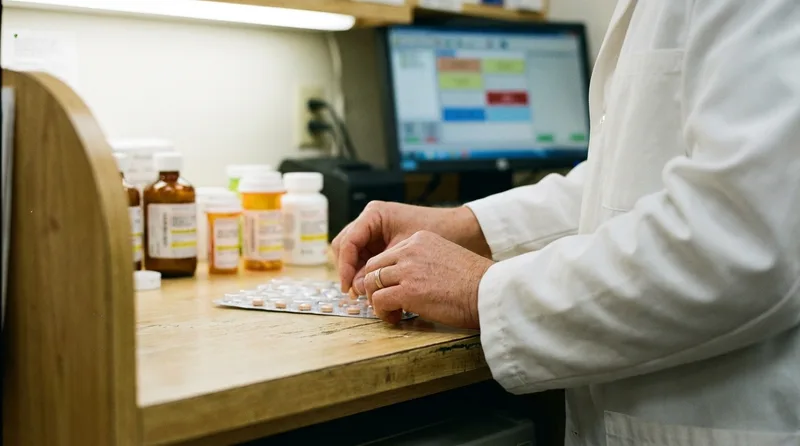
Multi-dose packaging for travelers needs no special licensing, just the right setup.
These non-vaccine services often generate more repeat visits than vaccines do. A patient may only need a given vaccine once, but will need refills, counseling, or packaging support every time they travel.
Preventive Medications and Kits
Malaria prophylaxis is one of the highest-value non-vaccine services here. It pairs naturally with a couple of lower-effort add-ons:
Malaria prophylaxis: prescription-based, with destination-specific dosing and timing counseling
Traveler's diarrhea kit: typically an antibiotic plus loperamide, a low-cost add-on
Motion and altitude sickness medication: for high-altitude or cruise-heavy trips
Multi-Dose Packaging for Travelers
Patients on multiple daily medications often need their prescriptions repackaged into multi-dose or blister packs before a trip, both for convenience and to avoid confusion crossing time zones. This overlaps directly with an existing medication synchronization program, since med sync patients are the easiest group to offer travel packaging to. Pharmacist-led adherence support like this has been shown to raise adherent-patient rates from the mid-70s into the low-80s in community pharmacy trials, per the American Journal of Managed Care. It requires no new licensing, just equipment most pharmacies already have.
Counseling and Documentation
Round out the service with a few more items that take only minutes to prepare:
Insect repellent and permethrin-treated clothing counseling
DVT prevention advice for long flights
Early refill authorization for patients traveling past their normal refill date
A written medication list and doctor's letter, especially for patients carrying controlled substances, to prevent problems at customs
Do Pharmacists Need Special Certification to Offer Travel Health Services?
Most travel health services need no special certification beyond a pharmacist's existing immunization authority, but yellow fever vaccination requires separate registration as an official yellow fever vaccination center. State scope-of-practice rules also determine which vaccines a pharmacist can administer without a physician's order.
Vaccines That Need No Special License
Typhoid, hepatitis A/B, and rabies vaccines fall under the same immunization authority most pharmacists already use for flu and shingles vaccines in states with broad pharmacist prescribing authority. No separate travel-specific license applies to those.
The Yellow Fever Exception
Yellow fever is the exception. Only vaccination sites registered as official yellow fever centers can administer it. They alone can issue a valid International Certificate of Vaccination or Prophylaxis, the paper proof some countries require at the border. Registration involves a training requirement and an application through the relevant state health authority.
Malaria Prophylaxis and Prescriptive Authority
Malaria prophylaxis typically requires a physician's prescription, or a pharmacist's in states with expanded prescriptive authority. Check your state's rules before advertising it, since travel-medication authority varies more by state than routine immunizations do.
Service
Certification Needed
Typhoid, hepatitis A/B, rabies
Standard pharmacist immunization authority
Yellow fever
Official yellow fever vaccination center registration
Malaria prophylaxis
Physician Rx, or pharmacist Rx where state authority allows
Diarrhea kits, motion/altitude sickness meds
None beyond a standard pharmacist license
Multi-dose packaging
None; standard packaging equipment only
Make sure travel patients can actually find you
A pharmacy website and local SEO setup built around specific services, not just "pharmacy," is what shows up when patients search for travel vaccines near them.
How Do You Structure a Travel Health Consultation?
Structure a travel health consultation around an intake questionnaire, a destination-specific risk review, and a documented plan covering vaccines, medications, and any required paperwork. Book it with enough lead time, ideally four to six weeks before departure, for multi-dose vaccine series to complete.
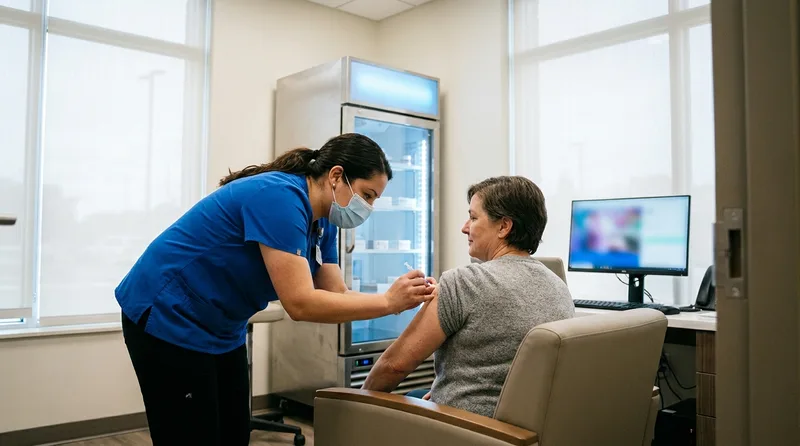
Most travel vaccines fall under a pharmacist's existing immunization authority.
Start with an intake form covering destination, trip length, itinerary type (urban, rural, adventure), accommodations, and any existing health conditions. This takes five minutes for the patient to fill out and gives the pharmacist everything needed before the consultation begins, rather than working it out in real time.
The Risk Review
Cross-reference the destination against current vaccine and malaria recommendations, factoring in season and any active outbreak advisories. This is where a pharmacy earns its value over a generic vaccine schedule, since timing alone can change a patient's risk profile.
Documentation Patients Actually Need
Provide a written summary of vaccines given, prescriptions issued, and any counseling covered. For yellow fever, this means the International Certificate of Vaccination card. For malaria prophylaxis, a dosing schedule tied to travel dates prevents the most common failure: patients need to keep taking it 1-4 weeks after returning home, not stop on landing.
A First-Time Consultation, Start to Finish
Patient completes the intake form covering destination, trip length, and itinerary type
Pharmacist reviews destination-specific risk, including active outbreak advisories
Pharmacist recommends and administers eligible vaccines, or refers out for yellow fever
Pharmacist writes or fills prescriptions for malaria prophylaxis and any travel kits needed
Patient leaves with written documentation: vaccine record, dosing schedule, and any required certificates
Building the Program: Staffing, Supplies, and Workflow
Building a travel health program requires one trained pharmacist, proper cold-chain storage for temperature-sensitive vaccines, an online or phone booking process that accounts for lead time, and a simple intake form. None of this requires new square footage or major capital investment.
Staffing and Training
One pharmacist with travel health training can run the entire program initially. That matters given the economics independents face. Gross profit margin for the channel fell to its lowest point in a decade, according to NCPA's 2024 Digest report. That makes a higher-margin service worth the modest training cost. Several continuing education providers offer travel health certificate programs covering risk assessment, vaccine recommendations, and malaria dosing.
Vaccine Storage and Supplies
Standard refrigerated storage covers typhoid, hepatitis A/B, and rabies vaccines. Yellow fever vaccine has stricter live-virus storage requirements, part of why center registration exists. Stock diarrhea kits and repellent products at the counter so they can be added to any consultation.
Booking and Scheduling
Nearly 70% of Americans choose pharmacies for convenient locations and extended hours, per CVS Health. Travel consultations need more time than a walk-in flu shot, typically 20-30 minutes for the first visit. A booking option that flags the four-to-six-week lead time up front helps. It stops patients from booking a slot three days before their flight, then showing up too late to complete a multi-dose series.
How Do You Market Travel Health Services Once the Program Is Built?
Market travel health services the same way you would any specialty service. A dedicated page on your website. A Google Business Profile listing. Outreach to local employers and travel agencies. The program has to exist before the marketing does, since travel patients research heavily before booking.
Same Playbook as Vaccine Marketing
Once the program is built, the marketing playbook is largely the one used for shingles, RSV, and other off-season vaccines. Our guide to pharmacy vaccine marketing beyond flu season covers those channel-by-channel tactics, including turning travel patients into a referral engine.
Where to Start
Travel patients search for a provider by service, not by pharmacy name. 76% of people who run a "near me" search visit a related business within a day, according to Backlinko's local SEO research. Showing up in that specific search matters more than a general ad.
Publish a destination-to-vaccine reference page on your website
List travel health as its own specific service on Google Business Profile, not folded into general "immunizations"
Reach out to one local travel agency or employer with international staff
Collect reviews that mention "travel vaccines" or "yellow fever shot" by name; 75% of consumers regularly read online reviews before choosing a healthcare provider, per
A pharmacy travel health program comes together from a few core pieces. Destination-specific vaccines. Non-vaccine services like malaria prophylaxis and multi-dose packaging. A clear certification picture. A consultation workflow that respects lead time.
None of it needs new square footage or major investment. It needs a trained pharmacist and a booking process built around the lead time. Build the program first. Then market it with the same playbook as your other vaccine services.
Turn your travel health program into a growth channel
See how RevealSite helps independent pharmacies market specialty services like travel health to the patients already searching for them.
Pharmacy travel health services are pre-travel consultations, vaccines, and preventive medications tailored to a patient's specific destination and itinerary. They go beyond routine immunization by covering destination-specific risks like malaria, yellow fever requirements, and food and water precautions.
Do pharmacies need special certification for travel vaccines?▼
Most travel vaccines, including typhoid, hepatitis A/B, and rabies, fall under a pharmacist's existing immunization authority. Yellow fever is the exception and requires registering as an official yellow fever vaccination center to administer the vaccine and issue valid certification.
What travel health services don't require vaccines?▼
Malaria prophylaxis counseling, traveler's diarrhea kits, motion and altitude sickness medication, insect repellent counseling, early prescription refills, and multi-dose packaging for travelers are all non-vaccine services a pharmacy can offer without administering a single shot.
How far in advance should patients book a travel health consultation?▼
Four to six weeks before departure is ideal, especially for multi-dose vaccine series like hepatitis B or rabies pre-exposure that need spacing between doses. Booking too close to a trip can mean a patient cannot complete a full vaccine series in time.
What is multi-dose packaging for travelers?▼
Multi-dose packaging, also called blister packaging, repackages a patient's regular medications into organized daily doses for easier tracking across time zones and travel days. It overlaps with medication synchronization programs and requires no special licensing to offer.
How do you market pharmacy travel health services?▼
Market travel health services with a dedicated website page, a Google Business Profile listing under the specific service name, and outreach to local travel agencies or employers with international staff. Travel patients research heavily and search by service, not by pharmacy name.