HomeBlogs
Pharmacy Delivery Service Marketing: 7 Proven Strategies
RevealSite Team
September 21, 2026 · 10 min read
Key Takeaways
- ✓Strategy 1: Keep pricing to one radius, one price, and one guaranteed window so patients never have to ask.
- ✓Strategy 2 and 3: Add delivery to every refill text, then layer email, social, signage, direct mail, and your website underneath it.
- ✓Strategy 4: Target chronic-disease, senior, and homebound patients first, since they abandon prescriptions most over inconvenience.
- ✓Strategy 5: Bundle delivery with medication synchronization to turn five monthly trips into one.
- ✓Strategy 6 and 7: Mention delivery at the first transfer message and keep Google Business Profile posts current.
- ✓Measure it: track delivery-attributed refills and retention monthly to prove the strategies are actually working.
Most independent pharmacies already offer delivery. Almost none of them market it well. Pharmacy delivery service marketing is the difference between a service that quietly exists and one that actively pulls patients away from chain pharmacies, and it comes down to seven specific moves, not a vague "spread the word" plan. Get your marketing and visibility right and delivery stops being a line item nobody notices.
Nearly 90% of Americans live within five miles of a pharmacy, so proximity stopped being the deciding factor years ago. Research from the Journal of the American Pharmacists Association makes that clear. Service decides now. Here are seven strategies that turn an existing delivery program into a real growth engine, plus how to check whether they're actually working.
Strategy 1: What's the Simplest Way to Price and Structure Pharmacy Delivery?
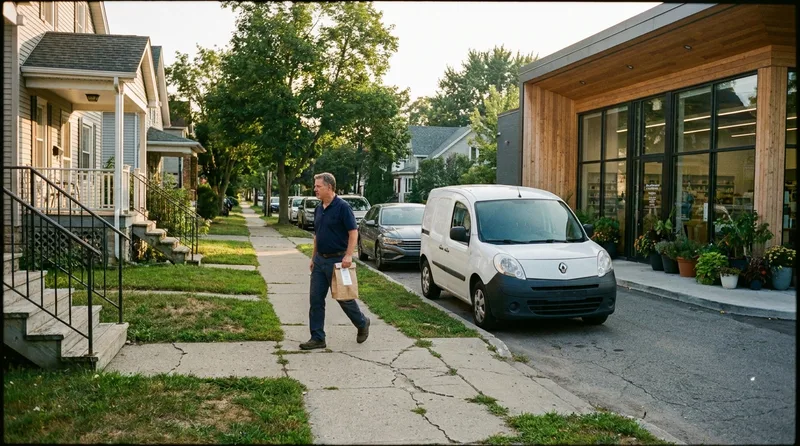
Structure delivery around one radius, one price, and one guaranteed window. Free within 5 to 10 miles, a flat fee beyond that, same-day before a fixed cutoff. Nothing more. Complexity is the single biggest reason patients never book a program that already exists.
A patient who has to call and ask, "Do you deliver to my street" seldom calls. They just go somewhere else. That's not a hypothetical; it's the most common way a good program dies quietly. Independent pharmacies are already losing ground on cost, with gross margins down to 19.7%, the lowest in a decade, while the largest pharmacy benefit managers control close to 80% of prescription claims. The FTC's PBM staff report spells out exactly how that squeeze works. You can't renegotiate a PBM contract. You can absolutely make delivery so simple that a patient never has to think twice about using it.
| Model | Best For | Typical Cost |
|---|---|---|
| In-house driver | Dense local area, high daily volume | Fixed staff cost, highest control |
| Courier partnership | Rural or wide-radius coverage | Per-delivery fee, variable cost |
| Hybrid | Growing pharmacies testing demand | In-house close, courier farther out |
Pick one row, write the terms down, and repeat them identically everywhere: on the phone, the website, the refill text. Pair it with your existing loyalty program and delivery becomes a second, concrete reason to stay instead of a vague perk nobody can describe.
Strategy 2: Why Do Refill Text Reminders Convert Delivery Bookings Fastest?
Refill texts convert fastest because the patient is already deciding where to fill at that exact moment. One added line, "add free delivery to this order," turns a routine reminder into a booking opportunity without any extra staff work or new software.
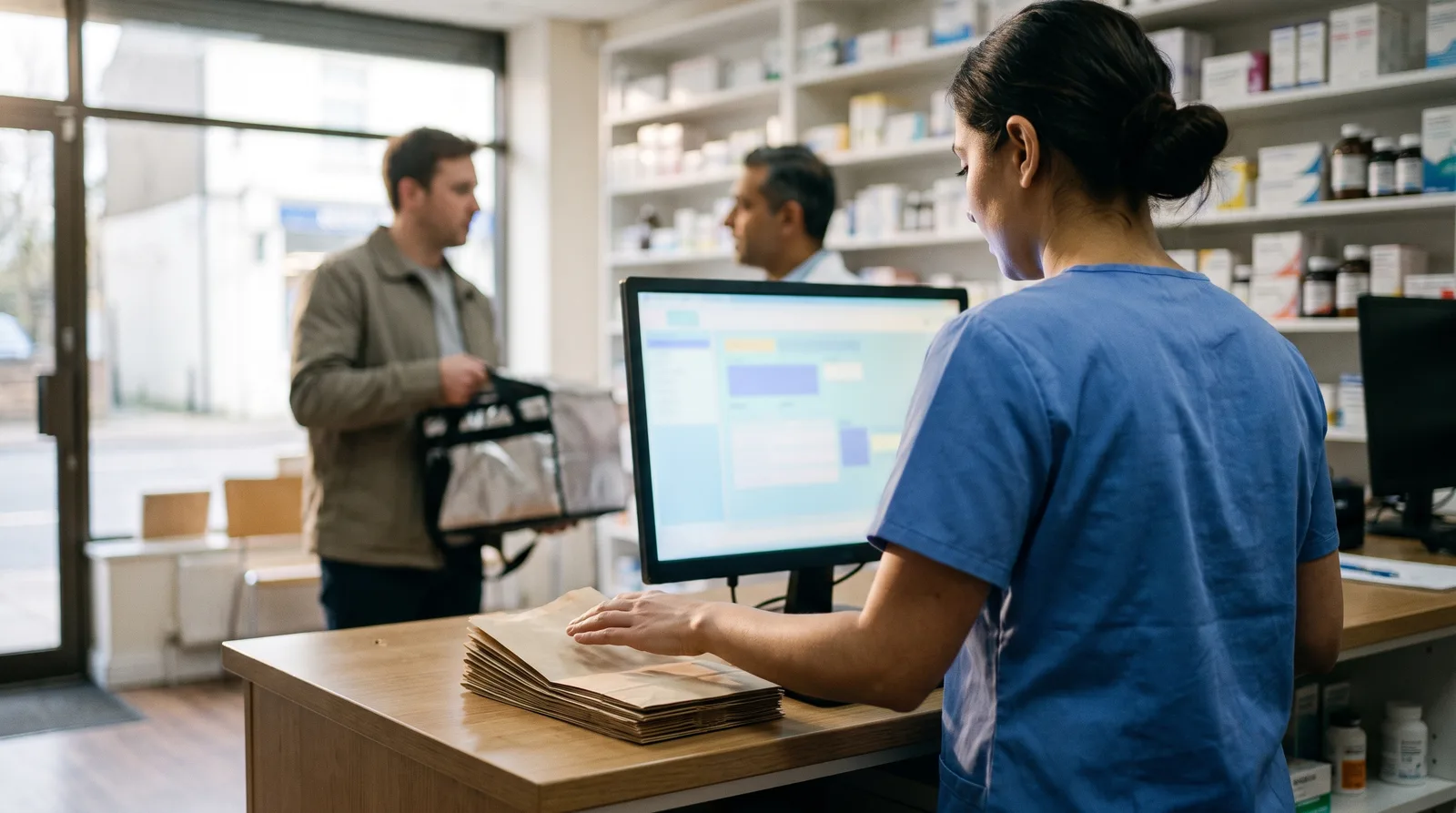
Brick-and-mortar pharmacy satisfaction dropped more than 10 points in a single year, and long counter waits sit at the top of the complaint list. J.D. Power's 2024 US Pharmacy Study ties that drop directly to wait times and unclear communication, the two things a text-triggered delivery offer removes before the patient ever walks in. No counter. No wait. No decision to make once the option is right there on their phone.
Don't stop at texts. Layer these on top, in this order of impact:
- Refill text reminders: the highest-converting placement, because the decision is already active.
- Pinned Google Business Profile post: shows delivery hours and radius before a patient opens your site.
- Homepage banner and refill page: repeats the offer where a patient is already comparing pharmacies.
- New-patient welcome email: mentions delivery the moment a switch is still fresh in their mind.
Vague copy kills all four. "We deliver" tells a patient nothing. "Free same-day delivery within 5 miles, order by 2pm" gives them a reason to act right now, not eventually.
Not sure which channel fits your patient base?
A short strategy call can map your delivery program to the channels your patients already check daily.
Request a Free Demo →Strategy 3: Which Additional Marketing Channels Should You Layer On Top of Refill Texts?
Layer email, social media, in-store signage, direct mail, and your own website underneath your refill texts, because each of those channels reaches a patient who isn't due for a refill yet. Refill texts convert the booking. These five channels are what keep pharmacy delivery service marketing working between refill cycles, not just at the moment of one.
Every channel has a different job. Confusing "fast" channels with "awareness" channels is the most common reason a delivery program plateaus after an initial bump.
| Channel | Speed to Book | Best Use |
|---|---|---|
| Slow, broad reach | Monthly newsletter reminder, new-patient welcome series | |
| Social media | Slow, builds awareness | Local Facebook and Instagram posts showing a real delivery |
| In-store signage | Medium | Patients picking up in person who don't yet know delivery exists |
| Direct mail / EDDM | Slow, upfront cost | New movers in your radius who've never heard of the pharmacy |
| Website / local SEO | Slow to rank, compounds over time | Patients actively searching "pharmacy delivery near me" |
Don't run all five at once if you're just getting started. Pick social media first if your patient base is younger and mobile-first. Pick direct mail first if you're in a rural or suburban service area where a physical mailer still gets read. A dedicated delivery page tied into your local SEO strategy pays off slower than any of the others, but it keeps working long after a mailer gets thrown out. Either way, point every channel back to the same offer you locked in during Strategy 1: same radius, same price, same cutoff, no exceptions.
- Email: mention delivery in every newsletter footer, not just a one-time announcement.
- Social media: post a real delivery photo monthly; a generic stock graphic gets scrolled past.
- Signage: place it at eye level near the pickup counter, where the decision actually happens.
- Direct mail: lead with the price and radius on the front, not buried inside.
- Website and SEO: give delivery its own page with the radius and price stated plainly, so it can rank for local searches instead of sitting buried in an FAQ.
Strategy 4: How Do You Target Chronic-Disease and Homebound Patients First?
Target chronic-disease and homebound patients before anyone else, because they abandon prescriptions over inconvenience more than any other group. Nearly half of patients managing a chronic condition don't take medication as prescribed, and that non-adherence drives roughly $528 billion a year in avoidable costs.
Research published on PMC ties that abandonment to access, not just price. Delivery removes the single biggest access barrier: getting to the store. Pharmacist-led adherence programs have pushed adherence rates from roughly 75% to over 80% in community pharmacy trials, and a study in the American Journal of Managed Care found delivery-plus-outreach was a meaningful part of that lift.
- Ask caregivers directly whether delivery would help, instead of waiting for the patient to bring it up.
- Flag polypharmacy patients in your system and offer delivery as part of the conversation, not a separate ask.
- Mention delivery during every MTM consult, where barriers are already being discussed out loud.
Small ask. Outsized retention payoff.
Strategy 5: How Does Bundling Delivery with Medication Sync Increase Retention?
Bundling delivery with medication synchronization turns five separate monthly trips into one, which is exactly what keeps a patient managing multiple prescriptions from quietly switching pharmacies. The two services solve the same root problem from opposite directions: sync reduces the number of trips, delivery removes the trip entirely.
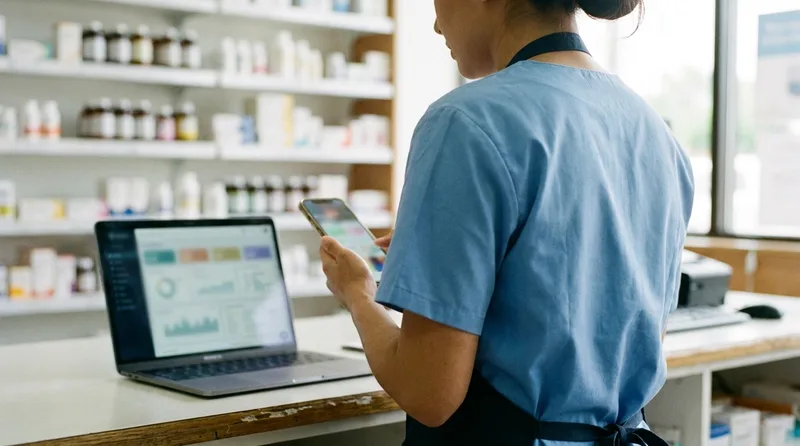
Roughly 81% of independent pharmacies already offer medication therapy management services, according to NCPA's 2024 Digest, which means most of you already have the clinical touchpoint. Deliver the synced order alongside it, and you've turned a monthly errand into something the patient never has to think about again. That single sentence at pickup, "we'll sync it and bring it to you," does more for retention than any flyer ever will.
Related: Bundling delivery with a synchronization program keeps polypharmacy patients on one predictable schedule instead of five separate pickups. Read the medication sync guide →
Don't sell the two services separately. A patient doesn't want "sync" and "delivery" as line items to evaluate. They want one sentence: "we'll fill everything together and bring it to you." That's the whole pitch, and it's the one that actually gets said out loud at the counter.
Strategy 6: How Do You Turn a New Prescription Transfer Into a Delivery Sign-Up?
Mention delivery in the very first message a transferring patient receives, before they've had time to second-guess the switch. A patient who just transferred a prescription from a chain is actively comparing you against the pharmacy they left, and delivery is often the tiebreaker.
New patients rarely know your policies yet. Say the radius, the price, and the cutoff time in the welcome email or text, not buried three clicks deep on the website. First impressions here are the whole conversion event: a strong one locks in a loyal patient, and a weak one sends them right back where they came from.
- Add a delivery mention to the transfer confirmation, not a separate follow-up they might ignore.
- Offer the first delivery free even outside your normal radius, as a one-time welcome gesture.
- Ask staff to say "and we deliver, by the way" out loud during every transfer call.
Strategy 7: How Should You Use Google Business Profile to Promote Delivery?
Pin a Google Business Profile post that states your delivery radius, price, and cutoff time, because that's often the first thing a patient sees before they ever reach your website. A stale or missing GBP delivery message quietly loses bookings to any competitor whose profile is more current.

Refresh the post monthly, not once and forget it. Google deprioritizes stale content in local results, and a patient scrolling past a six-month-old post reads it as a program that might not exist anymore. Add a photo of a real delivery, not a stock graphic, and mention delivery explicitly in your review responses when patients bring it up. That's branding most chains can't replicate, because their profiles are managed centrally and rarely feel local.
How Do You Measure Whether Your Pharmacy Delivery Service Marketing Is Working?
Measure delivery marketing by tracking three numbers every month: delivery-attributed refills, 90-day retention for delivery patients versus pickup patients, and cost per delivery against average script margin. Skip this step and you'll never know if the program earns its keep or just adds driver hours to payroll.
Tag every delivery order at the point of sale, not after the fact when the data's already messy. Pull the retention comparison monthly and act on it, tied directly to the broader revenue strategies that keep an independent pharmacy competitive against much bigger marketing budgets.
- Tag delivery orders at the point of sale.
- Pull a monthly retention comparison between delivery and pickup patients.
- Calculate true cost per delivery, driver time or courier fees included.
- Shrink the radius before you cut the program if cost outpaces margin.
- Re-survey non-users twice a year. Awareness fades faster than owners expect.
If a tight 5-mile zone works and an unreliable 15-mile one doesn't, that's not a failure. That's the data doing its job.
These seven strategies are what pharmacy delivery service marketing actually looks like in practice, not a checklist to finish in a week. Pick the one you're weakest on, whether that's pricing clarity or channel mix, fix it first, and track results for 90 days before adding the next one. A pharmacy that executes three strategies well, and actually measures them, beats one that half-implements all seven.
Ready to put your delivery program in front of more patients?
See how RevealSite builds the website, email, and local SEO around services like delivery, so patients actually book them.
Request a Free Demo →Want to see how other independent pharmacies made delivery work?
See Success Stories →Frequently Asked Questions
How much should independent pharmacies charge for delivery?▼
Most independent pharmacies offer free delivery within 5 to 10 miles and a flat fee beyond that radius. Free delivery close to the store removes the biggest barrier to adoption, while a flat fee farther out keeps the program financially sustainable.
What is the fastest way to promote a pharmacy delivery service?▼
Add one line about delivery to every refill text reminder. Patients already have the pickup decision on their mind at that moment, which makes refill texts the highest-converting channel for delivery bookings.
Which patients benefit most from pharmacy delivery marketing?▼
Chronic-disease patients, seniors, and homebound patients benefit most, since transportation is often their biggest barrier to adherence. Pairing delivery with medication synchronization compounds the benefit for patients managing multiple prescriptions.
How do you measure whether a pharmacy delivery program is working?▼
Track delivery-attributed refills, compare 90-day retention between delivery and pickup patients, and calculate cost per delivery against average script margin. A significant retention gap justifies keeping or expanding the program.
How quickly can an independent pharmacy launch a delivery marketing strategy?▼
Adding a delivery line to refill texts and pinning a Google Business Profile post can go live within a week. Bundling delivery with synchronization or measuring retention properly takes a full billing cycle to show results.
Sources
- NCPA 2024 Digest Report
- FTC Pharmacy Benefit Managers Staff Report
- J.D. Power 2024 US Pharmacy Study
- Journal of the American Pharmacists Association
- PMC: Medication Adherence and Access Barriers
- American Journal of Managed Care: Pharmacist-Led Adherence Interventions
- USC Schaeffer Center / Health Affairs: Pharmacy Closures
Was this article helpful?