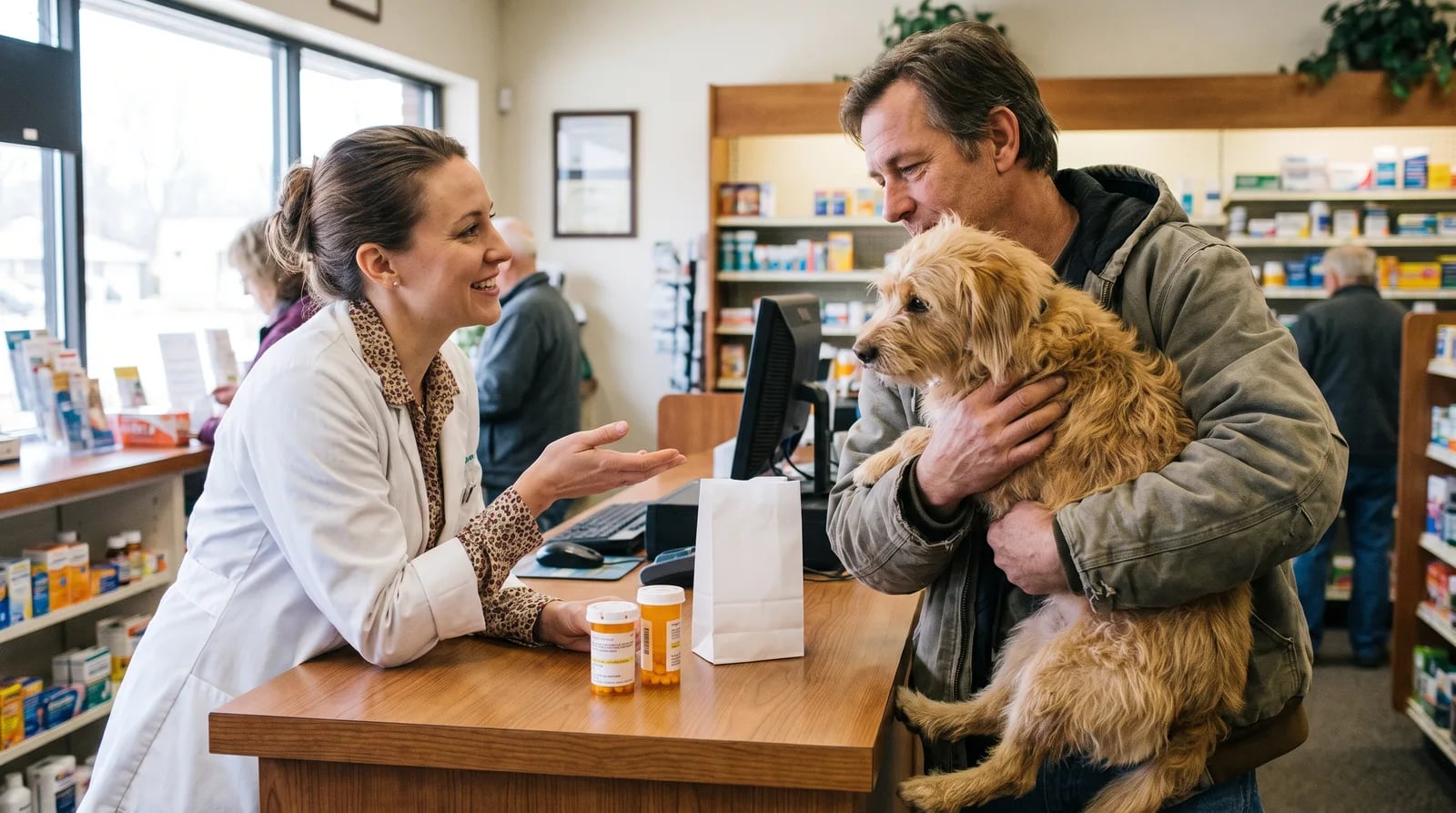
Pet Medication Pharmacy Marketing: Tap the Vet Rx Market
RevealSite Team
July 13, 2026 · 12 min read
Key Takeaways
✓Independent pharmacies already licensed for compounding can often prepare flavored, dose-adjusted pet medications with no new license required
✓35% of all US retail pharmacies are independents, per NCPA's 2024 Digest, giving this segment real scale to compete for veterinary prescription business
✓Most Google Business Profiles never mention pet medications, leaving that search traffic to competitors by default
✓Geofencing ads around veterinary clinics reach pet owners at the exact moment they are comparing medication prices
✓Direct outreach to local vets, not paid advertising, often produces the most reliable long-term referral pipeline
✓Tracking pet-related call volume and GBP search terms separately is the only way to know if the strategy is working
Build the presence your community trusts
Let us be your first step. Get in touch with our team today.
Pet medication pharmacy marketing rarely makes the priority list for independent owners. That's a mistake. A dog or cat on maintenance meds visits the pharmacy counter almost as often as a human patient does. Most of that spend still flows to veterinary clinics charging a markup, and your pharmacy can capture a meaningful share of it. This guide covers where the demand comes from, how to position your pharmacy services for pet owners, and which channels convert local searches into filled prescriptions.
None of this requires a new license or a compounding lab overnight. It requires visibility, the right partnerships, and content that answers the questions pet owners are already typing into Google. Done well, this becomes one of the steadier growth lines an independent pharmacy has.
What Is the Pet Medication Market Opportunity for Independent Pharmacies?
Independent pharmacies can capture veterinary prescription revenue because compounded and human-label medications for pets are a fast-growing, underserved niche. Compounding pharmacies already licensed for human formulations often qualify to prepare flavored, dose-adjusted versions for cats and dogs. Most pet owners have no idea their local pharmacy offers this.
Why the Timing Works in Your Favor
Veterinary clinics mark up medications heavily. Owners increasingly shop around once they realize a written prescription can be filled elsewhere, and online pet pharmacies like Chewy have trained consumers to expect price comparison as normal behavior, not disloyalty. That shift benefits any pharmacy willing to compete on price, speed, and personal service.
According to the Alliance for Pharmacy Compounding, the 2023-2024 industry snapshot surveyed over 11,400 compounders. That's spread across more than 500 unique facilities, a sign of how broad the compounding footprint already is. Independent pharmacies remain a large share of that network. Per NCPA's 2024 Digest, independents represent 35% of all US retail pharmacies, with no single chain outnumbering them combined.
Statista reports that over 70% of US households, more than 240 million homes, now own a pet, which is the size of the demand pool this segment of independent pharmacies is positioned to tap.
Where to Start
Start by auditing what you can already legally compound or dispense for pets. The average independent pharmacy already dispensed 59,644 prescriptions per store in 2023, according to NCPA, so even a modest share shifting toward pet medications adds up fast. Then decide whether pet medication pharmacy marketing becomes a standalone service line or a quiet add-on to existing compounding promotion. If compounding is already a bigger part of your business, our compounding pharmacy marketing guide covers the broader strategy pet medication marketing fits inside.
Why Do Pet Owners Choose a Pharmacy Over a Vet Clinic for Prescriptions?
Pet owners choose a pharmacy over their vet clinic mainly for cost, because clinics routinely mark up medications well above retail pharmacy pricing. Convenience and flavor options matter too, especially for cats that refuse plain pills.
Vet Clinic vs. Independent Pharmacy
Factor
Veterinary Clinic Dispensary
Independent Pharmacy
Price
Marked up over acquisition cost
Typically lower, closer to retail generic pricing
Flavor and dosing
Standard tablets or capsules only
Flavored, dose-adjusted compounding available
Turnaround
Often requires a separate order or wait
Same-day pickup in most cases
Existing relationship
New relationship per pet, per visit
Builds on trust already established with human prescriptions
A Real-World Example
Think about a golden retriever on a lifelong thyroid medication. At the clinic, that's a recurring markup every refill, month after month, for the life of the dog. At your pharmacy, it might be the same generic at a fraction of the cost. Add a chewable flavor the dog will actually take without a fight, and you've solved two problems at once. That combination, cheaper and easier to administer, is what turns a one-time price-shopper into a repeat customer.
Trust plays a role as well. Pet owners already trust their pharmacist for their own prescriptions. Extending that relationship to the family dog or cat isn't a stretch. It just needs to be visible. Most owners simply don't know the option exists until someone tells them, whether that's a front-desk conversation, a sign by the register, or a Google search that finally surfaces the right answer. National compounding chains like Wedgewood Pharmacy have shown how large the pet medication category can grow, but they cannot replicate the local relationship a neighborhood pharmacist already has with that pet owner.
How Should Pharmacies Optimize Their Google Business Profile for Pet Medications?
Pharmacies should optimize their Google Business Profile by adding pet-medication-related attributes, services, and photos. That's what makes the listing surface for searches like "pet prescription pharmacy near me." Most GBP listings never mention pets at all, leaving that traffic to competitors.
Services and Photos to Add
Start with the Services section. Add specific line items: "pet medication compounding," "veterinary prescription transfers," "flavored pet medications." Google's algorithm weighs these listed services heavily for category-based queries. BrightLocal's 2024 Local Consumer Review Survey found that 75% of consumers regularly read online reviews before choosing a business, which makes your review section just as important as your service list. Upload photos of compounded pet medications, your compounding equipment, and even a staff photo with a pharmacy dog or cat mascot if you have one. For the full checklist, see our Google Business Profile attributes guide, and pair it with our GBP photos walkthrough for image specifics. If your profile needs a broader rebuild first, start with our Google Business Profile optimization guide.
Keeping the Listing Active
Update your GBP description to explicitly mention pet medications, and post GBP updates monthly featuring pet-related services. Small, consistent signals compound over months, not days. Our guide to GBP posts for pharmacies covers post formats and cadence in more depth if monthly feels like the ceiling rather than the floor.
Match Your Listing to How Pet Owners Actually Search
Getting listed under the right services only works if those services match what pet owners actually type into Google. Pet pharmacy SEO keyword research tends to surface phrasing a pharmacy team would not guess on its own: dosage-specific searches, breed-specific medication names, and flavor requests among them. Building GBP services and website copy around those exact phrases closes the gap between what a pharmacy offers and what shows up in search.
Not sure your GBP is pulling its weight?
Our Smart Websites & Local SEO team audits pharmacy listings for missed categories, attributes, and photo gaps that keep you invisible to pet owners searching nearby.
What Content Builds Trust With Pet-Owning Patients?
Content that builds trust with pet-owning patients answers specific, practical questions: dosing safety, flavor options, and how compounding works for animals. Generic "we love pets" copy does not move the needle.
Pet Medication Content Checklist
Check off what your pharmacy already has in place.
Most independent pharmacies check zero of these boxes today, which is exactly the opportunity.
Formats Worth Testing
Write short blog posts or FAQ pages around real questions: "Can my cat's thyroid medication be flavored?" or "What's the difference between a vet's in-house pharmacy and a compounding pharmacy?" These posts do double duty. They rank for long-tail searches. And they give your front-desk staff a link to send when a pet owner calls with a question. An "Ask the Pharmacist" video series, even filmed on a phone, humanizes the service more than a stock photo of a golden retriever ever will.
A one-page FAQ specifically for pet medication questions
A short video explaining your compounding process for animals
A monthly newsletter section highlighting one pet medication success story (with owner permission)
This is exactly the kind of content our Creative & Content team builds for pharmacies that want a steady drumbeat of patient education without pulling staff off the bench to write it.
How Can Pharmacies Partner With Local Veterinarians for Referrals?
Pharmacies can partner with local veterinarians by offering faster turnaround, transparent pricing, and direct communication that clinics can't match through their own in-house dispensary. Most vets don't have a compounding relationship set up, and they're often relieved to have one.
How to Approach a Local Clinic
Reach out directly. Bring a one-page overview of what you compound, your typical turnaround time, and a direct phone line for their staff to call in prescriptions. Vets refer patients to businesses they trust will get the details right, not the cheapest option on paper. Consider a small independent clinic seeing 40 to 50 patients a week: even a modest referral rate from that single relationship adds up over a year. A single reliable partnership with a busy clinic can generate a steady trickle of referrals for years, especially in a market where clinics are stretched thin on staff and welcome one less thing to manage in-house. Pharmacy Times reported that more than 71% of the over 130,000 veterinarians practicing in the US focus their clinical work on companion animals, so the pool of potential referral partners in most markets is larger than it first appears.
Building the Long-Term Relationship
Offer to co-host a small educational event, or simply drop off printed FAQ sheets pet owners can take home from the vet's front desk. Small gestures, repeated consistently, build the kind of referral relationship that advertising can't buy on its own. The same principles apply to patients: our pharmacy referral program guide covers how to formalize referrals once a few vet relationships are in place.
Ready to build a full pet medication marketing plan?
RevealSite works with independent pharmacies on GBP optimization, vet outreach materials, and the content that turns pet owners into repeat customers.
What Paid and Social Strategies Reach Pet Owners Locally?
Paid and social strategies reach pet owners locally best through geofenced ads around veterinary clinics and Facebook posts featuring real pet medication stories. Broad-radius Google Ads waste budget on people outside your service area.
Which Channels Work Best for This Audience
Channel
Best For
Watch Out For
Geofencing
Reaching pet owners at competing vet clinics and pet stores in real time
Needs a tight radius and a 30 to 90 day window to stay relevant
Facebook and Instagram
Short reels showing compounding in action, paired with cost savings
Static graphics underperform video for this audience
Google Ads
Capturing high-intent searches like "compounding pharmacy near me"
Broad-radius targeting wastes budget outside your service area
Google Business Profile posts
Free, ongoing visibility for pet medication services
Easy to set up once and forget, so it needs a monthly cadence
Geofencing lets you serve ads specifically to phones that have been inside a competing vet clinic or pet store in the last 30 to 90 days. That catches pet owners at the exact moment they're shopping for medication options. Backlinko's research found that 76% of consumers who run a "near me" search visit a related business within one day. The ad needs to reach them before they walk into the clinic's own dispensary, not after.
On Facebook, a short reel of a compounded flavored medication being prepared, paired with a caption about cost savings, tends to outperform static graphics for this audience.
Keep the message simple: cheaper, faster, and easier for the pet. Save the clinical detail for the landing page. For the full playbook across channels, see our pharmacy paid advertising guide.
Related: If competitor vet clinics and pet stores are pulling foot traffic in your area, geofencing can put your pharmacy in front of those same shoppers. See our pharmacy geofencing guide →
How Do You Measure Success in Pet Medication Pharmacy Marketing?
You measure success by tracking new pet-related call volume, GBP search impressions for pet-related terms, and repeat fill rates from pet owners. Vague brand awareness metrics won't tell you if the campaign is working.
Set up a simple intake question: ask new pet medication customers how they heard about you, then log it. Watch your GBP insights for "pet" and "veterinary" search terms specifically. Semrush's local SEO research found that businesses ranking in Google's local 3-pack receive 126% more traffic than positions four through ten. Movement into that top-three block is worth watching closely. For a deeper look at how that algorithm actually weighs signals, see our Google Maps ranking guide for pharmacies.
Reviews matter here too. A customer who mentions their pet's medication by name in a Google review is free, credible marketing that outperforms anything you'd write yourself. Turning a handful of those mentions into content across other channels compounds the effect further.
What to Track Month Over Month
Metric
Where to Track It
Why It Matters
Pet-related calls
Front desk intake log
Direct signal of demand and word-of-mouth reach
GBP search terms
Google Business Profile Insights
Shows if pet-specific optimization is working
Repeat fill rate
Pharmacy management system
Tells you if pet owners are sticking around
A pharmacy that markets to pet owners without a system behind it will burn budget fast. Tracking and ad management need a home. Our Marketing & Visibility team builds exactly that, so these numbers stay visible month over month instead of disappearing into a spreadsheet nobody opens.
Pet medication pharmacy marketing works best as a layered effort. A Google Business Profile that actually mentions pets. A vet relationship or two. Paid ads that reach owners at the right moment. Skip any one piece and the others carry more weight than they should. Start with your GBP this week. It's free, it's fast, and it's the first thing a pet owner searching nearby will see.
Turn pet owners into repeat pharmacy customers
See how RevealSite helps independent pharmacies build the visibility and outreach that capture veterinary prescription business.
Pet medication pharmacy marketing is the set of strategies independent pharmacies use to attract pet owners who need compounded or human-label prescriptions for their animals. It includes local SEO, vet clinic partnerships, and targeted content that pulls veterinary prescription business away from clinics and mail-order pet pharmacies.
Do I need a special license to compound pet medications?▼
Most pharmacies already licensed for human compounding can prepare many pet medications under their existing 503A license. Requirements vary by state, so confirm with your state board before marketing pet compounding services, especially for controlled substances or complex formulations.
How do I get veterinarians to refer patients to my pharmacy?▼
Reach out directly with a one-page overview of what you compound, your turnaround time, and a direct phone line. Vets refer to pharmacies they trust will handle dosing and formulation correctly, so reliability matters more than price in building that relationship.
What should I add to my Google Business Profile for pet medications?▼
Add specific services like pet medication compounding and veterinary prescription transfers, upload photos of compounded products, and post monthly updates mentioning pet services. Most competitors never optimize for this, so even basic updates can capture search visibility.
Is geofencing worth it for pharmacy pet medication marketing?▼
Yes, geofencing lets you target ads to phones that recently visited a competing vet clinic or pet store, reaching owners while they are actively comparing medication options. It typically outperforms broad-radius Google Ads for this specific audience.
How do independent pharmacies compete with online pet pharmacies on price?▼
Independent pharmacies often match or beat online pet pharmacy pricing on generics while offering same-day pickup and flavored compounding options mail-order competitors cannot provide. Speed and personalization are the differentiators, not just price.