25 Pharmacy Advertising Ideas to Drive Foot Traffic
RevealSite Team
May 19, 2026 · 13 min read
Key Takeaways
✓Independent pharmacies need pharmacy advertising ideas that combine local search, paid ads, community marketing, refill outreach, and reviews. No single channel grows both foot traffic and script volume.
✓Google Ads averages a $66.69 cost-per-lead across industries, while Facebook Lead Ads runs about one-third of that for service businesses, making Facebook the cheaper prospecting channel.
✓A one-star improvement in average Google rating boosts pharmacy calls, clicks, and direction requests by 44%, making review generation one of the highest-return advertising activities.
✓About 88.9% of US adults live within 5 miles of a pharmacy, so hyper-local community marketing (employer flu clinics, screenings, sponsorships) outperforms broad-radius digital campaigns.
✓Pharmacist-led automatic refill programs raised on-time adherence rates from 73.6% to 83.6% in a published clinical trial, directly translating into protected script volume.
Build the presence your community trusts
Let us be your first step. Get in touch with our team today.
✓Execution kills most campaigns, not strategy. Pick three ideas, commit to 90 days, and measure by call volume, new transfers, and refill rate.
You're spending money to attract patients, but the chain pharmacy two blocks away is doing the same with deeper pockets. Independent pharmacies need pharmacy advertising ideas that punch above their weight class, working both online and inside the store. Most tactics that move foot traffic and refills don't require chain-level budgets. They just require someone running them consistently. Even a handful of low cost pharmacy advertising moves, done consistently, can outperform a bigger budget spent without a plan.
The independent pharmacy footprint dropped by 448 stores between 2023 and 2024, according to NCPA's 2024 Digest. Customer satisfaction at brick-and-mortar pharmacies fell more than 10 points the same year, per J.D. Power's 2024 US Pharmacy Study. That's the bad news. The good news: about 90% of adults trust their local pharmacist. Patients who already know your name don't need to be sold. They need to be reminded that you exist. That reminder is exactly the kind of work most independent owners eventually hand to a pharmacy marketing agency once the day-to-day gets in the way.
This article walks through 25 specific tactics grouped by what they actually do. Drive new foot traffic. Fill more prescriptions. Build local search visibility. Keep current patients refilling. Each one has been tested by real independent pharmacies. Most cost under $500 a month to start. For the broader strategic frame these 25 tactics sit inside, our complete guide to independent pharmacy marketing is the place to start. Bookmark this list of pharmacy marketing ideas and revisit it every quarter as your patient base and budget change.
What pharmacy advertising ideas bring in local foot traffic?
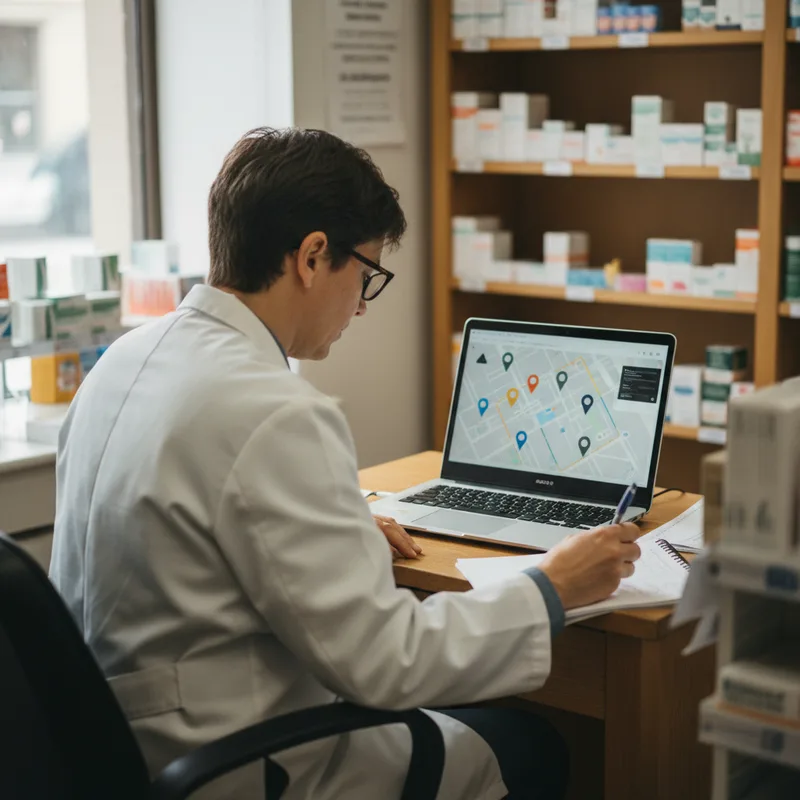
Local foot traffic starts with being visible in the searches your patients already run. The pharmacy advertising ideas with the highest foot-traffic return cluster around Google Business Profile (GBP) optimization, location pages, schema markup, secondary directories, and call tracking. Together, they capture the "pharmacy near me" moment.
Most independent pharmacies see Google Business Profile movement within 30 to 60 days of weekly posting.
Post weekly on Google Business Profile. Photos of new inventory, vaccine clinics, MTM consultations, or seasonal hours. Google Posts expire after 7 days, so weekly posts keep the profile in motion and tell the algorithm your store is active.
Build a dedicated landing page for each high-margin service: compounding, MTM, vaccines, delivery, hormone therapy. Each page targets a different "near me" query, and each one gives Google a separate signal that you do that service well.
Add LocalBusiness and Pharmacy schema to your homepage and service pages. It tells Google your hours, services, and review count in a structured format it can serve directly in AI Overviews and Maps results.
Claim secondary directory listings. Apple Maps, Bing Places, Yelp Health, NPI Registry, Healthgrades. They pull in the 15% of searchers who don't start on Google and feed back-link authority to your main domain.
Use call-tracking numbers on the GBP listing and every ad campaign. Without them, you can't tell which idea actually moves the phone. The data also reveals which hours staff is missing calls.
Treat this group as table stakes. Without local search visibility, every paid ad you run pays a Google tax for traffic you could have earned organically. Our step-by-step guide to ranking your pharmacy on Google covers the technical setup in detail.
Your pharmacy website is the foundation under every ad.
RevealSite builds pharmacy websites paired with Google Business Profile and local SEO so you rank for "pharmacy near me" searches in your service area.
Which paid ad channels actually work for pharmacies?
The strongest paid channels for independent pharmacies are Google Search Ads on high-intent service queries, Facebook Lead Ads for vaccine and MTM sign-ups, geofencing around competing chains, Instagram Reels boosts for new-customer offers, and retargeting for refill reminders. Cost-per-lead varies sharply between them, so the channel mix matters more than budget size.
Two benchmarks shape the channel decision. The average cost-per-lead in Google Ads across all industries was $66.69 in 2024, according to WordStream's Google Ads benchmarks. Facebook Lead Ads typically run roughly one-third of that for service businesses. So Google is the high-intent channel; Facebook is the low-cost prospecting channel. They serve different jobs. Running google ads for pharmacies well means bidding tightly on service-specific, high-intent terms instead of broad brand keywords that waste spend on browsers.
Five paid ad ideas worth testing first
Google Search Ads for high-intent queries. "Compounding pharmacy [city]," "free prescription delivery," "MTM near me." These cost more per click, but the caller already has intent and is comparing two or three local options.
Facebook Lead Ads for vaccines and MTM consults. A $5 daily budget targeting adults 55 and older inside a 3-mile radius can fill a flu clinic's slot list in under a week. The form sits inside Facebook, so the friction is near zero.
Geofencing competing chain pharmacies and walk-in clinics. Serve mobile display ads to people physically inside CVS or Walgreens at that moment. Message angles: faster pickup, free delivery, real pharmacist who answers the phone.
Instagram Reels boosts on your strongest organic Reels. Boosting a Reel that already earned 5,000+ organic views costs less per impression than promoting a cold one, because Meta's algorithm rewards the existing engagement signal.
Retargeting for refill abandonment. Patients who visited your refill page but didn't complete it see a 24-hour banner ad reminding them. CPM is low because the audience is tiny, and conversions are high because the intent is fresh.
One rule for every paid campaign: every ad needs a tracked call number and a tracked landing page URL. Otherwise you're guessing at what works. Our complete pharmacy paid advertising guide breaks down typical budgets, target CPLs, and creative angles for each channel.
Paid ads only work when someone watches the dashboard every week.
RevealSite runs Google Ads, Meta campaigns, and geofencing for independent pharmacies as an outsourced marketing department, not a hands-off tool.
How can in-store and community marketing fill prescriptions?
In-store and community marketing fills prescriptions by converting existing relationships into new patient transfers and add-on services. The strongest pharmacy advertising ideas in this category are health screenings, local employer partnerships, senior community outreach, in-store cross-merchandising, and youth sports sponsorships. They build the trust that paid ads can't buy.
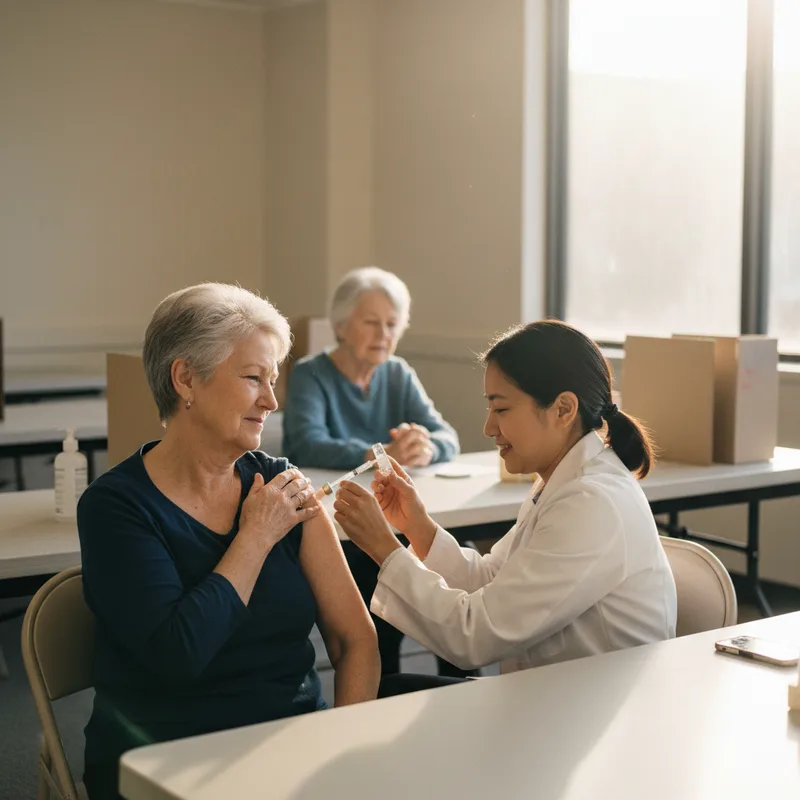
Local employer flu clinics convert into new pharmacy transfers that show up on the dispense system for months.
The geography backs the strategy. About 88.9% of the US population lives within 5 miles of a pharmacy, per research in the Journal of the American Pharmacists Association. That means your competitive moat isn't location anymore. About one in three US retail pharmacies (29.4%) closed between 2010 and 2021, with Black and Latino neighborhoods at the highest risk, per USC Schaeffer Center research published in Health Affairs. The pharmacies that survive are the ones building real relationships with the people who already drive past their door every day. Community marketing is how you build that moat, one event at a time. A flyer at the counter or a piece of pharmacy print advertising left with a local employer still earns attention in a market this saturated with digital noise.
Five community ideas with measurable ROI
Free health-screening events. Blood pressure, A1c, cholesterol, BMI. Promote them in your GBP, on Facebook, and with flyers at nearby businesses. Capture sign-ups for follow-up MTM consults and chronic-care monitoring.
Local employer flu and vaccine clinics. Approach HR managers at companies with 50 to 500 employees. You bring the vaccines on-site. They cover lunch. You walk away with new patients on your transfer list and a relationship for next year.
Assisted-living and senior-community partnerships. Offer monthly med reviews, bubble-pack delivery, and Medicare Part D enrollment help during open season. These patients average 10 to 14 prescriptions each, with high lifetime value.
Cross-merchandising tied to a chronic condition. A diabetes section pairs glucose meters, lancets, neuropathy creams, and CBD topicals near the consultation window. Customers self-educate while they wait for their script to fill.
Sponsor a youth team or local 5K. Tax-deductible, hyper-local, and your logo lands in front of parents in their 30s and 40s. They're the household decision-maker for chronic-care relatives and the family's flu shots.
Each idea generates content for your other channels too. The screening event becomes a Facebook post. The flu clinic becomes a press release. The 5K sponsorship becomes a photo for next month's newsletter. Our guide to marketing pharmacy clinical services breaks down which programs have the biggest revenue lift in 2026. None of it beats old-fashioned word of mouth pharmacy marketing, which is really just what happens when every one of these events is done well.
Related: Most new-patient calls start with a "near me" search before the patient ever sets foot in your store → How to Attract New Pharmacy Customers
What pharmacy advertising ideas keep patients refilling?
Pharmacy advertising ideas that protect refills focus on adherence and routine touch points: auto-refill SMS, medication synchronization, MTM invitations, adherence packaging promotions, and seasonal vaccine reminders. They keep existing prescriptions on your shelf and reduce the silent leakage to mail-order and chain competitors that erodes revenue every month.
Auto-refill enrollment SMS campaign. Send a one-time opt-in text to your top 200 chronic-medication patients. Conversion rates typically run 30% to 40%, and enrolled patients refill 10% to 15% more reliably.
Medication synchronization (med-sync) promotion. Offer to align all monthly prescriptions to one pickup date. Patients on 5 or more medications stick with the pharmacy that makes their life simpler, especially seniors and caregivers.
MTM consult invitations are sent to anyone with diabetes, hypertension, or three or more daily medications. Build the target list from your dispensing data and follow up with a personal call from the pharmacist.
Adherence packaging promotion with free delivery. Bubble packs or pouch packaging convert most reliably to seniors and caregivers managing complex regimens. Lead with a 30-day free trial to remove the commitment friction.
Content and reviews build pharmacy trust by stacking proof over time. Five reliable formats: weekly Ask the Pharmacist videos, patient-education blog posts, Google review SMS workflows, monthly email newsletters, and HIPAA-safe user-generated content. Together, the choice between you and a chain feels obvious to a hesitant patient.
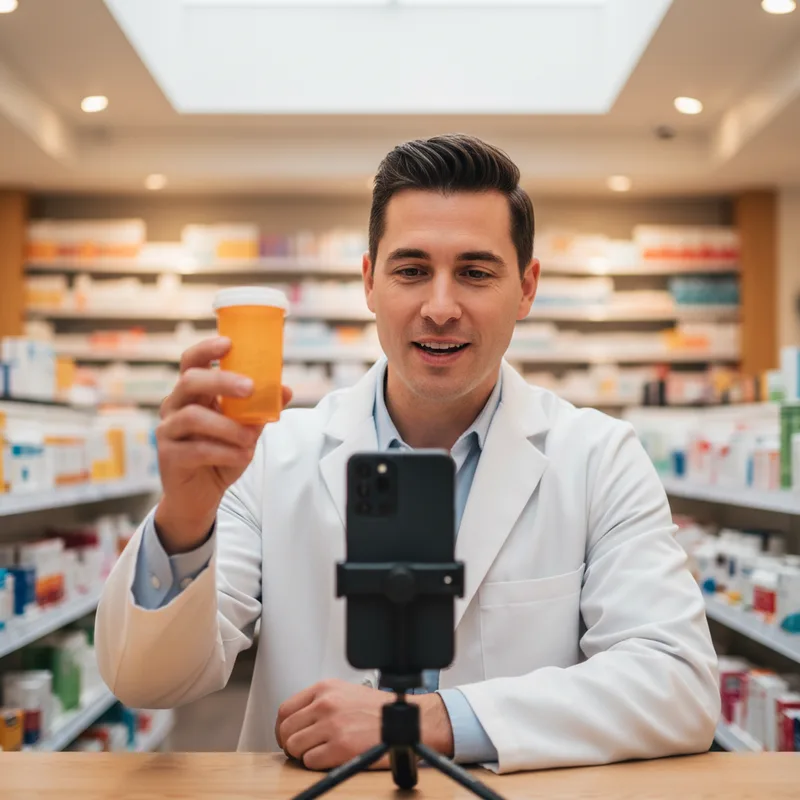
One filming session can produce a month of Ask the Pharmacist clips for Reels, TikTok, and YouTube Shorts.
Weekly Ask the Pharmacist Reels. 30 to 60 seconds, vertical, one health question per video. Reuse the same clip across Instagram, TikTok, YouTube Shorts, and Facebook. One filming session yields a month of content.
Patient-education blog posts on chronic conditions you actively treat: diabetes management, BP monitoring at home, statin side effects, immunization timing. Each post pulls organic traffic for years and signals topical authority to Google.
Review-request SMS workflow. Send a Google review link 48 hours after every new vaccine, MTM, or compound pickup. Automate the send, but make the pharmacist's name sign the message so it feels personal.
Monthly email newsletter with one seasonal health tip, one new service announcement, and one local community item. Open rates in independent healthcare consistently outperform retail by 10 to 20 points.
HIPAA-safe user-generated content campaigns. Aggregate testimonials, never name a patient. A "What our customers say" landing page paired with star-rating widgets pulls real reviews from Google in real time and adds fresh content automatically.
None of these ideas works in isolation. Stack three of them, and the compounding effect shows up in 6 to 9 months. See our complete pharmacy social media management guide for posting cadence, content templates, and platform-by-platform benchmarks.
Want the videos, blogs, and reviews running without you producing them?
Our Creative & Content team writes pharmacy blogs, films Ask the Pharmacist videos, and runs review-generation campaigns for independent pharmacies nationwide.
The 25 ideas above aren't secret. Most pharmacy owners already know them. Execution is the gap.
What kills these campaigns isn't the idea itself. It's running one for two weeks, getting impatient, switching to a different one, and quitting before any signal comes back. Pick three from this list. Commit to running them for 90 days. Measure by call volume, new transfers, and refill rate. None of this requires a large pharmacy advertising budget. It requires picking fewer ideas and running them longer.
Pick three ideas from this list.
Commit to running them for 90 days.
Measure by call volume, new transfers, and refill rate.
Two prerequisites apply to all 25 of these pharmacy advertising ideas. A pharmacy website that converts on mobile. Someone who watches the campaigns every week. Without either, the spending leaks out the back door.
What can independents learn from chain pharmacy advertising campaigns?
Chain pharmacies win on scale, not creativity, national flu-shot pushes, app-based refill reminders through myWalgreens or CVS's ExtraCare, and mass-market loyalty points. Independent pharmacies can't out-budget that, but they can out-execute it locally: faster pickup, a pharmacist who knows the patient by name, and same-day answers chains route through a call center.
That's the gap this list is built to close. A chain's advertising budget buys reach. It doesn't buy the trust a patient already has in the pharmacist down the street, the same trust referenced earlier in this guide. Compete on speed and familiarity, not spend.
See what your pharmacy's growth audit reveals.
A 30-minute call with our team maps which of these 25 ideas would lift your specific pharmacy's numbers fastest, with budgets and timelines attached.
What are the most cost-effective pharmacy advertising ideas for independent pharmacies?▼
The lowest-cost ideas with measurable ROI are Google Business Profile optimization, Google review SMS workflows, Facebook Lead Ads for vaccines, and email refill reminders. Each can be run on under $300 per month and shows results in 4 to 8 weeks for most pharmacies.
How much should an independent pharmacy budget for advertising?▼
Most independent pharmacies allocate 2% to 5% of annual revenue for marketing and advertising combined. A pharmacy filling 60,000 scripts annually typically budgets $2,000 to $5,000 per month, split across local SEO, paid ads, content, and review generation.
Do Google Ads work for independent pharmacies?▼
Yes, Google Ads work well for high-intent service queries like 'compounding pharmacy near me,' 'free prescription delivery,' or 'MTM consult.' The average industry cost-per-lead is $66.69. For broader awareness, Facebook Lead Ads usually deliver a lower cost per acquisition.
How long do pharmacy advertising ideas take to show results?▼
Paid ads show data within 7 to 14 days. Google Business Profile improvements move calls within 30 to 60 days. Pharmacy SEO and content marketing typically require 3 to 6 months before organic traffic meaningfully shifts. Reviews compound steadily over 6 months.
Can compounding pharmacies advertise on Facebook?▼
Yes, with limits. Facebook permits compounding pharmacy advertising as long as the ad avoids specific health-outcome claims, named medication brand promotion, and weight-loss-amount claims tied to compounded GLP-1 programs. Use service-category language like 'specialty formulations' instead of drug names.
Which pharmacy advertising ideas drive vaccine clinic sign-ups?▼
Facebook Lead Ads targeting adults 55 and older within a 3-mile radius reliably fill flu and COVID clinic slots. Pair them with local-employer outreach for on-site clinics. Email reminders to your existing patient list typically convert at 6% to 12% during peak season.
Should an independent pharmacy hire a marketing agency or use software?▼
Software tools are cheaper but require someone in-house to run them weekly. Agencies cost more but include the operator. For pharmacies without a marketing manager, an agency that runs Google, Meta, GBP, and reviews together usually generates a higher net return.