Pharmacy Social Media Management: Posts, Ads, and ROI
RevealSite Team
May 10, 2026 · 14 min read
Key Takeaways
✓Facebook and Instagram are the core platforms for independent pharmacies; TikTok and Nextdoor serve niche roles but shouldn't replace the fundamentals.
✓Organize pharmacy social content around four pillars: health education, behind-the-scenes team content, service promotions, and community involvement.
✓Post 3-5 times per week on Facebook and 3-4 times on Instagram; consistency matters more than volume for algorithm visibility.
✓Facebook Lead Ads average $21.98 per lead, roughly one-third the cost of Google Ads, making paid social the most affordable path to new local patients.
✓Measure social media ROI with four metrics: reach, engagement rate, website clicks, and new patient attributions tracked through unique landing pages or call tracking.
✓Repurpose one blog post into 4-6 social media posts across platforms to maximize content ROI without creating everything from scratch.
Build the presence your community trusts
Let us be your first step. Get in touch with our team today.
There are roughly 18,984 independent pharmacies in the United States, and most of them are invisible on social media. They fill prescriptions, counsel patients, give flu shots, and compound medications, but their Facebook page hasn't been updated in two months, and their Instagram doesn't exist. Meanwhile, the chain pharmacy down the street is running geo-targeted ads to the same zip code. Pharmacy social media management isn't about chasing likes or going viral. It's about staying visible to the 5,000-10,000 people in your service area who need a pharmacist and don't yet know you exist. That's the whole case for social media for independent pharmacies: staying visible costs far less than staying invisible.
This guide covers which platforms actually work for pharmacies, what to post, how often, when to spend money on ads, and how to measure whether any of it is producing patients. No fluff, no "just be authentic" platitudes. Specific tactics that work for independent and community pharmacies in 2026. Read it as a working playbook, not something you hand off entirely to a pharmacy social media management services provider without understanding what they're actually doing for you.
Why Does Pharmacy Social Media Management Matter?
Pharmacy social media management matters because it keeps your pharmacist visible between refills. A patient picks up their medication once a month. That leaves 29 days where your pharmacy doesn't exist in their mind. Social media fills that gap with health tips, team faces, and service reminders that reinforce the relationship without requiring an in-person visit.
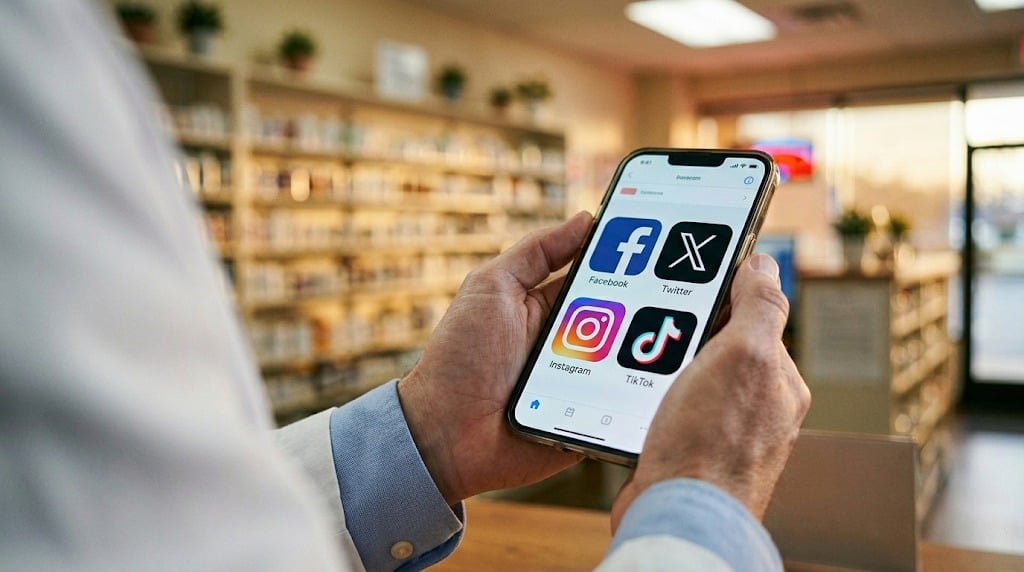
Social media keeps your pharmacist visible to patients between monthly refill visits.
The trust component is hard to overstate. According to the BrightLocal 2025 Local Consumer Review Survey, 85% of consumers used Google to find reviews for local businesses, up from 81% the prior year. But reviews don't form in a vacuum. Patients who see your pharmacist's face on Instagram, read a health tip on Facebook, or notice your pharmacy sponsored a Little League team are far more likely to leave a positive review when asked. Social media primes the relationship. Reviews close it.
There's a competitive angle too. The NCPA 2024 Digest reported that independent pharmacy count dropped to 18,984 from 19,432 the prior year. That's more than one independent pharmacy lost per day. The pharmacies that survive aren't just operationally strong. They're locally visible. Social media is one of the few marketing channels where a single-location pharmacy can compete with chains on equal footing because the algorithm rewards relevance and engagement, not budget size. That's the core of a workable pharmacy social media strategy: showing up consistently beats spending heavily.
Which Social Media Platforms Should Your Pharmacy Use?
Facebook and Instagram are the two platforms every independent pharmacy should prioritize. They reach the demographics that make pharmacy decisions, support local business features, and offer the most affordable geo-targeted advertising. Everything else is optional and depends on your capacity.
Here's how the platforms compare for pharmacy use:
Platform
Primary Audience
Best Content Types
Effort Level
Best For
Facebook
Adults 35-65+
Health tips, service announcements, reviews, events, ads
Low-Medium
Local reach, paid ads, community groups, reviews
Instagram
Adults 25-50
Team photos, Reels, carousels, Stories, behind-the-scenes
Awareness with younger audience (not primary pharmacy demographic)
Nextdoor
Homeowners 30-65+
Neighborhood recommendations, local offers, event posts
Low
Hyper-local word-of-mouth, reaching homeowners in your zip code
Google Business Profile Posts
Local searchers (all ages)
Service updates, offers, events, health tips
Low
SEO signals, appearing in map pack with fresh content
Facebook is non-negotiable for pharmacies. It's where the 35-65 age group, the people who pick the family pharmacy, manage their prescriptions, and schedule vaccine appointments, spend their time online. Facebook Business Pages also support check-ins, reviews, appointment links, and local ad targeting by zip code. Among the best social media platforms for pharmacies, Facebook remains the one no independent pharmacy should skip.
Instagram earns its spot through visual trust. Patients want to see who's behind the counter before they walk in. Team photos, short Reels of your pharmacist explaining a seasonal vaccine, and Stories showing the daily rhythm of your pharmacy humanize your business in a way that no website can. Instagram also cross-posts to Facebook, which cuts your content creation workload nearly in half.
TikTok gets attention but deserves a reality check. The platform skews 18-35, which isn't the primary decision-maker for pharmacy services. If you have a pharmacist who genuinely enjoys making short videos, it can build brand awareness. But it shouldn't replace Facebook and Instagram. Nextdoor, on the other hand, is underrated. It's hyper-local by design, and pharmacy recommendations on Nextdoor carry the weight of a neighbor's endorsement.
Need help managing your pharmacy's social media?
RevealSite handles social media, paid ads, and content creation for independent pharmacies so you can focus on patients.
Organize your pharmacy social media content around four pillars: health education, behind-the-scenes team content, service promotions, and community involvement. This mix keeps your feed varied, builds trust from multiple angles, and gives you a repeatable framework so you're never staring at a blank screen wondering what to post.
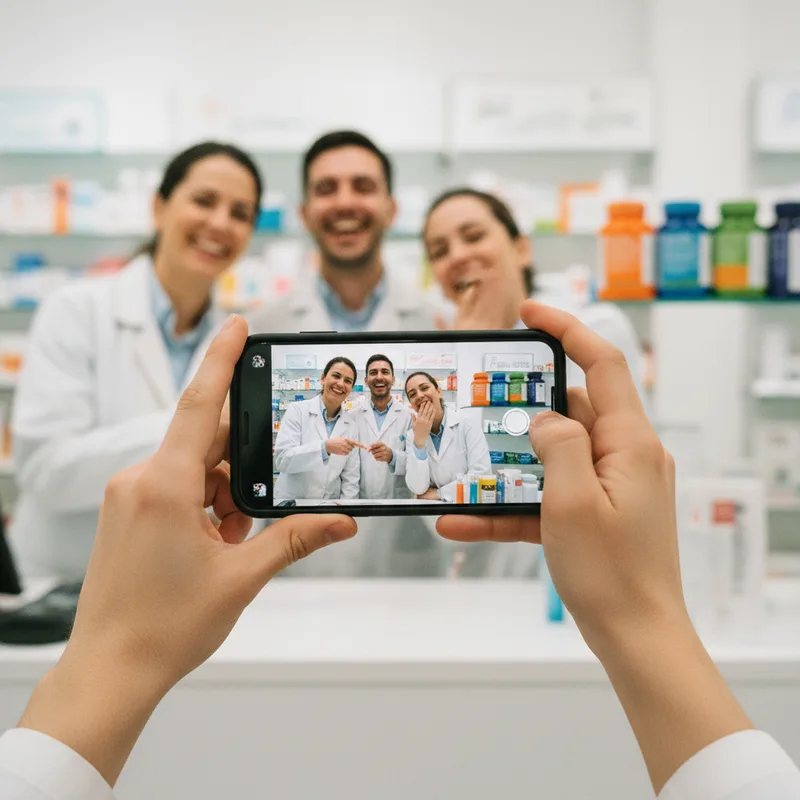
The best-performing pharmacy social posts feature real people, not stock photos or branded graphics.
Health education (40% of posts)
This is your highest-value content category. Health tips position your pharmacist as the local expert that patients trust between doctor visits. Seasonal content performs especially well: flu shot reminders in September, allergy tips in March, blood pressure awareness in May, diabetes management in November. The key is to keep posts short and actionable. A single tip per post outperforms a wall of text every time. A running list of pharmacy social media content ideas built around your seasonal calendar removes the guesswork every week.
The best part? You don't need to create everything from scratch. One blog post on your website can become four to six social media posts across platforms. Pull a statistic for a Facebook post, turn the key takeaways into an Instagram carousel, film your pharmacist answering the main question in a 30-second Reel, and schedule a GBP post linking back to the full article. According to Semrush's content marketing research, businesses publishing frequently generate 4.5x more leads than occasional publishers. Repurposing multiplies your output without multiplying your effort.
Behind-the-scenes and team content (25% of posts)
This is what separates an independent pharmacy from a chain. Show your team. Introduce your pharmacist by name. Post a quick photo of your technician celebrating a work anniversary or your delivery driver loading up the van. These posts consistently outperform polished marketing graphics because they feel real. Patients want to see the people who handle their medications, not a corporate logo.
A pharmacy in a mid-sized city that posts a weekly "Meet the Team Monday" with a casual phone photo and a two-sentence caption typically sees 2-3x the engagement of a generic health tip graphic. People share posts about people. They scroll past posts about products. These simple pharmacy social media examples, a name, a face, a two-sentence caption, consistently outperform anything produced by a design template.
Service promotions (20% of posts)
Promote your services, but do it with context. "We offer flu shots" is forgettable. "Flu shots available today, no appointment needed, most insurance accepted, 5 minutes in and out" gives a patient everything they need to act. Tie promotions to seasons, local events, or current health news. And always include a clear call to action: call this number, visit this link, walk in today.
If your pharmacy offers services that chains don't, like compounding, medication therapy management, point-of-care testing, or pet medications, social media is where you make those differences visible. The competitive advantage independents have over chains only works if patients know about it. Pharmacy Instagram marketing works especially well here, since a quick photo or Reel showing the service in action does more than any paragraph of text.
Community involvement (15% of posts)
Sponsor a local 5K? Post about it. Host a blood pressure screening at the senior center? Share the photos. Donate to the school fundraiser? Mention it. Community posts build the "neighbor pharmacy" identity that chains can't replicate. They also tend to get shared by the organizations you're involved with, which extends your reach to their followers at zero cost.
Post 3-5 times per week on Facebook and 3-4 times on Instagram. Consistency beats volume. A pharmacy that publishes three solid posts every week will build more engagement and algorithmic momentum than one that dumps ten posts in a week and then disappears for a month. The algorithm rewards accounts that show up regularly. A fixed pharmacy social media posting schedule removes the daily decision of whether to post at all.
Here's what a sample week looks like for a pharmacy running both Facebook and Instagram:
Day
Facebook
Instagram
Content Pillar
Monday
Team spotlight with photo
Same photo + Story poll
Behind-the-scenes
Tuesday
Health tip (text + image)
,
Health education
Wednesday
,
Carousel: 3 tips from blog post
Health education
Thursday
Service promo (vaccine, refill, etc.)
Reel: pharmacist answers FAQ
Service promotion
Friday
Community post or patient shoutout
Story: weekend hours reminder
Community
That's 4 Facebook posts and 4 Instagram touchpoints (3 feed posts plus a Story), with only 5 unique content pieces needed because Monday cross-posts. Batch-create your content on one day, schedule it using a free tool like Meta Business Suite, and you're covered for the week in about two hours.
The HubSpot State of Marketing report found that 80% of marketers now use AI tools for content creation. For pharmacies, that means drafting captions, generating health tip graphics, and repurposing blog content can happen significantly faster than it did even a year ago. The bottleneck isn't creativity. It's commitment to a schedule. Building even a simple pharmacy social media content calendar one month at a time turns that commitment into something you can actually stick to.
Let someone else handle the posting schedule
RevealSite manages social media content, scheduling, and paid campaigns for independent pharmacies. You review and approve. We do the rest.
What Pharmacy Social Media Ads Drive Patient Visits?
Paid social advertising is the fastest path to new local patients because it puts your pharmacy in front of people within a 5-10 mile radius who haven't heard of you yet. Organic posts build relationships with existing followers. Ads introduce you to everyone else.
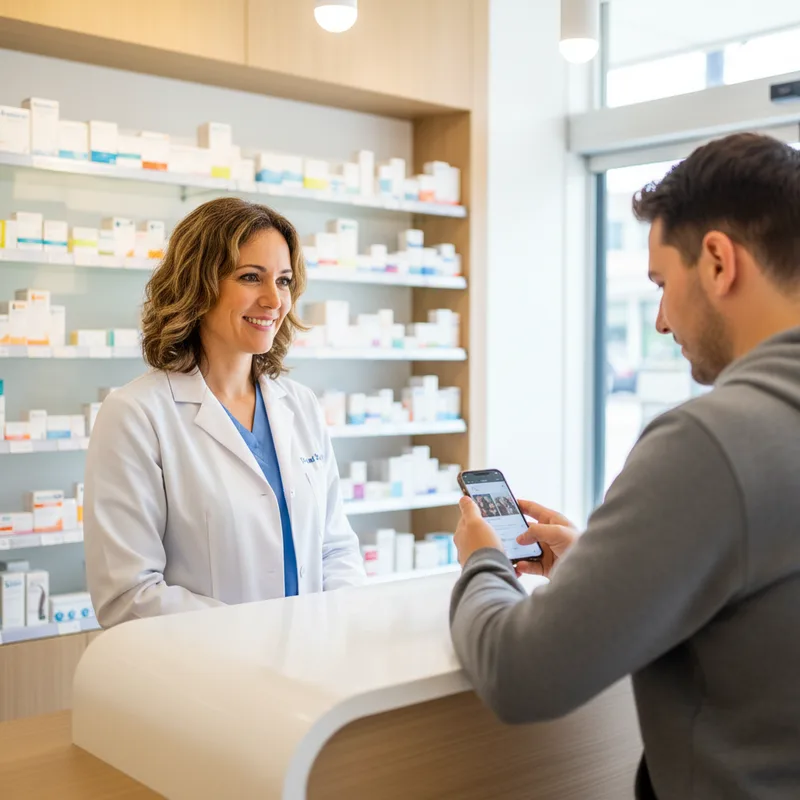
Geo-targeted Facebook ads put your pharmacy in front of every household within 5 miles.
The economics are favorable. According to WordStream's 2024 Facebook Ads benchmarks, the average cost per lead on Facebook Lead Ads was $21.98 across service industries. Compare that to Google Ads, where the average cost per lead was $66.69. For a pharmacy trying to acquire patients on a limited marketing budget, Facebook delivers leads at roughly one-third the cost of paid search.
Three ad types that work for pharmacies
Boosted posts are the simplest starting point. Take your best-performing organic post, one that already has strong engagement, and put $5-$10 per day behind it targeting your zip code plus the two or three surrounding ones. This extends the reach of content that's already proven to resonate. It's not sophisticated, but it works for building local awareness.
Lead generation ads are where the real patient acquisition happens. Facebook Lead Ads let patients fill out a form (name, phone, service interest) without leaving the app. Set up a campaign targeting adults 30-65 within 5 miles, promote a specific service like free delivery, no-wait immunizations, or a new patient discount, and you'll start collecting leads within days. The key is to follow up within 24 hours. A lead that sits untouched for a week is wasted.
Awareness campaigns serve a different purpose. They don't generate leads directly, but they put your pharmacy name and face in front of thousands of local residents at a low cost, often $0.005-$0.01 per impression. Run awareness ads when you're new to an area, launching a new service, or rebuilding your pharmacy's local reputation.
One important rule: always set geographic targeting. A pharmacy in Toledo has no use for impressions in Tampa. Set your radius to 5-10 miles from your location and exclude zip codes you don't serve. Every dollar should reach someone who could actually walk through your door.
Want pharmacy social media ads managed for you?
RevealSite runs geo-targeted Facebook and Instagram ad campaigns for independent pharmacies, from creative to reporting.
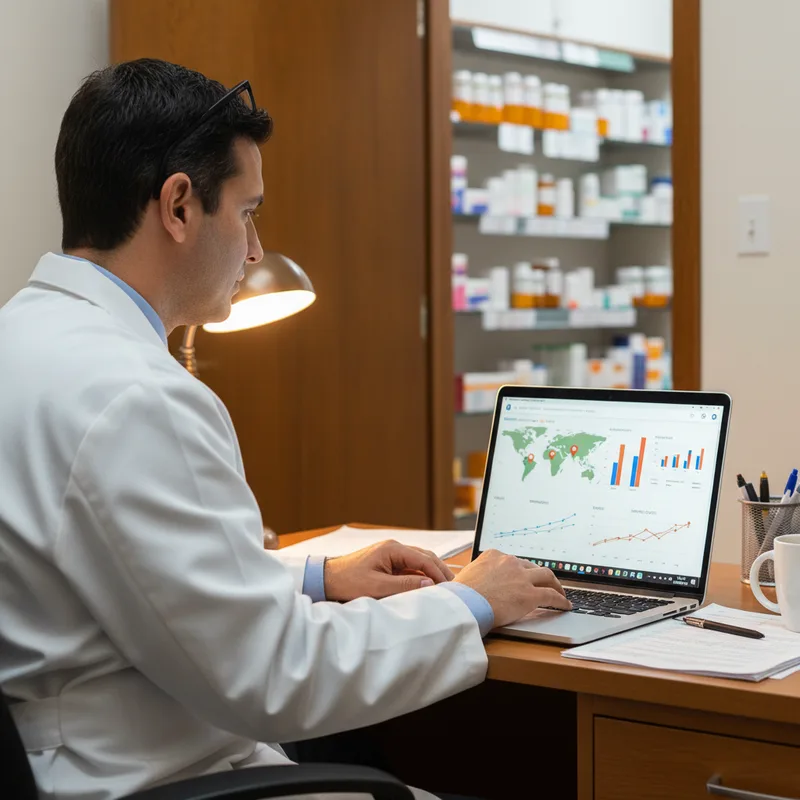
Measure pharmacy social media management ROI with four metrics that connect directly to patient acquisition: reach, engagement rate, website clicks, and new patient attributions. Follower count is vanity. These four metrics tell you whether your social media is actually putting people in front of your pharmacy counter.
Reach and impressions
Reach tells you how many unique people saw your content. For a single-location pharmacy, your target is steady reach within your service area zip codes. If you're reaching 2,000-5,000 unique locals per week through a combination of organic posts and small ad spends, you're building meaningful awareness. Track this monthly and look for upward trends, not daily spikes. Many independent pharmacies bring in a pharmacy social media agency around this stage, once tracking and reporting need more consistent attention than an owner has time for.
Engagement rate
Engagement rate measures the percentage of people who interacted with your content through likes, comments, shares, saves, or clicks. A healthy engagement rate for a local business Facebook page is 1-3%. For Instagram, 2-5% is strong. If your rate is below 1% on either platform, your content isn't connecting. Test different post types, try more photos of your team, and ask questions in your captions to invite responses.
Website clicks
Every social media post that links to your website should be tracked through UTM parameters or Meta's built-in link click reporting. This tells you which posts actually drive traffic to your pharmacy website. A pharmacy posting three times per week with link-bearing posts should aim for 50-150 social referral visits per month. If you're below that, your calls to action need sharpening.
New patient attributions
This is the metric that matters most and the one most pharmacies don't track. There are three simple ways to connect social media activity to new patients: use a unique phone number or tracking link in your social ads, ask new patients "How did you hear about us?" at intake, or create a landing page specifically for social campaigns and measure form submissions. Without attribution, you're guessing.
Use a unique phone number or tracking link in your social ads.
Ask new patients "How did you hear about us?" at intake.
Create a landing page for social campaigns and measure form submissions.
The Salesforce SMB Trends report found that 75% of small and mid-sized businesses are investing in AI tools, and growing businesses are nearly twice as likely to invest in AI as struggling ones. For pharmacy social media management, that means analytics dashboards, automated reporting, and AI-assisted content scheduling are becoming table stakes rather than luxuries. The pharmacies that track their social ROI are the ones that scale their investment. Everyone else is posting into the void.
Where Should You Start With Pharmacy Social Media?
Pharmacy social media management isn't about becoming a content creator or a social media influencer. It's about staying visible to the people within 5 miles of your front door who need a pharmacist and haven't chosen one yet.
Here is the five-step version if you are starting from zero:
Pick Facebook and Instagram.
Commit to 3-4 posts per week.
Mix health education with team content and service promotions.
Spend $150-$300 per month on geo-targeted ads.
Measure patients, not followers.
Ready to Put Your Pharmacy on Social Media the Right Way?
RevealSite manages social media, paid ads, and patient-education content for independent pharmacies across the US. See what a full marketing department looks like.
How much does pharmacy social media management cost?▼
DIY management costs your time plus $50-$200 per month in scheduling tools and ad spend. Hiring an agency typically runs $500-$2,000 per month depending on posting frequency, ad management, and content creation. Most independent pharmacies see a positive return within 90 days when combining organic posts with geo-targeted Facebook ads.
What is the best social media platform for pharmacies?▼
Facebook is the single best platform for most independent pharmacies because it reaches the 35-65 age group that makes pharmacy decisions, supports local business features like check-ins and reviews, and offers the most affordable geo-targeted advertising. Instagram is a strong second for visual content and younger demographics.
How often should a pharmacy post on social media?▼
Post 3-5 times per week on Facebook and 3-4 times on Instagram. Consistency matters more than volume. A pharmacy that posts three quality pieces every week will outperform one that posts ten times in a burst and then goes silent for a month.
What should a pharmacy post on Instagram?▼
Focus on visual content: pharmacist and team photos, behind-the-counter moments, seasonal health tips as carousel graphics, short Reels showing vaccine clinics or compounding processes, and patient testimonials with permission. Instagram rewards authentic, people-centered content over polished marketing graphics.
Does pharmacy social media management help with SEO?▼
Social media doesn't directly improve Google search rankings, but it drives referral traffic to your website, increases branded searches, and generates reviews that strengthen your Google Business Profile. An active social presence also signals to Google that your business is real, engaged, and locally relevant.
Can a pharmacy use social media to promote compounding services?▼
Yes, but stick to educational content about compounding categories like hormone therapy, pediatric formulations, or veterinary compounds rather than promoting specific medications or dosages. FDA and state board rules apply to social media claims the same way they apply to print advertising. Focus on awareness and trust, not direct-response drug marketing.
How do I get more pharmacy followers on Facebook?▼
Start by inviting existing patients through in-store signage, bag stuffers, and email. Run a small boosted post ($5-$10 per day) targeting people within 5 miles of your pharmacy. Post content that gets shared, like seasonal health tips or local event announcements. Follower count matters less than local reach and engagement rate.