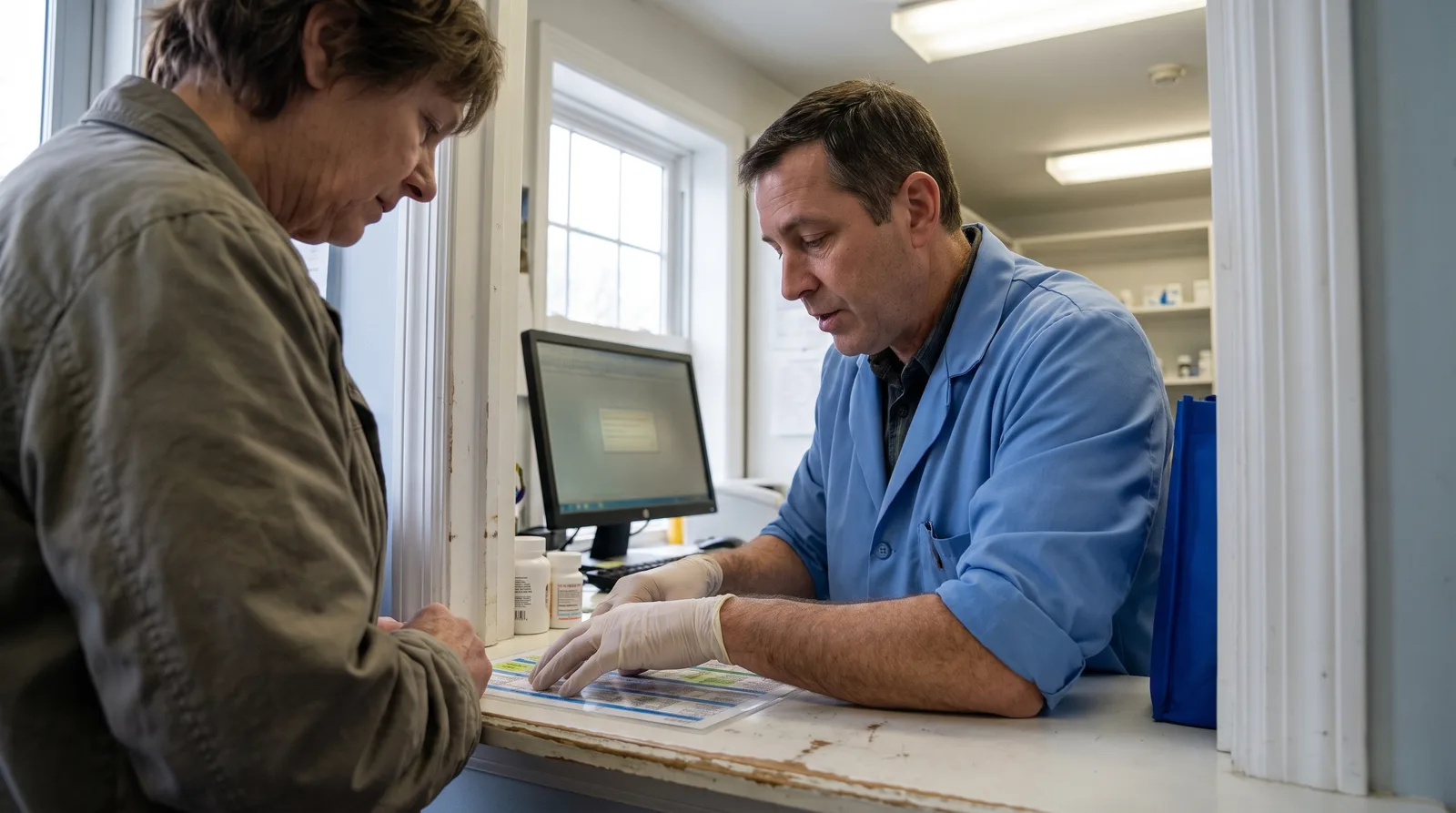
✓Pharmacies were the top setting for adult flu shots and COVID-19 vaccinations last season, proving patients already trust the counter for immunization
✓Shingles (Shingrix) targets adults 50+ and RSV targets adults 60+, both groups already visiting for chronic medication refills
✓Travel vaccines require destination-specific content and local partnerships because patients research providers months before they need the shot
✓A quarterly immunization calendar spreads shingles, RSV, and travel messaging across the year instead of concentrating it all in fall
✓Track attach rate and 90-day repeat visits by quarter, not month, since vaccine volume is naturally uneven
Pharmacy vaccine marketing usually peaks in September and goes silent by January, right when the calendar still has shingles, RSV, and travel vaccines left to sell. That gap costs money, especially since 58% of Americans say they would seek non-emergency healthcare at a pharmacy before any other setting, according to a Wolters Kluwer Pharmacy Next survey. Pharmacies and drug stores were the top setting for adult flu shots and updated COVID-19 vaccinations last season, which means patients already trust your counter for immunization. The problem is most independent pharmacies stop marketing vaccines the moment flu posters come down.
Build the presence your community trusts
Let us be your first step. Get in touch with our team today.
This guide builds a year-round immunization plan around shingles, RSV, and travel health, three services most pharmacies already offer but rarely promote outside flu season. You will see how to identify eligible patients, script the conversation, and turn your pharmacy marketing services into a calendar that keeps immunization revenue flowing from February through August.
Why Pharmacy Vaccine Marketing Can't Stop When Flu Season Ends
Pharmacy vaccine marketing cannot stop after flu season because immunization demand runs all year, not just October through December. Shingles, RSV, and travel vaccines have their own eligibility windows, and patients who only hear about shots in autumn assume your pharmacy stops offering them the rest of the year.
The Cost of Only Marketing Flu Shots
That assumption is expensive. Approximately 36.31 million adult flu vaccine doses were administered in retail pharmacies during the 2024-25 season, according to the CDC's FluVaxView dashboard. That volume proves patients will walk in for a shot when they know to ask for one. The trouble is most of your flu season pharmacy marketing messaging never mentions the other vaccines sitting in the same refrigerator.
Independent pharmacies operate on thin margins. Gross profit margin for the channel fell to the lowest point in a decade, according to NCPA's 2024 Digest report. Immunization services carry better reimbursement than dispensing alone, and a pharmacy that only markets flu shots leaves ten months of eligible patients on the table.
Vaccines That Don't Depend on a Season
Shingles alone qualifies most adults 50 and older. RSV vaccination targets adults 60 and up along with pregnant patients in certain windows. Neither depends on a season. Nearly 9 in 10 Americans already live within five miles of a pharmacy, according to a study published in the Journal of the American Pharmacists Association, which means the access problem is already solved. The awareness problem is not.
Treat immunization as a year-round service line, not a fourth-quarter campaign. Build messaging for shingles and RSV into spring and summer content, and save travel vaccines for the months before school breaks and summer travel actually happen.
Need content that covers every vaccine, not just flu?
RevealSite's Creative & Content team builds patient education content and blog posts that keep your pharmacy visible outside flu season.
What Vaccines Should Pharmacies Be Marketing Beyond Flu Shots?
Pharmacies should market shingles (Shingrix), RSV, Tdap boosters, pneumococcal vaccines, and travel vaccines alongside flu shots, since each targets a different age group or life event. Together they turn one seasonal visit into a year of return trips.
Most of the vaccines pharmacies already stock go unmentioned outside flu season.
Start with the two vaccines that carry the widest eligible population. Shingrix is recommended for most adults 50 and older, and RSV vaccination applies to adults 60 and up as well as some pregnant patients. Both groups already visit your pharmacy for chronic medications, which makes them easy to reach without new advertising spend.
The Core Adult Vaccines Worth Marketing
Tdap and pneumococcal vaccines round out the adult schedule and pair naturally with a point-of-care testing visit, since a patient already in the pharmacy for a strep or flu test is an easy prompt for "have you had your pneumonia vaccine?"
Travel vaccines are the outlier. About 52% of pharmacies running a lab already offer some form of point-of-care testing, per an AMCP Foundation survey, showing how much cross-service infrastructure already exists. Travel vaccines serve a smaller, higher-intent population that plans trips months in advance and searches for a provider specifically.
Quick Reference by Vaccine
Shingrix: adults 50+, two-dose series
RSV vaccine: adults 60+, and pregnant patients in specific weeks of gestation
Tdap/Td booster: adults due for a 10-year booster or wound care
Pneumococcal (PCV/PPSV): adults 65+ or with qualifying conditions
Travel vaccines: typhoid, hepatitis A/B, yellow fever, depending on destination
Not every pharmacy stocks all five. Know which ones you carry before you build a single ad.
How Do You Market Shingles and RSV Vaccines to Older Adults?
Market shingles and RSV vaccines to older adults through refill-linked outreach, in-store signage near the pharmacy counter, and a direct recommendation from the pharmacist rather than generic social posts. This age group responds to a familiar voice more than an ad.
Almost 90% of adults trust their local pharmacist, and most would discuss a personal health question with them directly, according to CVS Health's Rx Report. That trust is the channel to use first. A senior filling a monthly blood pressure prescription is already standing at your counter. Training staff to ask "are you due for your shingles or RSV vaccine?" during that interaction converts better than any Facebook ad aimed at the same demographic.
Your medication synchronization program is the other lever here. Patients enrolled in med sync already visit on a predictable schedule, which means you can flag vaccine-eligible patients in the pharmacy system and prompt the conversation before they arrive, not after.
Why the Recommendation Has to Come From a Person
Trust matters more with this group because J.D. Power's 2024 pharmacy study found satisfaction declining industry-wide, driven partly by wait times. A pharmacist-led recommendation, delivered in seconds during an existing visit, avoids that friction entirely.
Signage works too, but only as a reminder. The recommendation itself needs to come from a person.
Reach the patients most likely to need shingles or RSV vaccines
Targeted social and email campaigns can put your immunization message in front of the right age group before they ever walk in.
Can Travel Vaccines Become a Real Referral Engine for Your Pharmacy?
Yes, travel vaccines can become a genuine referral engine if you position your pharmacy as the local travel-health resource rather than a place that "also" offers them. Travel patients search specifically for a provider and refer friends once they find one that works.
Travel patients research their destination first and their pharmacy second.
Travel vaccination is different from every other shot in this article. Patients do not stumble into the need. They plan a trip, research required and recommended vaccines for the destination, and then look for someone who can administer them on a timeline. That means your marketing has to show up in that research phase, months before the actual appointment.
A dedicated travel health page that lists common destinations and their vaccine requirements does more work than a single blog post ever will, because it answers the exact question a traveler is searching. Our guide to building a pharmacy travel health program covers what to actually put on that page, including which vaccines to stock and which non-vaccine services to offer alongside them.
Partnering with a local travel agency or a corporate HR department that sends employees abroad adds a referral source that costs nothing beyond the relationship.
Building the Referral Chain
Publish a simple destination-to-vaccine reference page on your website
List your travel vaccine service on Google Business Profile with specific service tags
Reach out to one local travel agency and one employer with international staff
Ask satisfied travel patients for a Google review naming the specific vaccine or trip
Travel vaccines will never carry flu-shot volume. But the margin and the referral chain around them are worth building deliberately.
Building a Year-Round Immunization Marketing Calendar
Build a year-round immunization calendar by assigning one vaccine focus to each quarter instead of concentrating everything in the fall. Off-season months get shingles, RSV, and travel content; fall keeps its flu push; and each quarter gets one clear call to action.
Most pharmacies already have a pharmacy marketing calendar for seasonal promotions. Immunization deserves its own lane inside it rather than living only in the September through December block. Spring is a natural window for shingles and RSV messaging, since patients are not distracted by flu-season noise and appointment slots are wide open. Early summer works for travel vaccines, timed to when people actually book trips.
Content marketing supports this well. 76% of content marketers use blogs to generate leads in the first place, and businesses publishing 16 or more posts a month generate significantly more of them than infrequent publishers, according to Semrush's content marketing research.
You do not need that volume. But the principle holds: one immunization-focused post or email per quarter keeps the topic visible without turning it into background noise the rest of the year.
Quarter-by-Quarter Vaccine Focus
Quarter
Vaccine Focus
Primary Channel
Q1 (Jan-Mar)
Shingles, pneumococcal
In-store signage, refill counseling
Q2 (Apr-Jun)
RSV, travel vaccines
Website travel page, email
Q3 (Jul-Sep)
Travel vaccines, Tdap
Employer/travel agency outreach
Q4 (Oct-Dec)
Flu, COVID-19
Full seasonal campaign
Which Channel Fits Which Vaccine
The calendar tells you when to push each vaccine. The table below covers how, matching each channel to the vaccines and patient behavior it fits best. Most of that behavior starts with a search: 86% of Google Business Profile views come from category-based searches like "pharmacy near me," not branded queries, according to a Birdeye industry report.
Channel
Best For
Role
In-store signage
Shingles, RSV, pneumococcal
Reminder only; the pharmacist's verbal ask converts
Refill / med sync outreach
Shingles, RSV, Tdap, pneumococcal
Flags eligible patients before they arrive
Email & SMS
All five vaccines
Reminds patients who are due soon but haven't booked
Google Business Profile
Travel, walk-in shingles/RSV/Tdap
Captures "vaccine near me" search intent
Blog / website content
All five vaccines
Builds long-term search visibility, supports the quarterly calendar
Social media
All five vaccines
Builds awareness over time; not a booking driver
Local partnerships
Travel, senior-focused shingles/RSV/pneumococcal
Slow to build, steady referral source once established
How Do You Measure ROI on Off-Season Vaccine Campaigns?
Measure off-season vaccine campaign ROI by tracking shots administered per quarter, the percentage of vaccine patients who also fill a prescription that visit, and repeat visits within 90 days. Revenue per shot matters less than what each visit generates beyond the vaccine itself.
Attach rate tells you more about a vaccine visit than the shot itself.
Immunization is rarely profitable on its own. What makes it worthwhile is the cross-sell. 81% of independent pharmacies offered medication therapy management in 2024, up sharply, according to NCPA's 2024 Digest report, and vaccine visits are one of the easiest entry points into that service.
A patient who comes in for a shingles shot and leaves with an MTM consultation booked is worth far more than the vaccine reimbursement alone. Track these numbers by quarter, not by month. Vaccine volume is naturally lumpy, and a single slow month does not mean the campaign failed.
What to Track Each Quarter
Doses administered by vaccine type, tracked quarterly against the calendar above
Attach rate: percentage of vaccine visits that include a second sale or service
Repeat visit rate within 90 days of a vaccine appointment
New patient count sourced from vaccine-specific marketing (travel page, GBP listing)
If attach rate is flat across every vaccine type, your staff is not asking the follow-up question. That is a training fix, not a marketing one.
Pharmacy vaccine marketing holds up better when it stops behaving like a fall campaign and starts behaving like a permanent service line. Shingles, RSV, and travel vaccines already sit in your refrigerator. The gap is not supply. It is that patients only hear about vaccines when flu posters go up.
Pick one off-season vaccine, most pharmacies start with shingles, and build a single quarter of messaging around it before touching the rest of the calendar. Small and specific beats broad and vague every time.
Build a year-round immunization marketing plan
See how RevealSite helps independent pharmacies turn shingles, RSV, and travel vaccines into a real revenue line, not an afterthought.
Pharmacy vaccine marketing is the promotion of immunization services, from flu shots to shingles, RSV, and travel vaccines, to drive both vaccine visits and the prescriptions or consultations that follow. It works most effectively as a year-round program, not a single fall campaign.
Which vaccines should independent pharmacies promote outside flu season?▼
Shingles, RSV, Tdap, pneumococcal, and travel vaccines all have demand outside flu season. Shingles and RSV target older adults already filling chronic prescriptions, making them the easiest to add to existing pharmacy vaccine marketing efforts.
Who is eligible for the shingles vaccine?▼
Most adults age 50 and older are eligible for Shingrix, typically given as a two-dose series. Pharmacists should flag eligible patients during routine refill visits rather than waiting for patients to ask.
How do you market travel vaccines for a pharmacy?▼
Publish a destination-to-vaccine reference page, list travel vaccination on your Google Business Profile, and build relationships with local travel agencies or employers with international staff. Travel patients search months ahead, so early visibility matters most.
How often should a pharmacy promote immunization services?▼
Quarterly is a practical cadence for pharmacy vaccine marketing. Each quarter can highlight a different vaccine, such as shingles in winter or travel shots in early summer, so messaging stays visible without repeating the same flu-season push all year.
What is the ROI of off-season vaccine campaigns?▼
The return comes mostly from the cross-sell, not the vaccine reimbursement itself. Track attach rate, the share of vaccine visits that include another service like MTM, and repeat visits within 90 days to measure real impact.