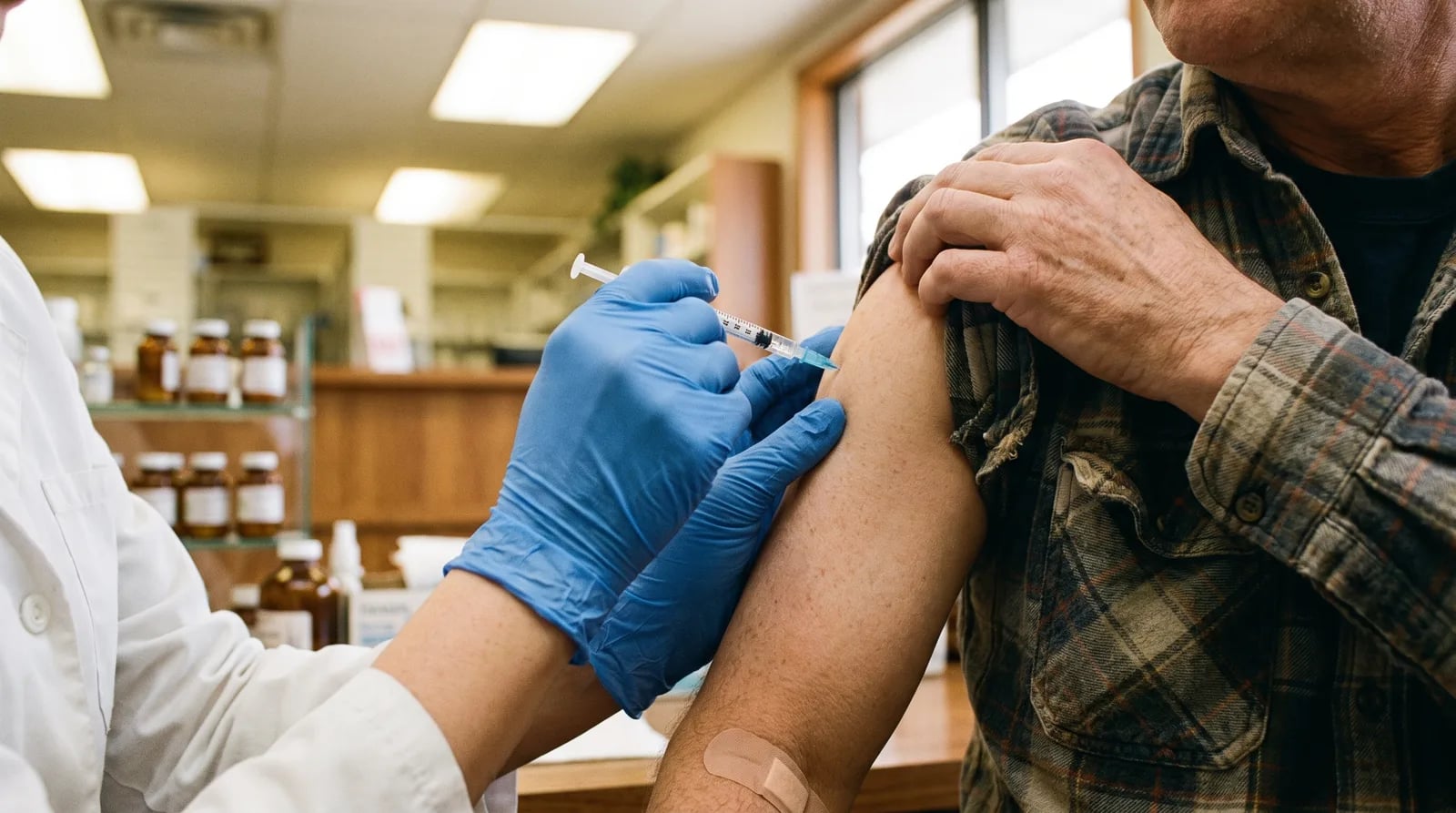
✓Pharmacies and drug stores were the top setting for adult flu shots (48.0%) and COVID-19 boosters (71.5%) during the 2023-2024 season, per the CDC
✓Approximately 36.31 million adult flu vaccine doses were administered in retail pharmacies during the 2024-25 season
✓Independent pharmacy gross margin fell to 19.7% in 2023, making immunization revenue one of the few growth levers not tied to prescription reimbursement
✓Updating GBP services and attributes six weeks before peak season often outperforms new website content for near-term visibility
✓52% of pharmacies operating a lab offer point-of-care testing, with influenza the most common test offered at 58%
✓Asking for a review within 30 minutes of a flu shot appointment outperforms waiting until the next day
Flu season pharmacy marketing is worth taking seriously well before the first cold front hits. Immunizations are one of the few services where independent pharmacies already out-compete doctor's offices and urgent care on convenience. Flu season is the busiest stretch of that calendar. The pharmacies that plan ahead capture patients who would otherwise get their shot at a big-box chain. That shot often goes to whichever pharmacy came up first in a search. This guide covers how to book more appointments and cross-sell related services. It also covers how to turn a single flu shot visit into a longer relationship with your pharmacy.
None of this requires new equipment, just pharmacy staff who are CIP-certified to administer vaccines. Most pharmacies already have this credential in place, since flu vaccination is a service they already offer. What it requires is treating the marketing side with the same seasonal urgency as the clinical side. That means updating listings, staffing schedules, and outreach before demand peaks, not after.
Why Does Flu Season Pharmacy Marketing Matter for Independent Pharmacy Revenue?
Flu season matters because pharmacies are already the top setting patients choose for adult immunizations. That traffic arrives predictably every year. Missing the marketing window means losing patients who were always going to get a shot somewhere.
The Scale of the Opportunity
Pharmacies and drug stores were the top setting for adult flu shots at 48.0% during the 2023-2024 season, according to the CDC. They were also the top setting for updated COVID-19 vaccinations that season, at 71.5%. That's not a niche service. It's the majority behavior for two of the most common vaccines administered every year. CDC FluVaxView data puts the scale in real numbers. Approximately 36.31 million adult flu vaccine doses were administered in retail pharmacies during the 2024-25 season alone. That volume didn't happen by accident. It reflects decades of pharmacies building trust as a convenient, no-appointment-necessary option. Patients used to associate that kind of service only with a doctor's office.
Why the Timing Pressure Is Real
Independent pharmacy margins have been shrinking for years. Gross profit margin fell to 19.7% in 2023, the lowest point in a decade, according to NCPA's 2024 Digest. Immunization revenue is one of the few growth levers that doesn't depend on prescription reimbursement rates. That makes flu season one of the highest-value marketing windows on the calendar, rather than a routine seasonal task. Prescription margins work differently, since pharmacies have limited control over them once a PBM sets the reimbursement rate. Immunization services still leave room to compete on speed, convenience, and patient experience. That's a rare kind of leverage in an industry where most cost pressures are set by someone else.
How Do You Get Patients to Book Their Flu Shot at Your Pharmacy Instead of Elsewhere?
You get patients to book at your pharmacy by making appointment scheduling frictionless. Showing up first when they search for a flu shot nearby matters just as much. Most patients choose the first convenient option they find, not the best one.
Make Booking Effortless
Offer both walk-in and online scheduling. Make sure the online option is no more than two clicks from your homepage. A patient comparing your pharmacy to the chain down the street will pick whichever one lets them book fastest. That's especially true if they're doing it from their phone in a parking lot. Send appointment reminders by text, not just email. Flu shot appointments get forgotten easily among back-to-school and holiday planning.
Online booking visible within two clicks of the homepage
Walk-in availability clearly stated, not buried in a FAQ
Text reminders sent 24 hours before scheduled appointments
A same-day slot always held open for walk-ins
Win the "Near Me" Search
Update your Google Business Profile services list to include "flu shots," "flu vaccine walk-in," and "no appointment needed" if that's accurate. Do this at least six weeks before flu season typically peaks. Google surfaces GBP attributes for these searches well before it surfaces your website content. That's why this single update often outperforms a new blog post for near-term visibility. Pair the update with a GBP post announcing flu shot availability. Posts get a visibility boost in the two weeks after publishing. A static profile field doesn't get that same boost on its own.
Not sure your GBP is optimized for flu season yet?
Our Smart Websites & Local SEO team audits your profile and website for the seasonal updates that actually move bookings.
Extend Reach With Employer and Community Flu Clinics
Not every flu shot patient will come looking for your pharmacy online. Local employers, schools, senior centers, and assisted living facilities often want an on-site flu clinic and don't know an independent pharmacy can provide one. Reaching out directly opens a channel that geofencing and search ads can't reach on their own. Don't wait for these organizations to come searching for a provider.
A short outreach email or call to HR contacts and facility managers, made in the weeks before flu season, can offer a scheduled on-site clinic day. This tends to convert well because it solves a logistics problem for them, rather than asking them to send staff out individually. This works especially well alongside the kind of institutional relationships covered in our LTC-at-home marketing guide. The outreach approach is similar, even though the setting is different.
What Cross-Selling Opportunities Exist Alongside Flu Vaccinations?
Cross-selling opportunities alongside flu vaccinations include COVID-19 boosters, shingles and pneumonia vaccines for eligible patients, and point-of-care flu testing. A single visit can cover several services if you ask. Most pharmacies leave this revenue on the table simply because front-line staff never bring it up.
Bundle the Right Services Together
Add-On Service
Best Patient Fit
How to Prompt It
COVID-19 booster
Anyone eligible per current guidance
Ask at scheduling, not just at the counter
Shingles or pneumonia vaccine
Patients 50 or 65 and older
Flag eligible ages in your scheduling system
Point-of-care flu testing
Patients with symptoms, not just prevention
Promote alongside vaccination messaging, not separately
Point-of-care testing is more common than most owners assume. Among pharmacies operating a lab, 52% offer point-of-care testing, according to an AMCP Foundation survey. Influenza is the most common test offered, at 58%. If you already have the capability, flu season pharmacy marketing should mention testing alongside vaccination. That captures the symptomatic patients who assumed a pharmacy could only handle prevention. Someone with a fever and body aches is searching for a place to get tested. That happens just as often as someone searching for a preventive shot. Most pharmacy marketing never speaks to that second group at all.
Prompt Flu Shots at the Front and Pickup Counter
Digital marketing gets patients to search for your pharmacy. But the front counter and pickup window are where a lot of flu shots actually get booked. A patient picking up a maintenance prescription or paying for a purchase is already standing in front of a staff member. That staff member can ask a single question: "Have you gotten your flu shot yet this year?" Most pharmacies skip this because it isn't anyone's assigned job, not because it doesn't work. Assign the prompt to whoever is at the register, not just the pharmacist. Technicians and cashiers have more one-on-one moments with patients over the course of a shift.
Keep the ask short and specific, rather than a general "did you know we offer vaccines" line. Patients tend to tune that line out. A same-visit offer works best: "We can do that right now if you have a few minutes." This pairs naturally with the loyalty behavior covered in our patient engagement guide. A prompted flu shot at pickup is often the first extra touchpoint that turns a transactional visit into a repeat one.
How Should You Market Flu Shots Through Paid Ads and Local Search?
Market flu shots through a mix of geofencing, search ads, and social targeting. Each channel does a different job, rather than relying on just one. Broad, un-targeted campaigns waste budget on people who will never walk through your door.
Channel
Best For
When to Use It
Geofencing
Reaching patients near competing clinics and stores
A two-week burst at the season's start
Google Search Ads
Capturing high-intent "near me" and walk-in searches
Running throughout peak season
Facebook and Instagram
Building awareness before patients start searching
Two to three weeks before season starts
Retargeting
Re-engaging visitors who didn't book
One to two weeks after their visit
Organic Local Search
Long-term visibility without ongoing ad spend
Built once, updated annually
Geofencing and Seasonal Campaigns
Backlinko's research found that 76% of consumers who run a "near me" search visit a related business within one day. That makes a geofenced flu shot campaign timed to the start of the season far more efficient than an always-on generic ad. Our pharmacy geofencing guide covers how to set radius targeting around clinics and grocery stores. Those locations see heavy flu-season foot traffic. For the full seasonal calendar beyond flu shots, see our seasonal pharmacy ads guide.
Timing the campaign matters as much as the targeting. Launching geofenced ads the week flu shots become available, rather than waiting until mid-season, captures the patients who plan ahead. Those early bookers tend to be the most reliable repeat visitors. A short two-week burst at the season's start, followed by a lighter maintenance budget through the rest of flu season, generally outperforms one flat budget. Spreading that budget evenly across the whole period tends to underperform.
Google Search Ads for High-Intent Terms
Bid on exact phrases like "flu shot near me," "walk-in flu vaccine," and "flu shot no appointment." Avoid broad match terms, since those pull in unrelated pharmacy searches. These are the searches with the shortest path to a visit. The person typing them is usually deciding right now, not researching for later. If your pharmacy qualifies, Google's Local Services Ads program can place you above standard search ads with a "Google Guaranteed" badge. That badge carries extra trust for a healthcare-adjacent service like vaccination.
Facebook and Instagram for Awareness and Reminders
Paid social works differently than search. Instead of capturing intent, it creates it. A short video of a quick, painless flu shot reaches people before they've thought about getting vaccinated at all. A simple graphic listing walk-in hours works just as well. Layer age-based targeting so the messaging changes. Younger adults respond to convenience and speed, while messaging to patients 50 and older can mention shingles and pneumonia vaccines in the same ad. Posting in local community Facebook groups, where allowed, often outperforms paid placement for pure awareness. It also costs a fraction as much.
Retargeting Website Visitors
Anyone who viewed your flu shot or immunization page but didn't book is a warmer audience. That's true compared to a cold geofencing or search click. A lightweight retargeting campaign, a simple reminder ad served for one to two weeks after that visit, catches patients who intended to come back. Some just got distracted. This audience is usually small, which keeps retargeting budgets modest even during the busiest weeks of the season.
Organic Local Search
Paid channels get patients in the door this season. A dedicated, well-optimized flu shot page is what keeps showing up in organic results next season without new ad spend. Build one page specifically for "flu shots" rather than burying the service in a general immunizations page. Keep it updated each year with current availability and hours, instead of publishing a new page from scratch. This works alongside the GBP updates covered earlier. The page ranks organically while your profile captures the map pack. Between the two, your pharmacy shows up twice on the same results page for the same search.
Want a flu season campaign built and running before the rush?
RevealSite builds geofenced ads, GBP updates, and reminder campaigns timed to your local flu season calendar.
How Do You Turn Flu Season Visits Into Reviews and Referrals?
Turn flu season visits into reviews by asking immediately after the appointment. Ask while the experience is still fresh and positive. Waiting even a day drops response rates significantly. A quick, painless vaccine visit is exactly the kind of experience patients are willing to write a few sentences about.
Ask at the Right Moment
BrightLocal's 2024 Local Consumer Review Survey found that 75% of consumers regularly read online reviews before choosing a business. Flu season generates a burst of fast, low-friction, generally positive visits. That makes it an ideal time to build review volume. A simple text message with a review link, sent 30 minutes after the appointment, outperforms an email sent the next day. Our reviews into marketing content guide covers how to reuse what comes in. Our website trust signals guide covers where to display it once you have it.
Send the review request by text within 30 minutes of the appointment
Keep the message short with a single, direct link, not a long explanation
Respond to every review that comes in, positive or negative, within a few days
Feature a handful of the best flu season reviews on your homepage once collected
Measure flu season marketing ROI by tracking doses administered against marketing spend. Also track the new-versus-returning patient ratio and review volume generated during the season. Vaccine counts alone don't tell you what worked.
What to Track
Flu Season Tracking Checklist
Review these weekly during peak season, not just at the end.
New patients who came in for a flu shot are the ones worth watching most closely. A first flu shot visit is often the first time a patient sets foot in your pharmacy at all. Whether they come back for a refill next month is the real measure. That's what tells you if flu season marketing paid off. Our Marketing & Visibility team sets up this kind of tracking so you're not guessing at the end of the season.
Flu season pharmacy marketing works best when it starts early and targets locally. Treat the vaccine visit as the beginning of a relationship, rather than a one-time transaction. Update your GBP now, and build the reminder and review workflow before the rush hits. Track new patient bookings separately so you know exactly what the season delivered. Pharmacies that treat flu season as a single event tend to rebuild their approach from scratch every year. Treating it as a repeatable annual campaign works better. Documenting what worked this season, even briefly, makes next year's planning far faster.
Make this flu season your busiest yet
See how RevealSite builds flu season campaigns that turn one-time vaccine visits into long-term patients.
When should a pharmacy start flu season marketing?▼
Start updating your Google Business Profile and booking flow at least six weeks before flu season typically peaks in your area. GBP attribute updates take time to influence search visibility, so waiting until shots are already available means missing the earliest, most reliable bookings.
What percentage of flu shots happen at pharmacies?▼
Pharmacies and drug stores were the top setting for adult flu shots at 48.0% during the 2023-2024 season, according to the CDC. That makes pharmacies the single most common location for this service, ahead of doctor's offices and clinics.
What other vaccines should be cross-sold during flu season?▼
COVID-19 boosters, shingles vaccines for patients 50 and older, and pneumonia vaccines for eligible patients are the most natural additions. Flagging eligible ages in your scheduling system makes it easy for staff to prompt these at booking rather than relying on memory.
How do you get more flu shot appointments booked online?▼
Make online booking visible within two clicks of your homepage and offer walk-in availability alongside it. Patients comparing pharmacies typically choose whichever option lets them book fastest, especially from a phone, so friction at booking costs real appointments.
Is point-of-care flu testing worth promoting alongside vaccination?▼
Yes, if your pharmacy already offers it. 52% of pharmacies operating a lab offer point-of-care testing, with influenza the most common test at 58%. Marketing that only mentions prevention misses symptomatic patients searching for a place to get tested.
How should flu season ad budget be timed?▼
A short, higher-intensity burst in the first two weeks of the season, followed by a lighter maintenance budget, typically outperforms a flat budget spread evenly across the whole period. Patients who book early tend to be the most reliable repeat visitors.
Should front-counter or pickup-counter staff be trained to mention flu shots?▼
Yes. A short, specific prompt at pickup or checkout, such as offering to give the shot right then if the patient has a few minutes, converts better than signage alone, since it removes the extra step of the patient having to ask or come back later.
Can independent pharmacies host flu shot clinics for local employers or community organizations?▼
Yes, and it's an underused channel. Reaching out directly to HR contacts, schools, or senior centers with a scheduled on-site clinic day solves a logistics problem for them and reaches patients who would never have searched for a pharmacy online.
How should flu shot marketing address patients who are hesitant about vaccines?▼
Keep messaging factual and low-pressure rather than persuasive, and point hesitant patients toward a conversation with pharmacy staff rather than trying to resolve concerns in an ad or social post. This is general marketing guidance, not medical advice, and any specific health questions should go to the patient's pharmacist.
Does offering a high-dose flu vaccine for older adults change how you should advertise?▼
It's worth calling out specifically in messaging aimed at patients 65 and older, since it signals that your pharmacy stocks age-appropriate options rather than a single standard formulation, which can be a deciding factor for that age group.