HomeBlogs
Pharmacy Email Automation: 5 Sequences Every Pharmacy Needs
RevealSite Team
June 16, 2026 · 9 min read
Key Takeaways
- ✓Pharmacy email automation sends triggered sequences automatically, unlike a newsletter blasted to everyone at once.
- ✓Five sequences cover the key moments: welcome, refill reminder, seasonal, clinical nurture, and win-back.
- ✓The refill reminder sequence is the highest-value automation because it protects recurring revenue.
- ✓Each sequence needs one trigger, spaced timing, one call to action per email, and no protected health information.
- ✓Start with welcome and refill sequences, measure monthly, then add the rest as results fund them.
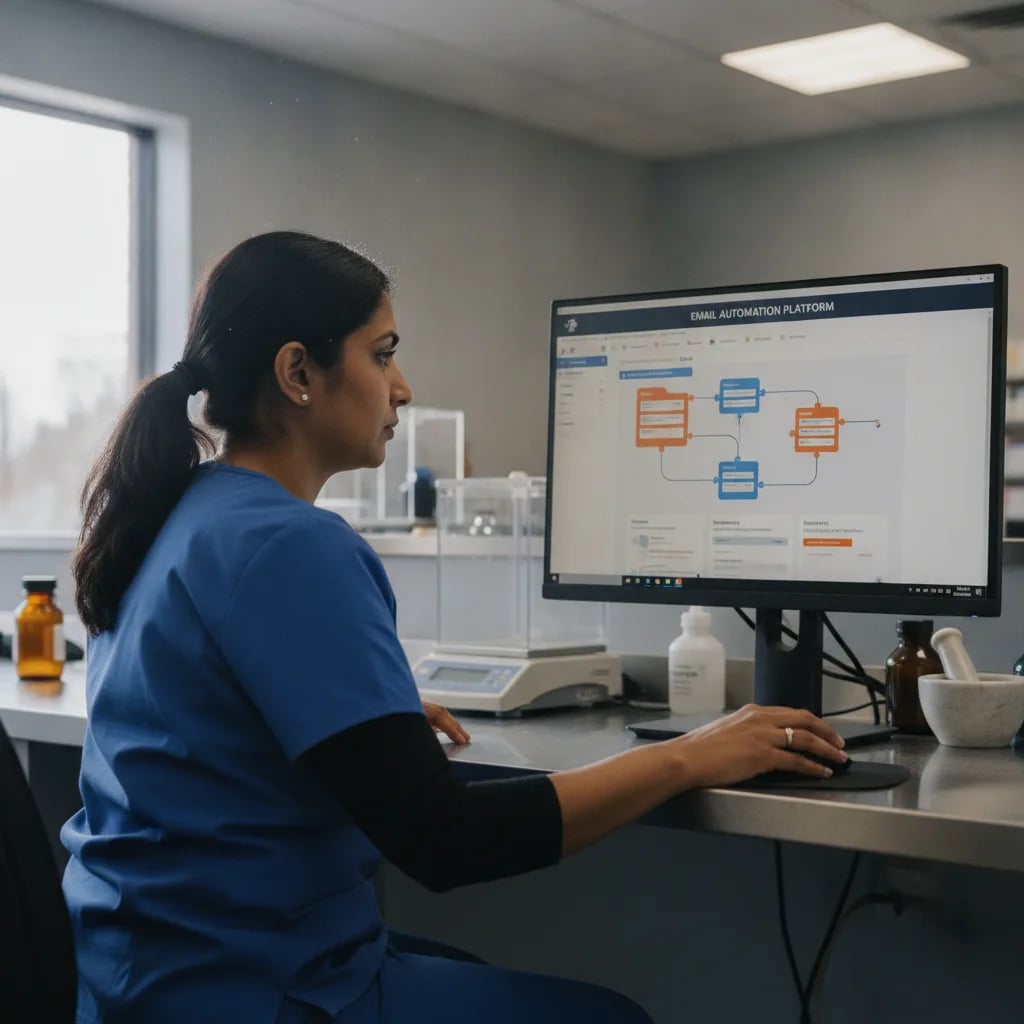
Most independent pharmacies have an email list and almost no system for using it. A few broadcast blasts go out around flu season, then nothing for months. Pharmacy email automation fixes that gap by sending the right message at the right moment without anyone hitting send. Set up once, these sequences run quietly in the background, reminding patients to refill, welcoming new ones, and pulling lapsed patients back.
This guide covers what email automation is, why it beats sending by hand, and the five sequences worth setting up first. None of them require a big team. They require deciding what should happen automatically, then letting the software do it.
What is pharmacy email automation, and how is it different from a newsletter?
Pharmacy email automation is a set of pre-built email sequences that send on their own when a patient takes an action or hits a date, such as joining your list, missing a refill, or reaching a vaccine season. A newsletter is one message you write and blast to everyone at once; automation is a series triggered by individual patient behavior.
The difference is timing and relevance. A newsletter reaches every patient on the same day with the same content, whether or not it fits their situation. An automated sequence reaches one patient at the moment it matters, a refill reminder three days before they run out, a welcome note the day they sign up. Both have a place, but automation does the work that drives refills and retention.
Automation also runs on the list you already have. If you have not built one yet, start with a patient email list first, then layer sequences on top. The tool you use matters less than the setup, though many pharmacies outgrow generic platforms quickly, a point covered in why generic tools miss the mark for pharmacy.
Why automation beats sending emails by hand
Sending by hand fails for one reason: it depends on someone remembering. A busy pharmacy team will not stop to email every new patient or every lapsed refill, so those messages never go out. Automation removes the human bottleneck, sending consistently whether the pharmacy is slammed or short-staffed.
The payoff shows up in two numbers. Email is still one of the cheapest channels you own, with service-industry campaigns averaging a 39.48% open rate and 2.21% click-through rate, according to HubSpot benchmarks. Compare that to paid acquisition, where the average cost-per-lead on Facebook Lead Ads runs about $21.98 per WordStream, and the math favors keeping the patients you already have. For a pharmacy, the return comes through refills and retention rather than online sales.
Adherence is where it lands hardest. About 50% of patients with chronic conditions do not take medications as prescribed, per research indexed by the National Institutes of Health. A reminder sequence will not close that gap alone, but it keeps your pharmacy in front of patients at the moments they are most likely to lapse, working alongside automated refill reminders on other channels.
There is a quieter benefit too. Automation makes your pharmacy look bigger and more organized than its staff size suggests. A two-pharmacist shop running clean welcome and refill sequences feels, to a patient, like a place that has its act together, the same impression a chain spends millions to manufacture. You get that impression for the cost of setting the sequences up once.
The 5 sequences every pharmacy should run
Five sequences cover the moments that matter most: a patient joining, refilling, lapsing on a refill, reaching a seasonal need, and drifting away entirely. Build these in order, because each one protects revenue you already have before chasing anything new.
Build them in this order
Each sequence and the moment that sets it off.
1
Welcome
New patient joins
2
Refill reminder
Refill due or missed
3
Seasonal / vaccine
Calendar date
4
Clinical nurture
Service interest
5
Win-back
60–90 days inactive
1. New patient welcome sequence
The welcome sequence is three to four emails sent over the first two weeks after a patient joins. It introduces your services, sets expectations for refills and hours, and tells patients how to reach you. First impressions decide whether a patient stays, and a warm, useful welcome signals that your pharmacy is organized and attentive from day one.
A simple structure works: email one thanks them and explains how refills work, email two introduces a service they may not know about, and email three invites them to set their communication preferences. The goal is not to sell but to make the patient feel known, so the next time they need a prescription filled, your pharmacy is the obvious choice.
2. Refill reminder and lapsed-refill sequence
This sequence triggers a few days before a refill is due, then follows up if the refill does not happen. It is the single highest-value automation for an independent pharmacy because it directly protects recurring revenue. Pharmacist-led adherence work has raised the share of adherent patients into the 77.5% to 83.6% range, according to the American Journal of Managed Care, and email reminders extend that effort at almost no marginal cost.
3. Seasonal and vaccine campaign
A seasonal sequence fires on a date rather than a behavior, flu shots in early fall, allergy support in spring, shingles and pneumonia reminders for older patients. These emails turn predictable health calendars into booked appointments and walk-in traffic, and they position your pharmacy as a proactive health resource rather than a counter that only reacts.
Because the dates repeat every year, you build these once and reuse them. Schedule the flu campaign to send in late August each fall, the allergy series each spring, and let them run on their own. A pharmacy that emails patients about the shingles vaccine before they think to ask becomes the place they trust for the next health question too.
4. Clinical service nurture sequence
This sequence educates patients about services they may not know you offer, medication therapy management, blood pressure monitoring, or diabetes support. The need is real: more than 2 in 5 US adults have prediabetes, and 8 in 10 do not know it, per the CDC. A short education series connects a common condition to a service you provide, turning awareness into appointments.
5. Win-back and re-engagement sequence
When a patient has not filled in 60 to 90 days, a win-back sequence checks in, asks if anything changed, and makes it easy to transfer prescriptions back. Losing a patient quietly costs far more than a few emails, which is why re-engagement ties directly to pharmacy patient retention. Even a modest recovery rate pays for the whole automation program.
Tone matters here more than in any other sequence. A win-back email should read as genuine concern, not a guilt trip, because a patient who left for a chain or a mail-order plan may simply need a reason and an easy path to come back. One clear offer to handle the transfer for them often does more than any discount.
Here is how the five sequences compare at a glance:
| Sequence | Trigger | Goal |
|---|---|---|
| Welcome | New patient joins | First impression, retention |
| Refill reminder | Refill due or missed | Adherence, recurring revenue |
| Seasonal/vaccine | Calendar date | Appointments, foot traffic |
| Clinical nurture | Service interest or signup | Service uptake |
| Win-back | 60 to 90 days inactive | Recover lapsed patients |
What does each sequence need to actually work?
Every working sequence shares four parts: a clear trigger, sensible timing, one focused goal per email, and clean patient data. Get those right and a sequence runs for years; get them wrong and patients unsubscribe or, worse, stop trusting your emails.
A few rules keep sequences effective and compliant:
- One trigger, one job: each sequence should respond to a single event and push toward a single action.
- Space the emails: two to four messages with days between them, not a daily barrage.
- One call to action per email: refill now, book the shot, reply to transfer. Competing buttons lower clicks.
- Segment by behavior: a new patient and a lapsed one should never get the same message.
- Keep protected health information out of email: reference that a refill is ready, never the medication or condition.
That last point matters most. Email is not a secure channel for health details, so automation should prompt patients to log in or call rather than carry sensitive information itself. Pairing email with pharmacy text message marketing lets you reach patients on their preferred channel while keeping each message appropriate to it.
How do you measure if your pharmacy email automation is working?
Track four numbers per sequence: open rate, click rate, the action it was built to drive, and unsubscribes. Opens and clicks tell you the email is landing; the action, a refill or a booked appointment, tells you it is working; unsubscribes warn you when frequency or relevance has slipped.
Four numbers per sequence
Watch these monthly, not daily.
Open rate
Is the subject line earning attention?
Click rate
Are patients acting on the one CTA?
Conversion
Refills, appointments, transfers back.
Unsubscribes
Rising means too many or wrong emails.
The metrics worth watching:
- Open rate: is the subject line earning attention against the benchmark for your sequence type?
- Click rate: are patients acting on the one call to action?
- Conversion: refills filled, appointments booked, prescriptions transferred back.
- Unsubscribe and complaint rate: a rising number means too many emails or the wrong ones.
Review these monthly, not daily. Automation compounds over time, and a sequence that looks quiet in week one often becomes a steady contributor by month three. Connect it to the rest of your channels through the full pharmacy patient communication software stack so email, text, and your website share one view of each patient.
Where should your pharmacy start?
Start with the welcome and refill sequences. Together, they cover your two highest-stakes moments, the first impression and the recurring fill, and they protect revenue you already have before you spend effort winning anything new. Add the seasonal, clinical, and win-back sequences once the first two are running cleanly. Automation rewards patience: build one sequence well, measure it, and let the results fund the next.
Setting up that first sequence is simpler than it sounds. Pick one trigger, such as a new patient joining your list. Draft two or three short emails, decide how many days apart they send, and write a single call to action into each. Turn it on, then leave it alone for a month and watch the open and click numbers before you touch anything. Once the welcome sequence runs cleanly, the refill sequence follows the same pattern, and every sequence after that gets faster to build because you are reusing a process you already trust.
Want these sequences built and running without adding to your team's plate?
RevealSite sets up patient email automation for independent pharmacies as part of a connected marketing and visibility program.
Request a Free DemoFrequently Asked Questions
What is pharmacy email automation?▼
Pharmacy email automation is a set of email sequences that send automatically when a patient takes an action or reaches a date, such as joining your list or missing a refill. It runs patient communication without anyone manually sending each message.
How is email automation different from a pharmacy newsletter?▼
A newsletter is one message blasted to your whole list at once. Pharmacy email automation sends a series triggered by individual patient behavior, reaching each person at the moment it matters rather than on a single shared send date.
Which email sequence should a pharmacy set up first?▼
Start with the refill reminder and welcome sequences. The refill sequence protects recurring revenue by reducing missed fills, while the welcome sequence shapes the first impression that decides whether a new patient stays with your pharmacy.
Is it safe to put health information in automated pharmacy emails?▼
No. Email is not a secure channel for protected health information. Automated emails should note that a refill is ready or prompt a login or call, never naming the specific medication, condition, or other sensitive details.
How many emails should each automated sequence include?▼
Most sequences work best with two to four emails spaced days apart, each with a single call to action. A daily barrage drives unsubscribes, while well-spaced messages keep your pharmacy present without overwhelming patients.
Sources
Was this article helpful?