Generating Clinical Pharmacy Leads with Social Media Ads
RevealSite Team
November 11, 2026 · 11 min read
Key Takeaways
✓Promote one clinical service at a time, chosen by staff capacity first, then margin and season.
✓Target by a 3-5 mile radius and age band, because Meta removed health-topic targeting options in 2022.
✓Expect cheaper leads on social: WordStream's 2024 benchmarks put Facebook lead ads at $21.98 per lead vs. $66.69 for Google Ads.
✓Keep lead forms to name, phone, preferred time, and service, and never ask about conditions or medications.
✓Call every lead the same business day, ideally within an hour, with one staff member owning follow-up.
✓Judge campaigns on cost per completed appointment after 30-45 days, not on clicks or raw lead counts.
Clinical pharmacy leads are the adults near your store who could use a medication review, a vaccine, or a point-of-care test this month. Most of them don't know you offer it. Targeted Facebook and Instagram ads, run as part of a structured , put those services in front of the right neighbors at a predictable cost.
Build the presence your community trusts
Let us be your first step. Get in touch with our team today.
The timing matters. According to the NCPA 2024 Digest, independent pharmacy gross margin fell to 19.7% in 2023, the lowest in the report's 10-year lookback. Fee-based clinical work is one of the few revenue lines that doesn't ride on PBM reimbursement. But an empty appointment book earns nothing.
This guide covers which services to advertise first, how to target patients when Meta restricts health targeting, what to put in the ad, where to send the lead, and how to tell whether the spend is turning into booked appointments.
What Are Clinical Pharmacy Leads, Exactly?
A clinical pharmacy lead is someone who requests a pharmacist-delivered service rather than a refill. That could be a form asking for a medication review, a call about an A1c test, or a booked shingles shot. Each one starts a relationship that dispensing alone rarely creates.
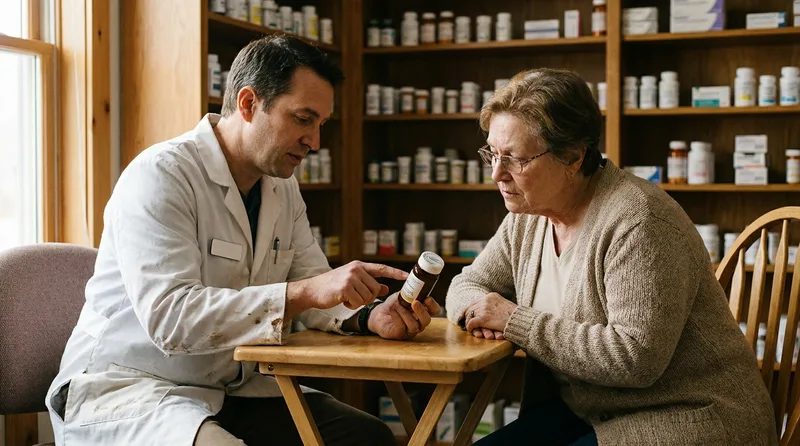
A booked medication review is the real goal behind every ad click.
The distinction changes how you run ads. A refill-transfer campaign chases people who already fill elsewhere. A clinical campaign chases a need: someone juggling eight prescriptions, a 55-year-old who hasn't checked their blood sugar in years, a family planning a trip abroad. Different need, different audience, different ad.
Here's how the most common services map to audiences and the action you want them to take:
Clinical service
Who the ad should reach
Lead action
Medication therapy management (MTM)
Adults on several maintenance medications, and their caregivers
Request a medication review
Point-of-care testing (A1c, glucose, cholesterol)
Adults 40 and older who haven't been screened recently
Book a screening time
Immunizations (shingles, RSV, travel, flu)
Older adults, travelers, caregivers
Book online or call to check availability
Test-and-treat (where state law allows)
Working adults who want care without a clinic wait
Call before coming in
Medication synchronization
Patients with several refill dates each month
Sign up for one pickup day
Vaccines are the easiest entry point, because adults already think of a pharmacy when they need a shot and demand follows a built-in calendar. If you already immunize, the year-round vaccine marketing playbook shows how to keep that demand going after October.
Which Clinical Services Should You Advertise First?
Advertise the service you can deliver most often with the staff you already have, then rank the rest by margin and season. For most independents, that means medication reviews or point-of-care tests before niche offerings, because demand for both already exists inside your current patient base.
You're probably not starting from zero. The same NCPA Digest found that 81% of independent pharmacy respondents offered MTM in 2024. Testing is spreading too. An AMCP Foundation survey published in JMCP in 2025 found that 52% of pharmacies operating a lab offer point-of-care testing, most often influenza (58%), blood glucose (46%), and HbA1c (40%).
So the question isn't whether you have something to sell. It's which offer to lead with. Rank your options this way:
Capacity. Can a pharmacist block six appointment slots a week without slowing fill times? If not, the ad will create a backlog you can't serve, and frustrated leads leave reviews.
Payment clarity. Services with a clear cash price or known billing path convert better, because the patient's first question is usually "what will this cost me?"
Season. Immunizations peak in fall, travel health in spring, and A1c screenings pair well with November's diabetes awareness push. Match the ad to the calendar.
Local gaps. If the nearest chain doesn't offer a service, you have less competition for the same audience.
How Do You Target Clinical Pharmacy Leads When Meta Limits Health Targeting?
Target by place, age, and life stage instead of medical condition. Meta removed detailed targeting options tied to health topics in 2022, so a diabetes screening ad can't aim at "people interested in diabetes." A tight radius around your store plus a sensible age band does most of the work.
That restriction sounds limiting. In practice, it helps independents. Your advantage is proximity, and location targeting is still wide open. Meta has also narrowed how health and wellness advertisers can share and optimize on some conversion events, so campaigns built around lead forms and calls tend to hold up better than ones chasing website purchase events.
The audience layers that work for clinical campaigns:
Radius. Three to five miles in suburbs, wider in rural areas. People rarely drive past several pharmacies for a 20-minute service.
Age bands by service. 50 and older for shingles, 40 and older for A1c screenings, 18 to 45 for travel vaccines.
Engagement audiences. People who watched your Facebook or Instagram videos or engaged with your page. These warm audiences often convert at a lower cost than cold traffic.
Broad interests that aren't medical. Travel, grandparenting, or caregiving-adjacent topics can work, but test them against a plain radius audience before trusting them.
One firm warning. Don't upload your patient list to build a custom or lookalike audience without legal review. Using patient information for marketing can trigger HIPAA's marketing authorization rules. The HHS Office for Civil Rights has also published guidance on online tracking technologies, so keep tracking pixels off any page that collects health details. The practical pharmacy Facebook marketing playbook covers more of these HIPAA basics for your page and ads.
What Should a Clinical Service Ad Say and Show?
A clinical service ad should name one service, one audience, and one next step. "Book a 20-minute medication review with a pharmacist down the street" beats "We care about your health," because the reader knows within two seconds whether it's for them and exactly what to do next.
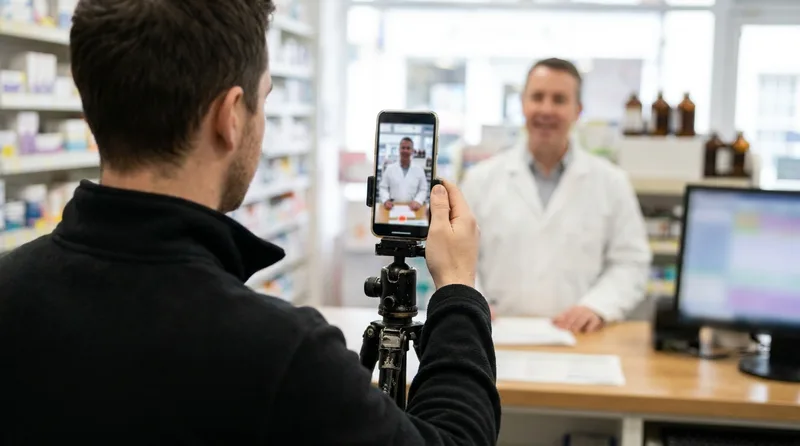
Short vertical clips of your own pharmacist outperform stock photos.
Most people will see your ad on a phone. Mobile devices generated 62.54% of global website traffic in Q4 2024, according to Statista. Design for a thumb scrolling fast, with vertical video, large type, and the offer in the first line of text.
What tends to work in the creative:
Your actual pharmacist on camera. A 15-second clip of the person who will do the review beats any stock photo. Get written consent from every staff member who appears.
Plain cost language. "Most insurance accepted" or a cash price removes the biggest objection.
A specific time cue. "Walk-ins Tuesday and Thursday mornings" gives people a reason to act this week.
And what to keep out. No outcome promises, such as claims that a review will lower A1c or that a service replaces a physician visit. FTC truth-in-advertising rules apply to health claims. No patient stories that reveal conditions without signed HIPAA authorization. For immunization ads, word copy around your state's rules: vaccine availability and minimum age depend on state law and pharmacist authority, which varies.
One more policy check. If an ad promotes prescription medications themselves, Meta generally requires LegitScript certification. Service ads for screenings or reviews usually fall outside that rule, but read Meta's current pharmacy policy before launch.
Should Leads Go to a Lead Form, a Landing Page, or a Phone Call?
Use Meta's instant lead forms when you want volume, a landing page when the service needs explaining, and click-to-call when the patient needs an answer today. Many independents run two paths at once: a lead form for medication reviews and a call button for vaccine availability questions.
Cost is part of the case for social. WordStream's 2024 Facebook ads benchmarks put the average Facebook lead ads cost per lead at $21.98 across service industries, roughly a third of the $66.69 average for Google Ads. Cheap leads aren't automatically good leads, though. Form leads are often colder than callers.
Lead path
Strength
Weakness
Fits
Instant lead form
Low friction, prefilled contact details
Lower intent, needs fast follow-up
MTM, med sync
Landing page
Room to explain price, process, timing
More drop-off, needs a fast mobile page
Testing, travel health
Click-to-call
Highest intent, books on the spot
Needs staff free to answer
Vaccines, test-and-treat
Whichever path you pick, keep forms minimal: name, phone, preferred time, and a service dropdown. Never ask about conditions or medications in a social lead form. If you send traffic to your site, a fast pharmacy website with HIPAA-aware forms keeps the click from going to waste.
How Fast Should You Follow Up on Clinical Pharmacy Leads?
Call clinical pharmacy leads the same business day, ideally within an hour. A form submission marks a brief moment of interest, and it cools once the person scrolls on. Calling at 2 p.m. about a 1 p.m. form gets a very different conversation than calling three days later.
Same-day callbacks turn form fills into appointments that actually happen.
Speed is where most independent campaigns quietly fail. The ad works, the form fills, and then the lead sits in a Meta inbox nobody checks until Friday. Picture a store running 22 leads a month for medication reviews. If half wait three days for a callback, the campaign looks broken even though the targeting was fine.
A simple follow-up routine fixes it:
Name one owner. A tech or front-counter lead checks new leads at set times, such as 10 a.m., 1 p.m., and 4 p.m.
Connect the form to your phone or email. Route Meta lead notifications to a shared inbox so nothing waits in the ads manager.
Use a short script. Confirm the service, offer two time slots, and book during the call.
Send a confirmation text. Make sure your texting platform is 10DLC-registered so messages actually arrive.
Follow up twice, then stop. One more call and one email cover most people who were simply busy.
Email still earns its place in that last step. HubSpot's 2025 email benchmarks report a 39.48% average open rate for B2B services emails. Patient email behavior differs, but a short, plain reminder is cheap and usually read.
How Do You Know If Social Ads Are Producing Clinical Revenue?
Measure cost per completed appointment, not cost per click or cost per lead. A $20 lead that never books is worth nothing. A $60 booked medication review that turns into a med sync enrollment can keep paying back for months, so track every lead from form to finished service.
Here's a simple worked example. Say you spend $500 in a month and collect 25 leads, a $20 cost per lead. Your team reaches 18, books 12, and 10 show up. Your real cost is $50 per completed appointment. Now compare that to what each service earns, including follow-on revenue like recurring refills.
The numbers worth tracking weekly:
Contact rate: leads reached divided by leads received. Low numbers point to a follow-up problem, not an ad problem.
Booking rate: appointments booked divided by leads reached.
Show rate: completed visits divided by bookings. Reminder texts move this one.
Cost per completed appointment: total spend divided by completed visits. This is the number to manage.
Give a campaign 30 to 45 days before judging it, since Meta's delivery system needs time to learn. If you're also weighing search ads, the pharmacy paid advertising guide compares channels side by side. And the breakdown of social media ads vs. organic posts shows how to split effort between the two.
Want help setting up lead tracking from ad to appointment?
The RevealSite team can connect your Meta lead forms, call tracking, and booking steps so you see what each completed visit actually costs.
The ad is the easy part. What separates campaigns that fill appointment books from ones that burn budget is what happens in the first hour after a form comes in. Clinical pharmacy leads are only as valuable as your team's ability to call, book, and confirm.
So start small. Pick one service you can deliver six times a week, set a modest monthly budget, assign one person to own follow-up, and track cost per completed appointment for 45 days. Then decide whether to scale, switch services, or adjust the offer.
Turn Social Ads Into Booked Clinical Appointments With RevealSite
RevealSite plans, launches, and tracks Facebook and Instagram campaigns built around your pharmacy's clinical services and local market.
How much should an independent pharmacy spend on social ads for clinical pharmacy leads?▼
Start with a modest monthly test budget you can sustain for 45 days, then scale based on cost per completed appointment. The right number depends on your local market and how many appointment slots your pharmacists can actually fill each week.
Can pharmacies use patient lists to build Facebook lookalike audiences?▼
Not without legal review. Patient information used for marketing can fall under HIPAA's marketing authorization rules, even if you only upload names and phone numbers. Engagement audiences built from people who watched your videos or interacted with your page are a safer starting point.
Are Instagram ads or Facebook ads better for clinical pharmacy leads?▼
Run both through the same Meta campaign and let delivery decide placement. Facebook often reaches more adults over 50, which suits shingles vaccines and medication reviews, while Instagram can perform well for travel vaccines and younger working adults who want test-and-treat services.
Do pharmacy ads for vaccines need special wording?▼
Yes. Immunization ads should reflect your state's rules, because vaccine availability and minimum age depend on state law and pharmacist authority, which varies. Use CDC-style language such as "reduces the risk of" rather than absolute promises about protection.
Why do social ad leads for pharmacy services fail to book?▼
Slow follow-up is the most common cause. A lead form captures a brief moment of interest, and that interest fades within hours. Pharmacies that check leads at set times each day and book during the first call usually see far better results than those calling back days later.
Should I promote my pharmacy's clinical services with boosted posts?▼
Boosted posts work for awareness, but they offer fewer objectives, placements, and lead form options than campaigns built in Meta Ads Manager. For clinical pharmacy leads, a lead or call campaign gives you more control over who sees the ad and what happens after the click.