
HomeBlogs
Seasonal Pharmacy Ads: Flu, Back-to-School, and Holidays
RevealSite Team
July 6, 2026 · 9 min read
Key Takeaways
- ✓The four highest-value seasonal windows for independent pharmacies are flu season, back-to-school, the holiday refill rush, and spring allergy season.
- ✓Flu shot campaigns should launch ads 4-6 weeks before peak demand, not after, since early vaccinees drive clinic traffic that brings in refill patients.
- ✓Back-to-school campaigns pair physicals, immunizations, and back-pack health kits to capture families before the school year starts.
- ✓Holiday campaigns focus on chronic medication refills and travel health, two high-intent needs that national chains underserve with personal attention.
- ✓Seasonal campaigns perform best when the ad, the landing page, and the in-store experience all carry the same message and offer.
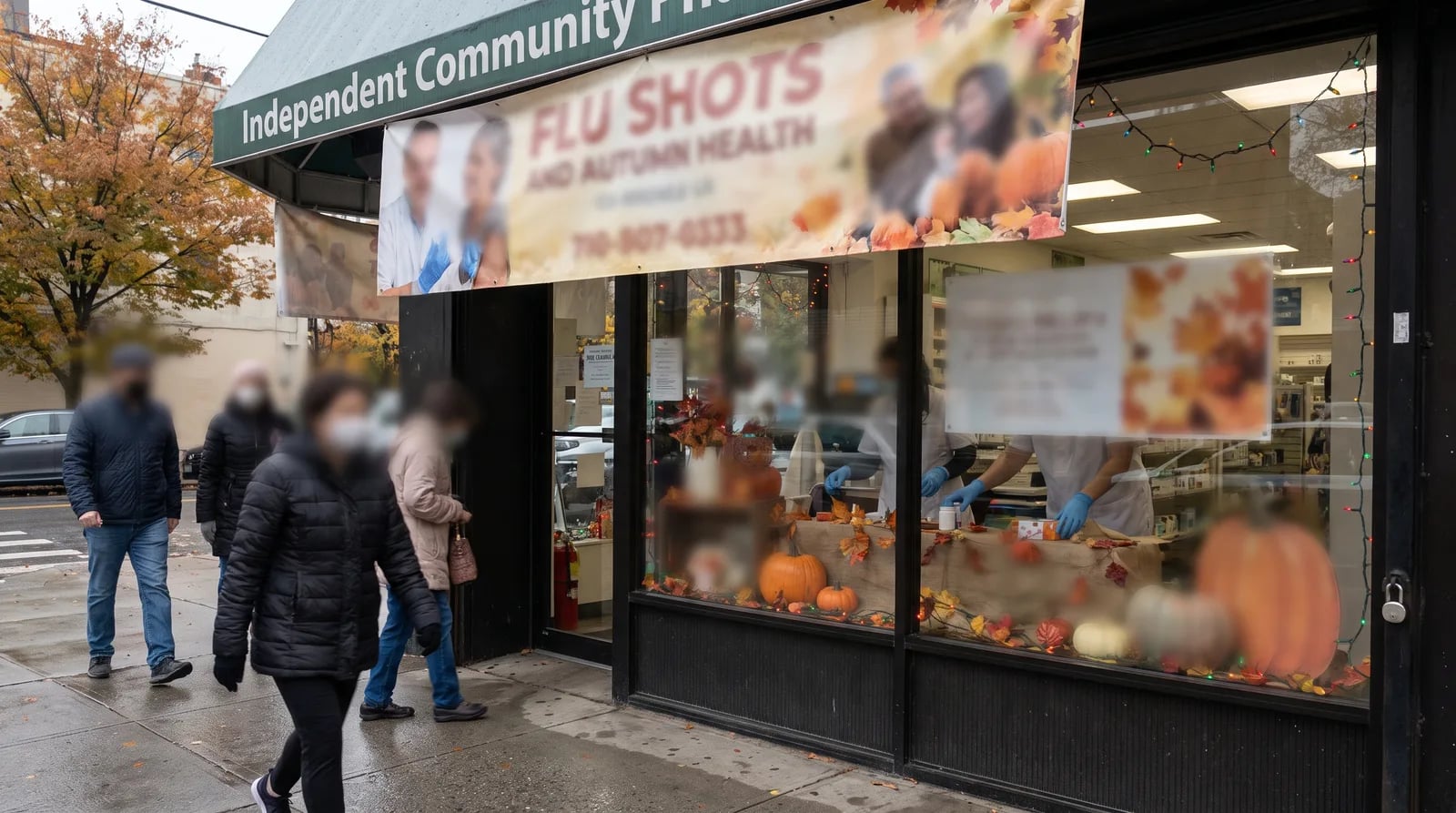
Independent pharmacies have a natural advantage in seasonal health moments. A national chain runs the same flu shot creative in every market. You can run something that names your neighborhood, reflects your hours, and sounds like a person wrote it. Seasonal pharmacy ad campaigns are not about competing with chain budgets. They are about showing up with a specific offer at exactly the right time, in exactly the right feed or search result.
This guide covers the four highest-value seasonal windows, how to structure paid and organic tactics for each, and what to have in place before you spend a dollar. If you are new to paid advertising for pharmacies, the Google Ads for Pharmacies guide and the Facebook Ads for Pharmacies guide cover the channel setup before you build seasonal campaigns on top.
What makes seasonal pharmacy ad campaigns different from evergreen ones?
Seasonal pharmacy ad campaigns are time-boxed promotions aligned to predictable patient demand spikes. Unlike evergreen ads that run year-round on general messaging, seasonal campaigns succeed or fail on timing and specificity. The window is narrow, the competition spikes, and a campaign that launches a week late leaves real patients to the chain across the street.
The mechanics differ too. Evergreen campaigns optimize over months. Seasonal ones need faster creative decisions, tighter audience targeting, and a landing page that matches the exact offer in the ad. You also cannot test your way into a seasonal campaign. By the time you have enough data, the season is half over. The setup work happens before the ads go live.
The upside is predictability. You know flu season comes every fall. You know back-to-school peaks in July and August. That means you can plan creative, build landing pages, and schedule ad spend weeks in advance rather than reacting when demand arrives.
Pharmacy seasonal campaign calendar
When to launch ads, not when the season peaks.
Aug-SepFlu season launch: ads live 4-6 weeks before peak. Lead with convenience and walk-in availability.
Jul-AugBack-to-school: immunizations, physicals, lice prevention, backpack health kits. Target parents on Facebook.
Nov-DecHoliday refill rush: 90-day fills, travel health, gift card promotion. Search ads for "pharmacy near me open."
Mar-AprSpring allergy season: OTC and Rx antihistamines, point-of-care testing. Target nearby urgent care geofences.
How should a pharmacy run a flu season ad campaign?
A pharmacy flu season campaign should launch ads 4-6 weeks before peak demand, lead with convenience over clinical language, and run search and social simultaneously. Retail pharmacies administered approximately 36.31 million adult flu vaccine doses in the 2023-2024 season, per CDC FluVaxView data, making flu shots the single highest-volume seasonal service most independents offer.
Timing is the biggest lever
Most pharmacies wait until flu season arrives to advertise. The ones that win start earlier. By the time chains saturate local feeds with flu shot creative in October, an independent that launched in late August has already built recognition, collected calls, and vaccinated the early-adopter patients who tend to be the most loyal. Early movers also pay lower CPMs before demand for health-adjacent ad inventory peaks.
- Launch Google Search ads 4-6 weeks before your region's typical peak (late August for most markets).
- Launch Facebook awareness ads one week later to warm up local audiences before search intent spikes.
- Update your Google Business Profile with flu shot hours and availability at the same time ads go live.
- Review campaign performance at the two-week mark and cut any keyword or audience not converting.
What the creative should say
Patients do not search for "flu vaccine." Instead, they search for "flu shot near me" and "walk-in flu shot." Lead with availability and convenience, not the vaccine itself. "No appointment needed, walk in anytime" outperforms "get your flu shot today" in click-through because it removes the friction patients are actually worried about. Keep the landing page simple: your hours, insurance accepted, and a click-to-call button above the fold.
Flu season campaign checklist
Complete these before you launch ads, not after.
☐Confirm vaccine stock arrival date and daily capacity with your wholesaler.
☐Update your Google Business Profile with flu shot availability and walk-in hours.
☐Build a simple landing page with your hours, insurance accepted, and a click-to-call button.
☐Set up call tracking so you can tie ad spend to actual appointment calls.
☐Write 2-3 ad variations: one on convenience, one on no appointment needed, one on insurance coverage.
☐Schedule social posts for the same window so organic and paid reinforce each other.
Need seasonal campaign creative built and launched?
RevealSite handles paid ad setup, creative, and ongoing optimization for independent pharmacies across every seasonal window.
See Marketing Services →What does a back-to-school pharmacy campaign look like?
A back-to-school pharmacy campaign targets parents in July and August with messaging around school immunizations, physicals, and family health products. It runs primarily on Facebook and Instagram, where parenting-age audiences are reachable by demographic, and pairs well with a simple appointment request form or a click-to-call CTA for scheduling.
What to promote
Immunizations required for school enrollment are the highest-intent offer. Layer in ancillary items that fit the moment:
- Lice prevention kits and first-aid refills
- Sports physical referrals if your pharmacy works with local clinics
- Back-pack health supply bundles
- Refill transfer promotions for new school-year patients
Each gives you a second hook for families who already got immunizations elsewhere.
How to target parents on Facebook
Facebook's detailed targeting lets you reach parents of school-age children within your zip codes. Layer that with local geographic targeting and a back-to-school creative theme and you have a tight, relevant audience. 76% of people who run a near-me search visit a related business within a day, per Backlinko local data, so even social awareness that drives a search query the next morning works in your favor. Pair paid posts with organic content on your social media content calendar so the message reinforces across every touchpoint.
How can a pharmacy maximize the holiday refill rush?
The holiday refill rush runs from mid-November through December, when patients travel, offices close early, and chronic medication management becomes urgent. A pharmacy that runs paid search ads for "pharmacy open Christmas Eve" or "90-day prescription refill" captures patients at exactly the moment their usual pharmacy fails them, which is the most fertile patient acquisition window of the year.
What drives holiday pharmacy demand
Three things spike in November and December: early refill requests before travel, insurance benefit resets prompting patients to use remaining coverage, and patients missing doses because their routine is disrupted. The NCPA reports that 81% of independent pharmacies offer medication therapy management services, per NCPA 2024 Digest data. That clinical relationship is what makes an independent the right place to turn when a chain's automated system cannot handle a travel exception.
Ad tactics that work in November and December
Google Search ads targeting "pharmacy open near me," "refill prescription early," and "90-day supply pharmacy" capture active intent searches that peak when schedules shift. On Facebook, retargeting past website visitors with a holiday hours message keeps you top of mind for patients who already know you. Keep creative warm but practical: exact hours, specific services, direct CTA. This is not a branding window. It is a conversion window.
How should pharmacies approach spring allergy season campaigns?
Spring allergy season campaigns run from late February through April and target patients dealing with seasonal symptoms before they default to a chain or urgent care. They work best as a combination of Facebook awareness, Google search capture, and geofencing around urgent care clinics and competitors, where patients with unmanaged symptoms are likely to be.
Paid search for allergy intent
Target keywords like "allergy medicine near me," "pharmacist for allergies," and "prescription antihistamine pharmacy." Add a Google call extension so patients can reach you without a click. 85% of consumers used Google to find local businesses in 2025, per BrightLocal research, and most of those local searches end in a phone call, not a form submission. Make the phone number the easiest thing to find. Make the phone number the easiest thing to find.
Social ads for allergy awareness
Facebook and Instagram allergy creative performs well with symptom-forward messaging: "still sneezing? we have same-day options" lands better than a generic antihistamine promotion. Pair it with a point-of-care testing angle if your pharmacy offers it. The goal is to position your pharmacist as the first call, before urgent care becomes the default. Tie this to your broader social media campaign strategy so paid and organic content reinforce during the same window.
| Season | Best paid channel | Primary offer | Key metric |
|---|---|---|---|
| Flu season | Google Search + Facebook | Walk-in flu shots, no appointment | Click-to-call, store visits |
| Back-to-school | Facebook (parent targeting) | Immunizations, physicals, health kits | Appointment requests |
| Holiday refill rush | Google Search | 90-day fills, travel Rx, extended hours | Refill transfers, new patients |
| Spring allergy | Facebook + geofencing | OTC and Rx antihistamines, testing | Foot traffic, OTC basket size |
Related: Not sure whether to run paid or organic for seasonal campaigns? See Pharmacy Social Ads vs Organic: How to Split →
What should every seasonal pharmacy campaign have in place before launch?
Every seasonal pharmacy campaign needs four things in place before the first ad goes live: a matching landing page, call tracking, a budget cap, and a way to measure store visits or conversions. A well-timed ad pointed at a homepage with no seasonal context wastes the click. The setup is the campaign.
Landing page alignment
The landing page should mirror the ad exactly: if the ad says "walk-in flu shots, no appointment needed," the page should open with those words, your hours, and a click-to-call button. No navigation menu above the fold. No generic pharmacy branding. One message, one action. Set up your conversion tracking before launch so every call and form fill ties back to the campaign that drove it.
Budget and measurement discipline
Seasonal campaigns need a hard budget cap and a weekly review cadence. Unlike evergreen campaigns that you can optimize over months, a seasonal window gives you four to six weeks. If spend is tracking wrong in week two, you need to know and adjust in week three, not week five. Businesses in the Google local 3-pack receive 126% more traffic than positions four through ten, per Semrush local data, so pairing your paid campaign with a strong local SEO presence compounds the seasonal effect at no extra cost.
Seasonal pharmacy ad campaigns reward preparation more than any other kind. The pharmacies that show up first, with the clearest message and the simplest path to action, win the patients the chains take for granted. Plan the window before it opens and the campaign runs itself. Wait until demand peaks and you are chasing it.
Start with one season, run it clean, measure it properly, and use what you learn to build the next one. A flu season campaign that produces real data on cost per call is worth more than four rushed campaigns that produce none.
Want your seasonal campaigns built before the next window opens?
RevealSite plans, builds, and launches seasonal paid campaigns for independent pharmacies so you are ready when patients start searching.
Request a Free Demo →See what seasonal campaigns look like in practice.
Read Success Stories →Frequently Asked Questions
When should a pharmacy start running flu shot ads?▼
Start paid ads 4-6 weeks before your community's peak flu vaccination window, typically late August for September-October campaigns. Early promotion captures patients before chains saturate local feeds and search results.
What is the best channel for seasonal pharmacy ads?▼
Facebook and Instagram work well for awareness and reminders; Google Search captures patients actively looking for flu shots or pharmacy services nearby. Most seasonal campaigns benefit from running both simultaneously.
How much should a pharmacy budget for a seasonal campaign?▼
A focused 4-6 week seasonal campaign can run effectively on a few hundred dollars per channel. Prioritize the channels where you already have an active presence so the spend goes further from day one.
Can seasonal pharmacy ads also promote prescription services?▼
Yes. Holiday and flu-season campaigns are natural entry points for refill reminders, medication synchronization enrollment, and transfer promotions. Pair vaccination messaging with a refill offer to increase basket size per visit.
Do seasonal campaigns require special compliance steps?▼
Platform pharmacy advertising policies apply year-round, not just for seasonal campaigns. Avoid making specific health claims, keep creative general, and ensure any vaccination promotion links to a compliant landing page.
Sources
Was this article helpful?