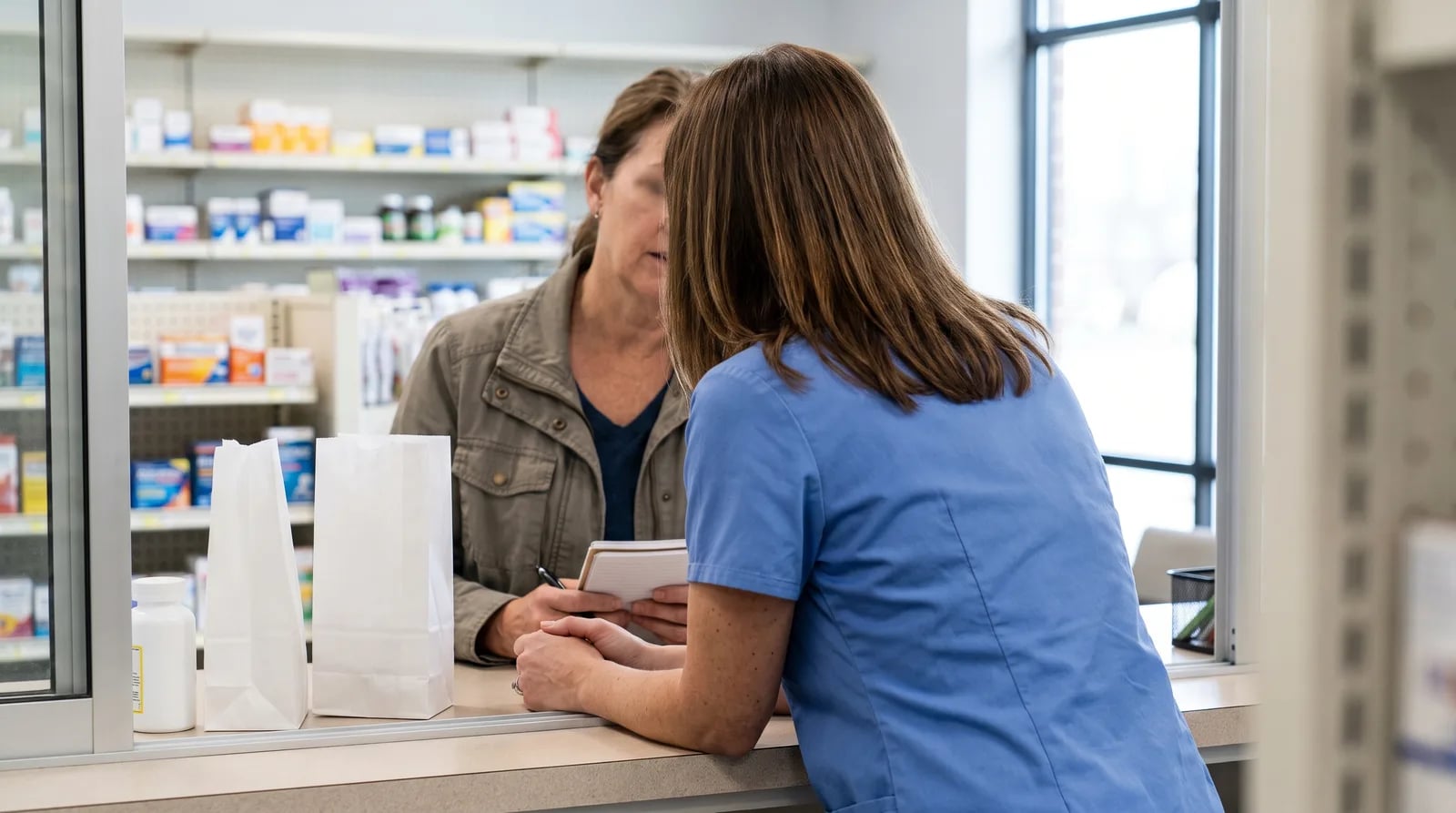
How to Build an LTC-at-Home Pharmacy Marketing Strategy
RevealSite Team
July 12, 2026 · 10 min read
Key Takeaways
✓Reach LTC-at-home patients through referral partners like home health agencies and hospice programs
✓Family caregivers are the real decision-makers, so reliability matters more than promotional messaging
✓$528 billion in annual US costs comes from medication non-adherence, a key risk for homebound patients
✓A one-star rating improvement boosts local search calls and clicks by 44%
✓Track new patients by referral source and delivery reliability, not website traffic
✓Email outreach to referral partners averages a 39.48% open rate for B2B service campaigns
LTC-at-home pharmacy marketing reaches a different buyer than facility-based long-term care: the homebound patient's family, a home health agency, or a hospice team coordinating care outside any building your pharmacy delivers to directly. That's a fast-growing model. More patients are aging in place instead of moving into a nursing home or assisted living community, and someone still has to manage complex medication regimens for them at home.
Build the presence your community trusts
Let us be your first step. Get in touch with our team today.
Almost 90% of the US population lives within five miles of a pharmacy, according to the Journal of the American Pharmacists Association, yet proximity doesn't help a patient who can't drive, can't stand in line, or has a caregiver juggling a full-time job. That gap is exactly what LTC-at-home pharmacy services fill, and it's a real opportunity if you know how to reach the people making the decision.
This guide covers six steps: identifying the right patients and referral partners, building trust with caregivers, strengthening local SEO, using reviews strategically, choosing digital channels, and measuring ROI. Our pharmacy marketing services team built this from what actually converts for independent pharmacies running LTC-at-home programs.
What Is LTC-at-Home Pharmacy Marketing?
LTC-at-home services are pharmacy programs built for patients who need long-term care level medication support while remaining in their own homes, rather than moving into a nursing home or assisted living facility. They combine home delivery, compliance packaging, and caregiver coordination.
The patient profile is specific. Think of an 82-year-old managing eight medications for hypertension, diabetes, and arthritis, living alone or with a spouse who also has health issues. She's not a candidate for a facility yet, and her family wants to keep her at home as long as possible. That family, not the patient herself, often becomes your actual point of contact. Home health nurses, hospice teams, and adult children living out of state all play a role in the decision. Marketing this well means speaking to caregivers and coordinators just as much as to the patient. A well-run LTC-at-home program often layers in medication synchronization. Aligning her refill dates into one monthly delivery cuts down on the coordination work for everyone in that decision.
Before marketing anything, confirm your operational readiness: reliable home delivery logistics, compliance packaging options like blister packs, and a process for coordinating refills with a home health nurse or family caregiver who isn't a licensed clinician. Medication compliance packaging is often the detail that matters most. It's the clearest sign to a caregiver that your pharmacy has this figured out before they ever call.
What LTC-at-Home Marketing Must Communicate
Reliable home delivery, including backup plans for missed or delayed deliveries
Compliance packaging suited to complex, multi-drug regimens
A single point of contact for caregivers, not a rotating call center
Clear coordination with home health nurses and hospice staff
How Do You Identify Patients and Referral Partners for LTC-at-Home?
You identify LTC-at-home patients by working through referral partners first, not by advertising directly to homebound patients who are hard to reach through typical channels. Home health agencies, hospice programs, and hospital discharge planners see these patients before you ever will.
Referral Partner
Why They Matter
Outreach Priority
Home health agencies
Nurses visit weekly and see medication problems firsthand
High
Hospice programs
Need fast, reliable delivery for comfort medications
High
Hospital discharge planners
Set up home care for patients leaving the hospital
Medium
Geriatric care managers
Advise families directly on which providers to use
Medium
Rank your outreach by how often each partner touches a homebound patient. A home health nurse who visits weekly has more influence than a discharge planner who sees the patient once. Start with the partners who interact with patients most consistently, then expand. This is the same referral marketing discipline home health agencies themselves use to grow their own patient base. Speaking that shared language tends to make your outreach land better.
Building Your Referral Pipeline
List home health agencies and hospice programs in your delivery radius
Identify hospital discharge planners at nearby hospitals and rehab facilities
Reach out with a specific offer, like a same-week medication review for new referrals
Track which partners actually send patients, and focus follow-up there
How Do You Build Trust With Caregivers and Family Decision-Makers?
You build trust with caregivers by making their job easier, not by selling them on your pharmacy. Family caregivers are often stressed, managing this alongside a job or their own health issues, so reliability matters more than any promotional message.
Nearly half of patients with chronic conditions don't take medications as prescribed, contributing to roughly $528 billion in annual US morbidity and mortality costs. That risk rises sharply for homebound patients managing multiple prescriptions without daily clinical oversight. Position your pharmacy as the partner that catches problems before they become emergencies: a call when a refill doesn't match a new prescription, a text confirming delivery, a simple compliance package that removes guesswork. Caregivers remember pharmacies that prevent problems far more than pharmacies that just fill orders on time. A JAMA Network analysis found that 43% of adults 65 and older now take five or more prescription medications. Good polypharmacy management, catching interactions before they cause a hospital visit, is exactly the value caregivers are quietly hoping you provide.
Offer a low-friction first step: a free medication review for a new patient, or a single trial delivery cycle. A caregiver juggling five things at once responds better to "let us handle this one part" than to a long pitch about your full service list. Framing what you do as caregiver support services matters here, not just prescription fulfillment. That framing is often the difference in how your first message lands.
A Simple Caregiver Communication Checklist
Caregiver Trust Checklist
Check each item your pharmacy has in place for LTC-at-home patients.
Your score: count your checks out of 4
Want help building a caregiver-focused outreach plan?
Our team can help you turn referral relationships into a repeatable LTC-at-home growth channel.
How Does Local SEO Support LTC-at-Home Pharmacy Visibility?
Local SEO supports LTC-at-home visibility because caregivers still Google search for help at 11pm after a hard day, typing things like "pharmacy home delivery for elderly parent near me." A strong Google Business Profile and a dedicated service page put you in front of that search.
Build a service page specifically for LTC-at-home, separate from your general homepage, describing delivery areas, compliance packaging, and caregiver coordination in plain language a stressed family member can scan quickly. Keep your name, address, and phone number consistent across your website, Google Business Profile, and any home health directories you're listed in, the same way you would for any local search strategy. Many caregivers researching this are quietly weighing pharmacy home delivery vs mail-order pharmacy. A page that speaks to local, personal service tends to win that comparison on trust alone.
Don't bury this content under generic pharmacy pages. A caregiver searching at midnight needs to find the right page fast, not dig through a homepage menu.
How Can Reviews and Testimonials Build Confidence in Home Delivery?
Reviews build confidence in home delivery because a caregiver choosing a pharmacy for a vulnerable family member wants proof it works before they commit. A one-star improvement in average rating boosts calls, clicks, and direction requests by 44%, according to Semrush local SEO research, and that lift applies directly to LTC-at-home searches too.
Ask satisfied caregivers for general feedback about reliability, communication, and responsiveness, never anything that identifies a specific patient's diagnosis or medications. A short review like "they call before every delivery and caught a prescription mix-up before it became a problem" builds more trust than a five-star rating with no detail. Respond to every review professionally, and never confirm or discuss any patient's health information publicly, even in a response.
75% of consumers regularly read online reviews, and more than a third of healthcare-related reviews specifically, according to BrightLocal's Local Consumer Review Survey. That's a caregiver population checking your reputation before they ever call.
Which Digital Channels Reach Caregivers and Home Health Partners?
Targeted email to referral partners and local search for caregivers reach this audience most effectively, while broad consumer social ads built for retail foot traffic largely miss both groups. LTC-at-home pharmacy marketing has two very different audiences that need two different approaches.
Email works well for the referral side of this business. B2B services email campaigns average a 39.48% open rate, which is strong for reaching home health agency coordinators and discharge planners directly with a short, specific message about your LTC-at-home program. For the caregiver side, local search and reviews do more work than paid social, since caregivers search in a moment of need rather than scrolling for inspiration. The same email approach works for DME provider partnerships too. Equipment suppliers see many of the same homebound patients and refer for similar reasons.
Channel
Best Audience
Priority for LTC-at-Home
Targeted email
Home health agencies, hospice, discharge planners
High
Local SEO and GBP
Caregivers searching in a moment of need
High
Reviews and testimonials
Caregivers vetting reliability before committing
High
Retargeting ads
Caregivers who visited but haven't called
Medium
Broad consumer social ads
General retail walk-in patients
Low
Skip broad awareness campaigns here. This audience is narrow and specific, so precision beats reach every time.
Not sure which channels fit your referral mix?
Our Marketing & Visibility team can help you split budget between referral outreach and caregiver-facing local search.
You measure LTC-at-home marketing ROI by tracking new patients per referral source and average patient lifetime value, not website visits or social impressions. This program grows through relationships, so the metrics need to reflect that.
Track new patients by referral source each month, average length of service per patient, and delivery reliability, since missed deliveries are the fastest way to lose a caregiver's trust and any future referrals from that source. Compare this against the retail pharmacy margin squeeze industry-wide, where the NCPA 2024 Digest reported gross margins falling to 19.7%, the lowest in a decade. A steady base of LTC-at-home patients with strong retention offsets that pressure better than chasing more retail foot traffic.
Review these numbers monthly. A referral source that sent two patients last quarter and none this quarter needs a check-in call before the relationship goes cold, not a quarterly report that catches the problem too late.
Monthly Metrics to Track
New patients by referral source
Average patient length of service
Delivery reliability rate
Caregiver satisfaction or review sentiment
Referral partner activity, month over month
Done well, LTC-at-home pharmacy marketing works when you treat caregivers and referral partners as the real audience, not an afterthought behind the patient. The pharmacies that grow here are consistent: reliable delivery, clear communication, and visible proof of that reliability wherever a stressed caregiver looks. Start with two or three referral partners, prove your reliability, and let that reputation carry you to the next one.
Ready to Build Your LTC-at-Home Growth Plan?
See how RevealSite helps independent pharmacies build referral relationships and caregiver trust that grow LTC-at-home programs.
LTC-at-home pharmacy marketing is how a pharmacy reaches homebound patients who need long-term care level medication support without moving into a facility. It targets caregivers and referral partners rather than the patient directly.
How is LTC-at-home different from facility-based LTC pharmacy marketing?▼
LTC-at-home targets family caregivers and home-based referral partners like hospice and home health agencies. Facility-based LTC marketing targets administrators and directors of nursing at a single location managing many residents at once.
Who are the best referral partners for LTC-at-home pharmacy growth?▼
Home health agencies and hospice programs are the strongest referral partners because their staff see patients regularly and notice medication problems firsthand. Hospital discharge planners and geriatric care managers are also valuable secondary sources.
Do reviews matter for LTC-at-home pharmacy marketing?▼
Yes. Caregivers research a pharmacy's reliability before trusting them with a vulnerable family member's medications. Reviews should describe communication and reliability, never a specific patient's diagnosis or medications.
What should I track to measure LTC-at-home marketing ROI?▼
Track new patients by referral source, average patient length of service, and delivery reliability rate. These numbers reflect the relationship-driven sales cycle better than website traffic or social media engagement.
Which channels work best for reaching caregivers and referral partners?▼
Targeted email works well for referral partners like home health agencies, while local SEO and reviews work best for caregivers searching in a moment of need. Broad consumer social ads generally don't reach either audience.