
HomeBlogs
How to Compete with Chain Pharmacies Like CVS and Walgreens

RevealSite Team
May 6, 2026 · 11 min read
Key Takeaways
- ✓Almost 90% of US adults trust their local pharmacist, giving independents a built-in advantage that chain pharmacies struggle to match at scale.
- ✓Independent pharmacies offering MTM, compounding, and point-of-care testing tap into revenue streams that most chain locations either don't provide or execute inconsistently.
- ✓Pharmacies ranking in Google's local 3-pack receive 126% more traffic than positions 4-10, and chains typically have thin, corporate-managed profiles that are easy to outrank locally.
- ✓Responding to every Google review nearly doubles consumer willingness to use your pharmacy (88% vs. 47%), a habit that costs nothing but staff time.
- ✓Competing on value rather than price protects your margins and positions your pharmacy as a clinical resource, not a commodity dispenser.
You can't outspend CVS or Walgreens. That's the wrong fight entirely. But you can compete with chain pharmacies on terms they're structurally unable to match, and thousands of independent pharmacies across the country are already doing exactly that. The question isn't whether it's possible. It's where to focus first.
Chain pharmacies win on brand familiarity and sheer location count. That's about it. On clinical depth, patient trust, local search visibility, and service flexibility, independent pharmacies hold real advantages that no corporate playbook can replicate. This guide breaks down six strategies that work right now, backed by data, so you can stop playing defense and start taking patients back.
Why Are Independent Pharmacies Losing Patients to Chain Pharmacies?
Independent pharmacies lose patients to chains not because chains provide better care, but because chains are easier to find online and easier to default to when a patient doesn't know alternatives exist. The problem is visibility, not quality.
Think about what happens when a new resident moves to your area. They search "pharmacy near me" on Google. If CVS and Walgreens dominate the top three map results because they have more reviews, more photos, and more complete Google Business Profiles, that patient never discovers your pharmacy at all. J.D. Power's 2024 US Pharmacy Study actually found that brick-and-mortar chain satisfaction fell more than 10 points in a single year, driven by long wait times and impersonal service. Patients aren't loyal to chains. They're defaulting to them out of convenience and habit.
Three forces push patients toward chains:
- Insurance network steering. PBMs and insurance plans funnel patients toward preferred pharmacies, often chains with negotiated volume agreements. Many patients don't even realize they have a choice.
- Advertising volume. Chain pharmacies spend hundreds of millions annually on national advertising. You'll never match that budget. But you don't need to, because their ads don't target your zip code the way local marketing does.
- Digital presence gaps. Many independents still rely on word-of-mouth alone. When 76% of "near me" searchers visit a business within 24 hours, according to Backlinko's local SEO data, an incomplete or missing online presence is a leak you can't afford.
The good news: every one of these disadvantages is fixable with the right approach.
And here's what most pharmacy owners miss: you don't need to fix all three at once. Closing even one gap, especially the digital presence gap, produces measurable results within 60-90 days. A complete Google Business Profile with fresh reviews and weekly updates is often enough to leapfrog the nearest chain location in local map results.
What Advantages Do Independent Pharmacies Actually Have Over CVS and Walgreens?
Independent pharmacies hold three structural advantages that chain pharmacies can't replicate at scale: clinical service depth, pharmacist-patient relationships, and operational flexibility. These aren't soft claims. They're backed by patient behavior data.

Patient Trust
CVS Health's own Rx Report found that almost 90% of adults trust their local pharmacist, and 75% would discuss personal health issues with them. That trust belongs to the person behind the counter, not the corporate logo above the door. In an independent pharmacy, patients see the same pharmacist every visit. Chains rotate staff across locations and rely on technicians for most patient interaction. Big difference.
Clinical Flexibility
The NCPA 2024 Digest reported that 81% of independent pharmacies now offer medication therapy management. Wolters Kluwer's Pharmacy Next survey found that 58% of Americans would seek non-emergency healthcare at a pharmacy before any other setting. You can add compounding, point-of-care testing, or a new immunization program next month. A CVS store manager needs to wait for corporate approval, a standardized rollout plan, and regional pilot testing before offering something new.
Speed and Responsiveness
When a patient calls with an urgent question, they get the pharmacist. Not a phone tree. Not a 20-minute hold. This responsiveness is a competitive moat that scales with your attention, not your headcount. Invoca's healthcare research found that 88% of healthcare appointments are scheduled by phone, which means every answered call is a conversion opportunity chains are systematically missing during peak hours.
Related: For a full breakdown of marketing channels and tactics → Independent Pharmacy Marketing: The Complete 2026 Guide
How Can Local SEO Help You Compete with Chain Pharmacies?
Local SEO is the single most effective channel for leveling the playing field against chains, because chain pharmacy Google Business Profiles are almost always managed by distant corporate teams who update them slowly and generically. Your local specificity is a ranking advantage they can't buy.
Backlinko reports that 42% of all local searchers click inside the Google Maps Pack. Semrush's 2024 data shows businesses in the local 3-pack receive 126% more traffic and 93% more calls than positions 4-10. You don't need to outrank CVS nationally. You need to outrank the CVS on Main Street in your town, and that's a fight you can win.
Here's how to do it:
- Complete every GBP field. Hours, holiday hours, every service you offer, a detailed business description, and at least 20 photos. Chain profiles rarely have more than a corporate-uploaded exterior shot and a logo.
- Post weekly GBP updates. Flu shot availability, new services, seasonal health tips. Activity signals freshness to Google's algorithm. Most chain profiles go months between posts.
- Build your review volume aggressively. Ask every satisfied patient for a Google review. A pharmacy with 150 reviews and a 4.7 average outranks a CVS with 40 reviews and a 3.9 every time. BrightLocal's 2025 data shows 85% of consumers now use Google to find local business reviews.
- Build service-specific pages on your website. Each service gets its own URL targeting a local keyword like "compounding pharmacy in [city]." Chain websites don't have location-specific service pages for individual stores. Yours should.
Outrank Chain Pharmacies in Local Search
RevealSite builds pharmacy websites with local SEO and Google Business Profile optimization built in from day one.
See Smart Websites & SEO →What Clinical Services Help You Differentiate from Chain Pharmacies?
Clinical services are where independent pharmacies create separation that chains can't close. Most chain locations are optimized for volume dispensing, not clinical care. That gap is your opportunity to compete with chain pharmacies on value rather than price.
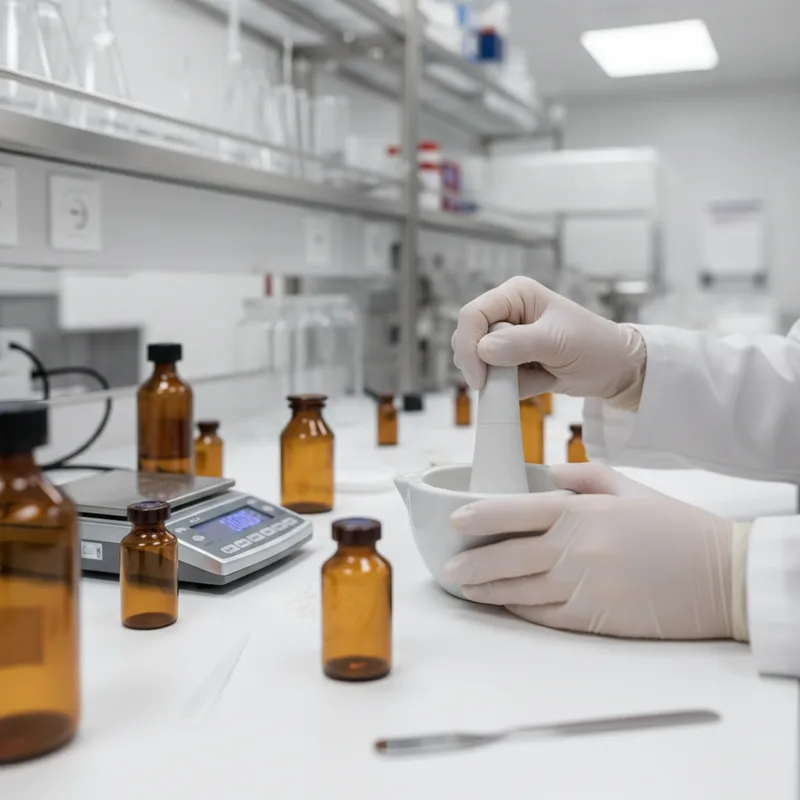
Compounding
Precedence Research valued the US compounding pharmacy market at $6.0 billion in 2024, projected to reach $10.8 billion by 2034 at a 6.2% CAGR. Chain pharmacies largely exited compounding because it requires specialized training, equipment, and individualized attention that doesn't fit their throughput model. If you compound, promote it aggressively in your local marketing and on your GBP profile.
Point-of-Care Testing and Immunizations
An AMCP Foundation survey published in the Journal of Managed Care & Specialty Pharmacy found that 52% of pharmacies with lab capabilities offer point-of-care testing, most commonly for influenza, blood glucose, and HbA1c. These are high-margin, high-trust services that bring patients through the door for reasons beyond picking up a prescription. The CDC reported that pharmacies administered 36.31 million adult flu vaccine doses during the 2024-25 season alone. Chains handle basic flu and COVID shots, but many skip travel vaccines, shingles programs, and pediatric immunizations entirely. Fill that gap.
Medication Therapy Management and Chronic Disease Programs
MTM is one of the highest-value services an independent pharmacy can offer, and one of the most poorly executed at chain locations. A comprehensive medication review takes 30-45 minutes of focused pharmacist attention. Chain pharmacies, built around speed and volume, rarely allocate that kind of time. You can. Verified Market Reports valued the global MTM market at $3.5 billion in 2024, with a projected 7.5% CAGR through 2033, so the revenue opportunity is growing fast.
Chronic disease management programs take this further. Patients with diabetes, hypertension, or high cholesterol need ongoing monitoring, medication adjustments, and education that their 10-minute physician appointments can't cover. Build structured programs around A1C monitoring, blood pressure tracking, or statin adherence. Bill through CMS Part D MTM reimbursement for eligible patients or offer direct-pay packages for uninsured ones. These programs create recurring patient visits, deepen the pharmacist-patient relationship, and generate clinical outcomes data you can use in marketing to prescribers and employers.
Veterinary Compounding and Specialty Niches
Fact.MR projects the North American vet compounding market will grow to $3.54 billion by 2034 at an 8.8% CAGR. Pet owners are loyal and vocal. A pharmacy known for pet medications builds a referral network through veterinary offices that chains can't touch because they simply don't offer the service.
Other high-potential niches worth evaluating:
- Hormone replacement therapy compounding for patients who need custom dosing unavailable from manufacturers.
- Specialty packaging for elderly patients managing five or more daily medications, reducing confusion and improving adherence.
- Medication synchronization programs that align all of a patient's refills to a single monthly pickup date.
Ready to Market Your Pharmacy's Competitive Edge?
RevealSite runs ads, social media, and content campaigns that position your pharmacy as the local alternative patients actually prefer.
Explore Marketing & Visibility →How Do You Build Patient Loyalty That Chain Pharmacies Can't Match?
Patient loyalty at a chain pharmacy depends on location convenience and insurance defaults. Remove either factor and the patient leaves without a second thought. Loyalty at an independent pharmacy is built on relationships, and relationships are much harder to disrupt.
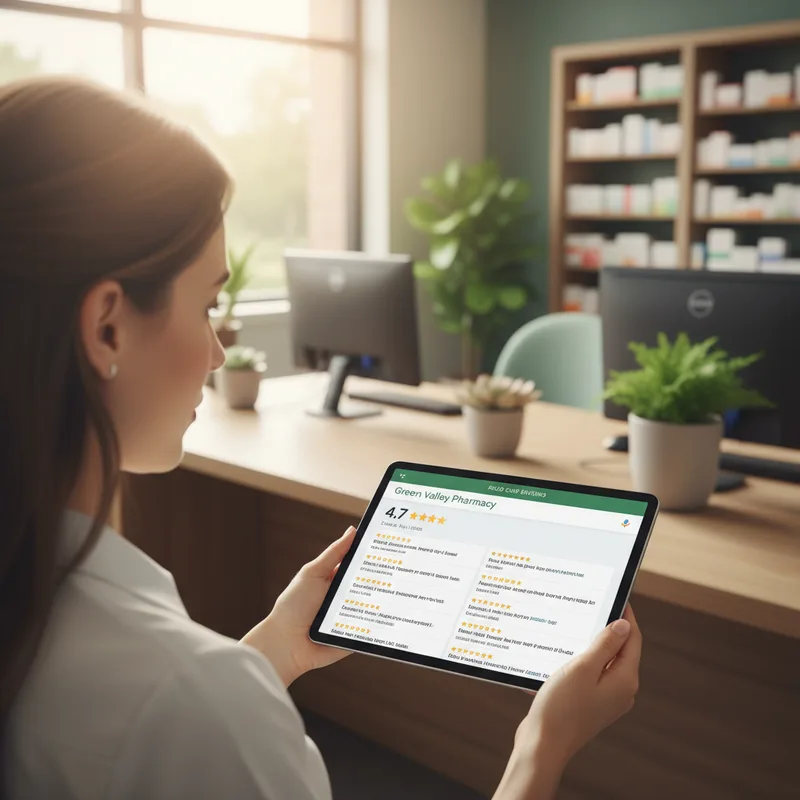
Start with reviews. According to BrightLocal's 2024 survey, 88% of consumers will use a business that responds to all its reviews, versus just 47% for businesses that ignore them. Chain pharmacies typically respond with slow, templated messages generated by a corporate social media team weeks after the review was posted. You can reply personally within hours. That difference is visible to every prospective patient reading your reviews.
Then build a content presence that keeps your pharmacy in patients' minds between visits. A monthly email newsletter, a few social media posts per week, and two to four blog articles per month create ongoing touchpoints. RevealSite's Creative & Content service handles this for pharmacies that don't have the bandwidth to produce it in-house.
Adherence programs are another loyalty builder chains consistently underdeliver on. Research published in the American Journal of Managed Care found that pharmacist-led refill programs raised the proportion of adherent patients from the 73-76% range to 77-84%. When your pharmacist knows a patient's medication history and proactively reaches out about refills, that's a retention engine no chain can replicate at scale.
See How Pharmacies Are Winning Patients Back
Real case studies from independent pharmacies that grew their patient base against chain competition.
View Success Stories →Should You Compete on Price or Value Against Chain Pharmacies?
Competing on prescription price alone against chain pharmacies is a losing strategy. Chains negotiate volume discounts with wholesalers and PBMs that independents can't match dollar-for-dollar. The winning move is competing on total value: positioning your pharmacy around outcomes and expertise rather than per-Rx cost.
Consider what price competition actually looks like from the patient's perspective. Research published in NIH's PubMed Central found that roughly 50% of patients with chronic conditions don't take medications as prescribed, contributing to an estimated $528 billion in annual US morbidity and mortality costs. Magellan Health's data shows prescription abandonment jumps from under 5% to 60% as out-of-pocket costs exceed $500. The patient's real problem isn't the price of one prescription. It's the total cost of managing their health over the years.
| Price Competition | Value Competition | |
|---|---|---|
| Approach | Match or undercut chain Rx prices | Position around outcomes and clinical expertise |
| Sustainability | Low (chains have volume purchasing leverage) | High (built on services chains can't offer) |
| Margin Impact | Compresses already-thin Rx margins | Protects and grows margins through services |
| Patient Profile | Price-sensitive, low loyalty, switches easily | Relationship-driven, high lifetime value |
| Examples | Discount cards, loss leaders, price-match guarantees | MTM, compounding, adherence programs, POCT |
That's where you win. Offer medication synchronization to reduce trips. Provide adherence counseling that keeps patients on therapy and out of the emergency room. Help patients find manufacturer copay cards and patient assistance programs that chain pharmacy staff are rarely trained to locate. These services reduce total healthcare cost in ways a chain pharmacy's high-volume workflow doesn't accommodate.
When you compete with chain pharmacies on value, you attract patients who stay longer, spend more on front-end products and clinical services, and refer their family and friends. That's a fundamentally different growth model than trying to undercut Walgreens by fifty cents on a generic.
The math favors you more than you think. A single compounding patient can generate $200-400 per month in revenue. Five MTM consultations per week at $50-75 each adds $13,000-19,500 annually. These numbers compound quickly when paired with a patient retention rate that chains simply can't match.
The pharmacies winning against chains in 2026 aren't doing one thing right. They're combining local SEO visibility, clinical service differentiation, and genuine patient relationships into a growth engine that chains are structurally unable to copy. You don't need to do everything at once. Pick the strategy where your gap is widest, execute it well for 90 days, measure the results, and then add the next layer. The full suite of pharmacy marketing tools exists to make this manageable, even for a one-location operation with a pharmacist-owner who has 15 free minutes a day.
Ready to Compete on Your Terms?
See how RevealSite helps independent pharmacies outrank, outmarket, and outgrow chain competition.
Request a Free Demo →Explore more pharmacy growth guides and case studies.
See Success Stories →Frequently Asked Questions
Can an independent pharmacy really compete with CVS and Walgreens?▼
Yes. Independent pharmacies hold structural advantages in clinical service depth, patient trust, and local search flexibility that chains struggle to match at scale. Nearly 90% of adults trust their local pharmacist, and independents can offer specialized services most chain locations don't provide.
What is the biggest competitive advantage independent pharmacies have over chains?▼
Personalized patient relationships and clinical service flexibility. Independent pharmacists can offer compounding, medication therapy management, point-of-care testing, and pet medications without waiting for corporate approval or standardized protocols.
How do independent pharmacies compete with chain pharmacies on price?▼
They generally shouldn't try to win on price alone. Instead, compete on value: clinical expertise, adherence programs, and specialized services that reduce total patient healthcare costs. Price wars against chains with massive purchasing power are difficult to sustain.
How important is local SEO for competing with chain pharmacies?▼
Critical. Chain pharmacy Google Business Profiles are typically managed by distant corporate teams and lack local detail. An optimized independent pharmacy profile with fresh photos, reviews, and service listings can outrank chain locations in the local map pack.
What services should independent pharmacies offer to differentiate from chains?▼
Compounding, medication therapy management, immunization programs beyond flu and COVID, point-of-care testing like A1C and blood glucose, veterinary compounding, and CBD consultations. These are high-margin services chains either skip or handle inconsistently.
How do online reviews help independent pharmacies compete with chain pharmacies?▼
Reviews build trust and improve local search rankings simultaneously. BrightLocal found that 88% of consumers will use a business responding to all reviews, compared to 47% for non-responders. Most chain locations have slow, templated review responses that feel impersonal.
Sources
Was this article helpful?