Independent Pharmacy Marketing: The Complete 2026 Guide
RevealSite Team
May 6, 2026 · 15 min read
Key Takeaways
✓Independent pharmacies ranking in Google's local 3-pack receive 126% more traffic and 93% more calls than positions 4-10, according to Semrush's 2024 local SEO data.
✓Google Business Profile optimization is the single highest-ROI marketing activity for most pharmacies, since 86% of profile views come from non-branded discovery searches.
✓Facebook Lead Ads cost roughly one-third the cost-per-lead of Google Ads ($21.98 vs. $66.69), making them a strong channel for pharmacies with limited budgets.
✓Responding to every patient review increases consumer willingness to use your pharmacy from 47% to 88%, based on BrightLocal's 2024 survey data.
✓Businesses earn an average of $22 in revenue for every $1 spent on SEO, delivering a 550% average ROI according to Conductor's 2025 State of SEO research.
Independent pharmacy marketing isn't something you can table until next quarter. Not anymore. Chain pharmacies pour millions into digital advertising every year, PBM reimbursements keep shrinking, and mail-order competitors like Amazon Pharmacy and Cost Plus Drugs are pulling patients out of brick-and-mortar entirely.
Build the presence your community trusts
Let us be your first step. Get in touch with our team today.
Your ability to attract new patients online is what separates growth from a slow fade. The data backs this up: according to Backlinko's analysis of Google data, 76% of consumers who run a "near me" search visit a related business within 24 hours. That's a massive window. But only if patients can actually find you.
This guide covers the full independent pharmacy marketing playbook for 2026: local SEO, paid ads, content and social media, online reviews, and how to measure what's actually working. Whether you operate a single-location community pharmacy or a small multi-store group, you'll finish with a clear, prioritized plan you can start executing this week.
Why Does Independent Pharmacy Marketing Matter More Than Ever?
Independent pharmacy marketing is the difference between competing on your terms and slowly losing patients to chains with bigger budgets. Targeted local marketing puts you in front of patients actively searching for pharmacy services in your area, often at a fraction of what national brands spend on a single campaign.
You don't need to outspend CVS or Walgreens. You need to outrank them locally. Semrush's 2024 local SEO analysis found that businesses ranking in Google's local 3-pack receive 126% more traffic and 93% more calls, clicks, and direction requests than positions 4-10. And Birdeye's 2025 State of Google Business Profiles report revealed that 86% of profile views come from discovery searches like "pharmacy near me," not branded queries. Your future patients aren't typing your pharmacy's name into Google. They're searching for what you do.
The independent pharmacy landscape has shifted in three ways that make marketing unavoidable:
PBM reimbursement pressure has squeezed prescription margins so tightly that front-end sales, clinical services, and new patient volume now drive profitability more than fill counts alone. The NCPA 2024 Digest noted that 81% of independent pharmacies now offer medication therapy management as a revenue diversification strategy.
Patient expectations have changed. J.D. Power's 2024 US Pharmacy Study reported that brick-and-mortar pharmacy satisfaction fell more than 10 points in a single year, driven by long wait times and eroding trust. Patients are actively looking for alternatives, and they're starting that search online.
Digital discovery is the default. Research published in the Journal of the American Pharmacists Association found that 88.9% of Americans live within 5 miles of a pharmacy. Proximity alone won't win them over. Visibility will.
Consider what this looks like for a typical single-location pharmacy filling 250 prescriptions a day. If even 15% of your patients are also checking Google reviews, comparing services, or looking for a closer option with better hours, that's 37 potential defections happening quietly every day. Most owners never see the leak until the numbers drop.
If you're not showing up in local search results, map packs, and social feeds, a chain pharmacy two blocks away is getting those patients instead.
How Should You Build Your Pharmacy's Local SEO Foundation?
Local SEO is the process of optimizing your online presence so your pharmacy appears when nearby patients search for services you offer. It's the highest-ROI marketing channel for most independent pharmacies because it targets people with immediate intent, and Backlinko reports that 42% of all local searchers click a result inside the Google Maps Pack.
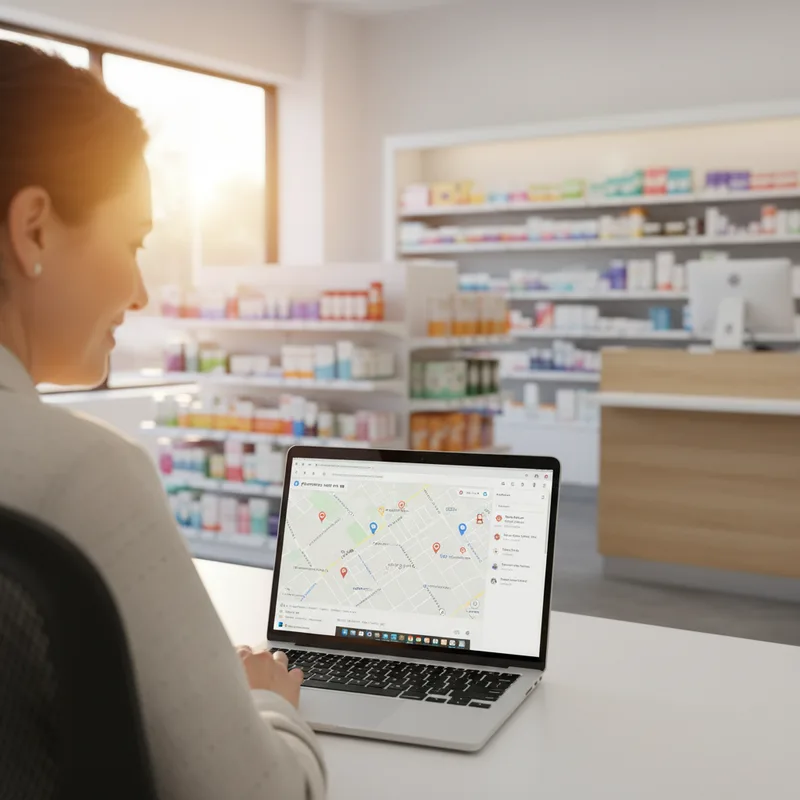
Local SEO puts your pharmacy on the map when nearby patients search for services.
Google Business Profile: Your Most Valuable Free Asset
Your Google Business Profile (GBP) is the single most important listing your pharmacy owns. It controls what patients see in the map pack, knowledge panel, and "near me" results. Complete every field: business name, address, phone number, hours (including holiday hours), service categories, and a detailed business description that mentions your key services.
Upload fresh photos at least monthly. Pharmacies with 20 or more photos on their GBP receive significantly more direction requests and website clicks than those with fewer than five. Post weekly GBP updates about flu shot availability, new services, or seasonal health tips. These posts signal activity to Google's algorithm and give patients a reason to engage with your profile directly.
One detail many owners miss: add every service you offer as a GBP "service" item with a short description. If you do compounding, immunizations, medication therapy management, pet medications, or point-of-care testing, each of those should appear on your profile. Patients filter by service more than you'd expect, and Google uses those service entries to match your pharmacy to specific queries. RevealSite's Smart Websites & SEO service handles full GBP optimization for pharmacy clients.
On-Page SEO for Your Pharmacy Website
Your website needs dedicated pages for every service you offer. Don't lump compounding, immunizations, and MTM onto a single "Services" page. Each service deserves its own URL targeting a specific keyword like "compounding pharmacy in [your city]." Include your NAP (name, address, phone number) consistently on every page, and make sure it matches your GBP listing exactly.
Technical basics matter too. Google completed its mobile-first indexing rollout in July 2024, meaning every site is now ranked based on its mobile version. If your pharmacy website loads slowly on a phone or has small tap targets, you're penalizing yourself in the rankings. Run your site through Google's PageSpeed Insights and fix any Core Web Vitals issues flagged as "poor."
Local Schema Markup
Add LocalBusiness and Pharmacy schema markup to your website's code. This structured data helps Google understand exactly what your pharmacy offers and where it's located. It won't move the needle as much as GBP optimization on its own, but it's a one-time setup that gives you an edge over competitors who skip it. Think of a schema as filling out a form that tells search engines the facts about your business in a format they prefer.
Need Help With Local SEO?
RevealSite builds pharmacy websites paired with Google Business Profile optimization so you rank for "pharmacy near me" in your service area.
What Paid Advertising Channels Actually Work for Pharmacies?
Paid advertising gives you immediate visibility while your organic SEO builds over time. The two most effective channels for independent pharmacies are Google Ads (search) and Facebook/Instagram Ads, and they serve fundamentally different roles in your marketing mix.
Google Ads captures high-intent patients. Someone searching "pharmacy open near me" or "flu shot walk-in [city]" is ready to act right now. WordStream's 2024 benchmarks put the average cost-per-lead across all industries at $66.69. Pharmacy-specific CPLs tend to run lower in smaller markets, but that number gives you a useful ceiling for budgeting.
Facebook and Instagram Ads work differently. They reach patients before a search ever happens. Someone scrolling their feed sees your immunization reminder, your compounding explainer, or a patient testimonial, and your pharmacy stays top-of-mind when they need a new provider. WordStream's 2024 Facebook benchmarks show the average cost-per-lead on Facebook Lead Ads at $21.98 across service industries. That's roughly one-third of Google's CPL.
Channel
Best For
Avg. CPL (2024)
Speed to Results
Google Search Ads
High-intent searches ("pharmacy near me," service keywords)
~$66.69
Immediate
Facebook/Instagram Ads
Awareness, promotions, new service launches
~$21.98
1-2 weeks
Google Local Services Ads
Top-of-map placement for verified businesses
Pay per lead (varies)
Immediate
Here's the practical takeaway: if your budget is under $1,500 per month, start with Facebook Lead Ads targeting a 10-mile radius around your pharmacy. The lower CPL stretches your dollars further while you build brand recognition in the community. Once you're ready to scale, add Google Search Ads for high-intent service keywords and "near me" queries.
One mistake to avoid: running ads without a landing page that matches the ad's promise. If your ad promotes compounding services, the click should land on your compounding page, not your homepage. Mismatched landing pages kill conversion rates and waste ad spend.
Ready to Run Pharmacy Ads That Convert?
RevealSite manages Google Ads, Facebook Ads, and hyper-local patient acquisition campaigns for independent pharmacies across the country.
How Can Content Marketing and Social Media Build Patient Trust?
Content marketing positions your pharmacist as the trusted local health authority, not just another place to pick up prescriptions. When done consistently, it builds the kind of patient loyalty that chain pharmacies struggle to replicate, because the content carries a real person's expertise and your community's specific health concerns.
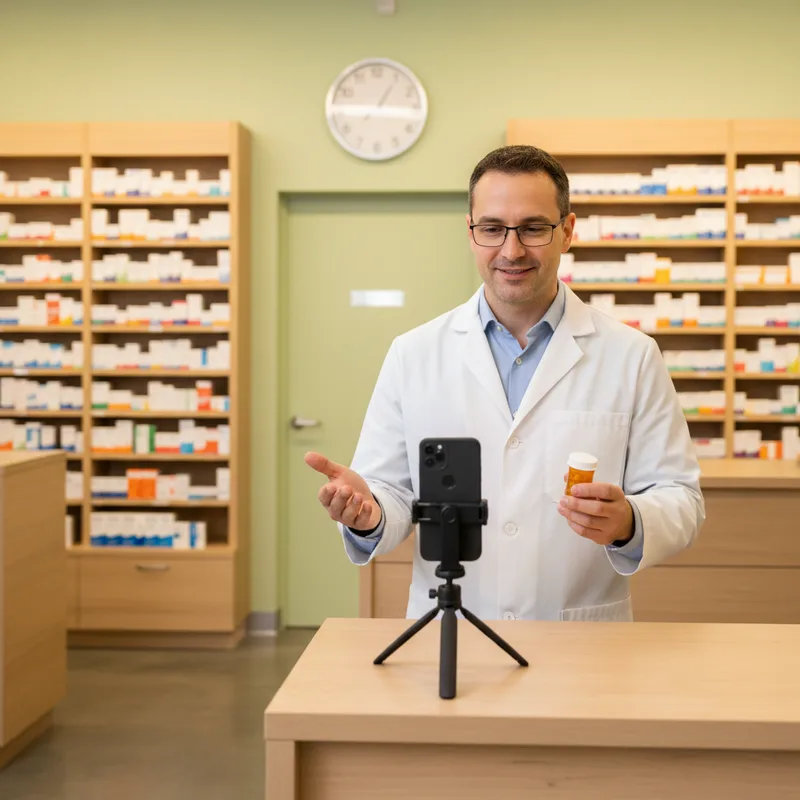
Short pharmacist-led videos build trust faster than any polished ad campaign.
Blogging and Patient Education
A pharmacy blog does two things at once. It gives Google fresh, keyword-rich pages to index, improving your organic rankings over time. And it gives patients a reason to visit your site beyond checking hours or refilling a prescription. Semrush's 2024 content marketing data found that businesses publishing 16 or more posts per month generate 4.5 times more leads than those publishing sporadically.
You don't need 16 posts a month. That's enterprise volume. Two to four well-researched articles monthly is a strong cadence for a single-location pharmacy. Focus on topics your patients actually ask about at the counter: medication interactions, blood pressure management, immunization schedules, supplement safety, and managing chronic conditions. Each post should target a specific long-tail keyword and link back to the relevant service page on your site.
The format matters too. Short, scannable posts with clear headings outperform long academic-style articles. Answer the patient's question in the first two sentences, then provide supporting detail. This structure works for both human readers and AI search engines that extract quick answers from your content.
Facebook is still the primary platform for community pharmacies. Its user base skews toward adults aged 30-65 who make household healthcare decisions. Post three to five times per week: a mix of health tips, pharmacy team spotlights, service reminders (flu shots, travel vaccines), and community event mentions. Video performs particularly well. Even a 30-second clip of your pharmacist answering a common question can outperform a polished graphic post.
Instagram works well for visual storytelling. Behind-the-counter moments, pharmacist Q&A Reels, and infographic carousels about medication safety all perform well on this platform. Keep the tone warm and approachable. You're a neighborhood pharmacist, not a corporate brand.
Email Marketing
Email remains one of the most underused channels in independent pharmacy marketing. HubSpot's 2025 benchmarks show B2B services averaging a 39.48% open rate and 2.21% click-through rate. A monthly newsletter covering seasonal health topics, new services, and pharmacy updates keeps you top-of-mind between visits. Pair it with automated refill reminders, and you've built a retention engine that runs quietly in the background.
RevealSite's Creative & Content service handles blog writing, social media management, and email newsletters for pharmacies that don't have time to produce content in-house.
What Role Do Online Reviews Play in Pharmacy Growth?
Online reviews are the single most influential trust signal for patients choosing a pharmacy. They affect your Google ranking, your click-through rate in search results, and whether a new patient walks through your door or drives to the next option on the map.
The numbers here are striking. According to BrightLocal's 2024 Local Consumer Review Survey, 88% of consumers will use a business that responds to all of its reviews, compared to just 47% for businesses that don't respond at all. That's nearly double the conversion potential from one habit: replying to every review. Semrush's compilation of local SEO data cited research showing that a one-star improvement in your average Google rating can boost calls, clicks, and direction requests by 44%.
Here's what a strong review strategy looks like in practice:
Ask at the point of service. Train your front-counter staff to say, "If you had a good experience today, we'd really appreciate a Google review." Simple and direct. Most patients are happy to help when asked in the moment. Some pharmacies print a small card with a QR code linking directly to their Google review page.
Respond to every review within 48 hours. Thank positive reviewers by name. For negative reviews, acknowledge the concern, avoid disclosing any protected health information (HIPAA applies even in public replies), and offer to continue the conversation offline via phone or email.
Monitor weekly. Set a Google Alert or use a review management tool to catch new reviews before they age. BrightLocal's 2025 survey found that 85% of consumers now use Google specifically to find reviews for local businesses, up from 81% the prior year. The trend is only accelerating.
Reviews compound over time. A pharmacy with 150 reviews and a 4.7-star average will consistently outperform a competitor with 12 reviews and a perfect 5.0. Volume signals trust. Freshness signals activity. Both influence how Google ranks you in the local map pack.
One more thing worth noting: don't ignore reviews on platforms beyond Google. Facebook recommendations, Yelp, and Healthgrades all contribute to your overall online reputation. But Google is where you should focus first, because it's where the vast majority of patients start their search.
See How Other Pharmacies Are Growing
From CBD programs to patient acquisition, see real results from pharmacies using a full-service marketing approach.
How Do You Measure ROI for Independent Pharmacy Marketing?
Measuring marketing ROI means tracking how much new revenue each channel generates relative to what you spend on it. Without clear metrics, you're guessing, and guessing leads to wasted budget on tactics that feel productive but don't actually move the needle.
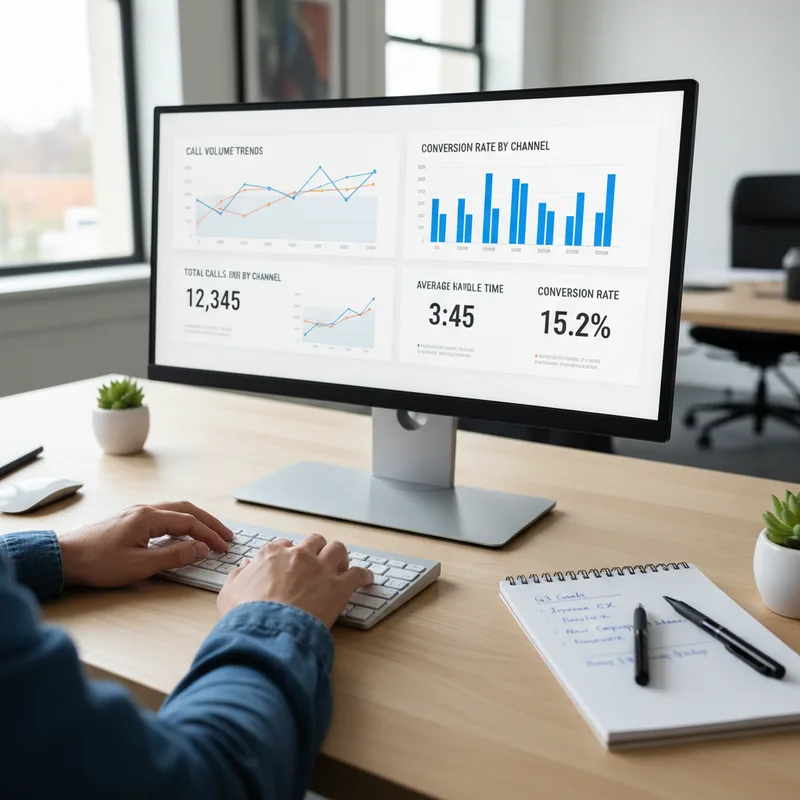
Tracking cost-per-lead by channel tells you exactly where your marketing budget works hardest.
The good news: pharmacy marketing is more measurable than most owners realize. Conductor's 2025 State of SEO research found that businesses earn an average of $22 in revenue for every $1 spent on SEO. That's a 550% average ROI. Paid channels are easier to track in real time, but organic efforts often deliver the highest long-term return because the traffic doesn't stop when you pause your budget.
Key Metrics to Track Monthly
Focus on these numbers every month, at a minimum:
Google Business Profile actions: calls, direction requests, and website clicks from your GBP listing. This is your best proxy for how well your local marketing is performing. A month-over-month increase in GBP actions usually means your visibility is improving.
Website traffic by source: separate organic search, paid ads, social media, and direct visits in Google Analytics. You need to know which channels are actually driving patients to your site and which are underperforming.
Cost per lead by channel: divide your monthly spend on each channel by the number of leads (calls, form submissions, appointment requests) it generated. If your Facebook ads cost $600 and produced 30 leads, your CPL is $20.
New patient volume: track how many first-time patients visit each month and ask how they found you. A simple intake question goes a long way toward understanding which marketing channels are actually producing patients, not just clicks.
Review count and average rating: trend these monthly. A steady increase in review volume with a stable or rising average rating signals a healthy reputation trajectory.
The Pharmacy Marketing Self-Assessment
Use this checklist to gauge where your independent pharmacy marketing stands today. Score yourself honestly, then prioritize the gaps.
Local SEO & Online Presence
Check each item you have completed.
Your score: count your checks out of 4
Content & Social Media
Check each item you have completed.
Your score: count your checks out of 3
Reviews & Reputation
Check each item you have completed.
Your score: count your checks out of 3
Paid Advertising & Measurement
Check each item you have completed.
Your score: count your checks out of 3
If you scored below 8 out of 13, you have clear gaps that are costing you patients every week. That's not a criticism. It's an opportunity. Most independent pharmacies are in the same position because marketing has historically been a back-burner priority. The pharmacies pulling ahead in 2026 are the ones treating it as a core business function, not something they'll get to eventually.
The most important thing about independent pharmacy marketing is that it compounds. Each blog post, each review, each month of consistent GBP activity builds on the last. A pharmacy that starts today won't see dramatic results in week one. But six months from now, the difference between doing this work and not doing it will show up in your call volume, your walk-in traffic, and your bottom line.
Pick one area from the self-assessment where you scored zero. Start there. Build the habit, measure the results, then add the next channel. That's how lasting pharmacy growth actually works.
Ready to Build Your Pharmacy Marketing Engine?
See how RevealSite can handle your SEO, ads, content, and reputation management so you can focus on patients.
How much should an independent pharmacy spend on marketing?▼
Most independent pharmacies allocate 3-7% of gross revenue to marketing. Start with high-ROI channels like Google Business Profile optimization and review management, which cost little beyond staff time. Add paid advertising only after your organic foundation produces consistent local search visibility.
What is the best marketing strategy for a small pharmacy?▼
Local SEO and Google Business Profile optimization deliver the strongest results for most small pharmacies. These channels target patients actively searching for services nearby, and pharmacies in the local 3-pack receive 126% more traffic than lower-ranked competitors.
How long does it take for independent pharmacy marketing to show results?▼
Google Business Profile updates and review generation can produce measurable increases in calls and direction requests within 30-60 days. SEO content typically takes 3-6 months to rank. Paid ads generate leads immediately but require ongoing budget to sustain.
Should pharmacies use Google Ads or Facebook Ads?▼
Both channels serve different purposes. Google Ads captures patients actively searching for pharmacy services with high purchase intent. Facebook Ads builds awareness and reaches patients before they search. Facebook's average cost-per-lead runs roughly one-third of Google's.
How do online reviews affect independent pharmacy marketing?▼
Online reviews directly impact local search rankings and patient trust. BrightLocal found that 88% of consumers will use a business that responds to all its reviews, compared to just 47% for businesses that ignore reviews entirely.
Do independent pharmacies need a website in 2026?▼
Yes. Your website is the destination for map pack clicks, ad traffic, and patients researching your services. Birdeye's 2025 data shows 47% of Google Business Profile clicks go directly to the pharmacy website, making it your most important conversion tool.
What social media platform works best for pharmacies?▼
Facebook remains the strongest platform for community pharmacies because its user base skews toward adults aged 30-65 who make household healthcare decisions. Instagram works well for visual content like health tips, behind-the-counter moments, and pharmacy team introductions.