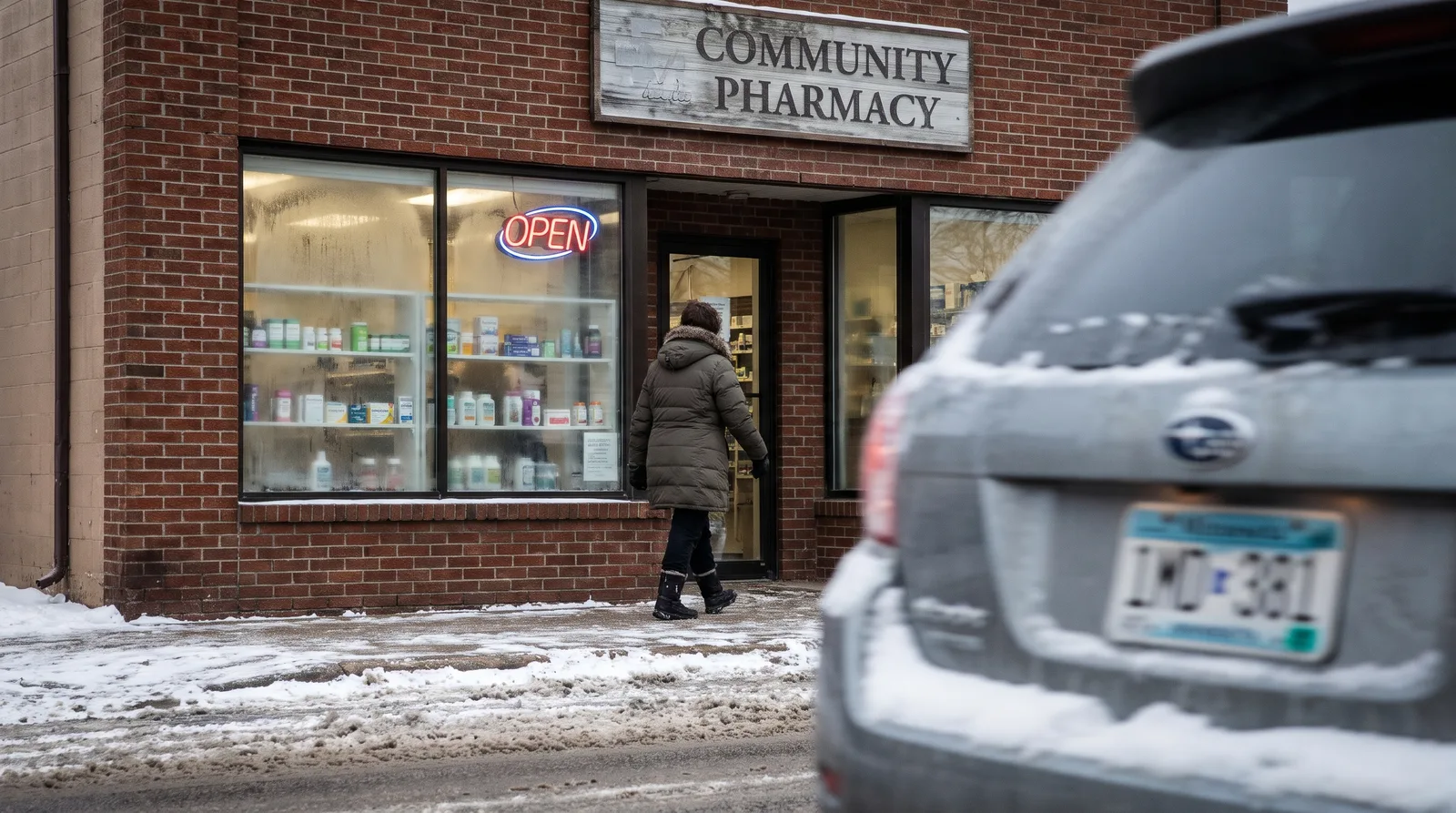
Minnesota Pharmacy Local SEO: Map Pack Optimization
RevealSite Team
November 23, 2026 · 9 min read
Key Takeaways
✓Know the three local ranking factors Google names: relevance, distance, and prominence. You can't pay for a better local ranking.
✓Aim for the map pack: businesses in the local three-pack get 126% more traffic and 93% more calls, clicks, and direction requests than positions four through ten, per Semrush.
✓Complete every Google Business Profile field, and keep hours accurate, including storm and holiday hours.
✓Collect and answer reviews, since 88% of consumers will use a business that responds to all of them, according to BrightLocal.
✓Adjust by market: neighborhood pages in the Twin Cities, provider relationships in regional hubs, delivery details in small towns.
Minnesota pharmacy local SEO is the work of making your pharmacy appear when a nearby patient searches on Google or Maps, especially in the three-listing map pack at the top of the results. A pharmacy in Bloomington, Rochester, or a small northern town competes for that spot with chains and other independents. A can build the profile, reviews, and pages that earn it.
Build the presence your community trusts
Let us be your first step. Get in touch with our team today.
This guide explains how the map pack ranks pharmacies, how to optimize your Google Business Profile, what reviews and listings do, and how strategy shifts from the Twin Cities to rural Minnesota. A simple 90-day plan closes it out.
What is Minnesota pharmacy local SEO, and why does it matter?
Local SEO for a pharmacy is the practice of improving your visibility in Google Search and Maps for searches near your store. It covers your Google Business Profile, reviews, website pages, and listings, so patients looking for refills, vaccines, or compounding find you before they find a chain.
Local intent is strong. Backlinko reports that 42% of local searchers click a result inside the Maps pack. Citing Google, it also reports that 76% of consumers who run a "near me" search visit a business within a day. That's a short window, and the map pack is where it opens.
The stakes are rising for independents. The NCPA 2024 Digest counted 18,984 independent community pharmacies in June 2024, down from 19,432 a year earlier. With fewer independents on the map, the ones patients can find easily gain ground.
What do patients actually search for?
Most pharmacy searches fall into a handful of patterns. Your profile and pages should match each one:
How does Google decide who appears in the pharmacy map pack?
Google ranks local results mainly on relevance, distance, and prominence. Relevance is how well your profile matches the search, distance is how far you are from the searcher, and prominence reflects how well-known you are, including reviews and links. You can't pay for a better local ranking.
Distance counts, so every store needs its own accurate local presence.
That last point comes straight from Google's Business Profile Help, which says there's no way to request or pay for a better local ranking. Paid ads appear separately, so local SEO is about earning your spot.
Because distance counts, two patients in different neighborhoods can see different map packs for the same search. Checking from one spot tells you little, so test from several.
Factor
What it means
What you control
Relevance
How well your profile matches what someone searches
Primary category, services, description, service pages
Distance
How far you are from the searcher
Accurate address, hours, and a location page for each store
Prominence
How well-known your pharmacy is
Reviews, ratings, links to your site, mentions, listings
Position pays. According to Semrush's local SEO statistics, citing SOCi, businesses in the local three-pack get 126% more traffic and 93% more calls, clicks, and direction requests than those in positions four through ten.
How should Minnesota pharmacy local SEO start with your Google Business Profile?
Start by claiming and verifying your profile, then complete every field: the Pharmacy primary category, relevant secondary categories, services, hours, holiday hours, photos, and a clear description. Accuracy matters most, because mismatched details confuse both Google and patients.
Work through the profile in this order:
Verify ownership and confirm your name, address, and phone number match your signage and website.
Choose Pharmacy as the primary category and add only secondary categories that truly fit.
List services such as vaccines, compounding, delivery, and medication sync.
Set regular hours, then update special and holiday hours before storms and holidays.
Add recent photos of your storefront, counter, and team.
Add a booking or contact link for vaccines and consultations.
Post short updates on a steady schedule.
What should your profile description say?
Describe what you offer in plain language, mention the communities you serve, and skip prices, links, and sales language. A patient should understand your services in two sentences. Google should too.
Hours deserve special care in Minnesota. Winter storms, holiday schedules, and flu season all change your day without much warning. Update special hours the moment plans change, so a patient never drives to a dark pharmacy.
Use your real business name. Stuffing keywords into the name can lead to a suspension, and it makes your pharmacy look less credible to patients anyway.
Reviews influence prominence, one of Google's three local ranking factors, and they persuade patients who are comparing pharmacies. More reviews and positive ratings can improve rankings, while thoughtful replies show patients that someone is paying attention.
Asking at pickup, while the visit is fresh, builds reviews steadily.
Replies matter. BrightLocal's 2024 consumer review survey found that 88% of consumers would use a business that responds to all reviews, versus 47% for one that ignores them. The same Semrush analysis, citing SOCi, found that a one-star improvement in average Google rating boosts calls, clicks, and direction requests by 44%.
A calm reply to a one-star review can earn more goodwill than the review costs you. Thank the person, acknowledge the concern in general terms, and invite a phone call. Don't confirm they're a patient or mention any medication details in public.
Invite every patient, because Google's policies prohibit selectively asking only for positive reviews. Then build a steady habit with a few simple moves:
Invite every patient at pickup, without pressure, whether or not the visit went perfectly.
Give out a small card with a QR code that opens your review page.
Send a short text or email with a direct link after a vaccine or consultation.
Reply calmly to criticism and offer to talk by phone.
Keep patient details out of public replies, and skip incentives, since Google prohibits offering payment, discounts, or free goods for reviews.
Run reviews and local campaigns for you
Review generation, social, email, and geo-targeted ads, managed as your outsourced marketing department.
What does your website need to support local search?
Your website needs a page for each location and service, consistent name, address, and phone details, pharmacy schema markup, a fast mobile experience, and clear refill and contact options. Those signals confirm what your profile says and give Google and AI summaries accurate facts to use.
AI summaries are changing how people click. Pew Research Center found that users clicked a traditional search result on just 8% of visits when an AI summary appeared, versus 15% when it didn't. Complete profiles and clear pages make it more likely your hours, services, and location are the facts people see.
Speed matters too. Most local searchers are on phones, so slow pages cost you visits. Compress images, limit heavy scripts, and make refill and call buttons easy to tap.
Build one page per store with address, map, hours, parking, and services.
Keep your name, address, and phone number identical across your site, profile, and major directories.
Add pharmacy schema markup so search engines understand your business.
Write a clear page for each service, from vaccines to delivery.
How does Minnesota pharmacy local SEO differ across the Twin Cities, regional hubs, and rural areas?
In the Twin Cities, competition plays out block by block, so neighborhood pages and review volume matter most. Regional hubs like Rochester and Duluth reward strong profiles and provider relationships. In small towns, a complete profile and visible delivery or pickup options often make you the obvious choice.
Market
Local SEO challenge
Priority actions
Twin Cities metro
Many pharmacies within a few miles, and map results shift by neighborhood
Neighborhood-level location pages, steady review growth, accurate hours and services
Regional hubs (Rochester, Duluth, St. Cloud)
Patients compare several options, and clinic systems shape referrals
A strong profile, provider partner pages, fast review replies
Small towns and rural areas
Fewer rivals, but patients may drive farther or use mail order
A complete profile, delivery and pickup details, visible community presence
Winter and storm season
Closures and hour changes happen quickly
Update special hours the moment plans change and mention storm-day pickup
In the metro, a Bloomington pharmacy and a Maple Grove pharmacy compete in different pools, so each store needs its own page, its own reviews, and its own accurate details. Lumping them together weakens both.
In smaller communities, the contest is often against distance and habit. Patients may drive to a bigger town or use mail order. Showing delivery, quick pickup, and friendly local reviews gives them a reason to stay close to home.
Competitors differ in every market, so check your own map pack. Search your main services from a few nearby spots and note who appears. That small test shows you exactly what you're up against.
What should your first 90 days of local SEO look like?
Spend days 1-30 on profile and listing accuracy, days 31-60 on reviews and location pages, and days 61-90 on content, posts, and measurement. Review calls, direction requests, and prescription transfers monthly to see what's working, and adjust one thing at a time.
Monthly check-ins show which local SEO changes are actually working.
Days 1-30: audit your profile, website, and listings, then fix every mismatch in name, address, phone, and hours.
Days 31-60: start a review routine, publish location and service pages, and set up call and direction tracking.
Days 61-90: add posts and content, compare results with your own transfer counts, and adjust.
What should you measure each month?
Track actions, not vanity numbers:
Phone calls and direction requests from your profile.
How long does Minnesota pharmacy local SEO take to work?▼
Local rankings improve gradually, and timing depends on your starting point and local competition. Profile fixes can help sooner, but review growth, location pages, and listing consistency usually build over several months. Be cautious of anyone promising a specific map pack position.
Can I pay Google to rank higher in the map pack?▼
No. Google says there's no way to request or pay for a better local ranking in its results. Paid ads appear separately, so local SEO focuses on relevance, distance, and prominence through your profile, reviews, and website.
How many Google reviews does a Minnesota pharmacy need?▼
There's no magic number. Aim for a steady flow of new reviews and answer each one, since fresh, genuine feedback signals prominence and helps patients decide. Compare your count with nearby competitors in your own map pack.
Does each pharmacy location need its own Google Business Profile?▼
Yes. Each physical location needs its own profile with an accurate address, hours, and services, plus a matching location page on your website. Sharing one profile across stores confuses patients and weakens each store's local signals.
How should a pharmacy list delivery on its Google profile?▼
List your street address as a staffed storefront, then describe delivery in your services and on your website. Follow Google's guidelines for your business type, and keep delivery areas and hours consistent everywhere patients might look.
What does a Minnesota pharmacy local SEO audit cover?▼
An audit reviews your Google Business Profile, categories, hours, reviews, website location pages, schema markup, and listing consistency, then compares you with nearby competitors in the map pack. The result is a prioritized list of fixes rather than a generic report.