
HomeBlogs
Home Blood Pressure Mistakes: Is Your Monitor Lying to You?
Key Takeaways
- ✓Avoid caffeine, nicotine, exercise, and a full bladder for 30 minutes before measuring—each can raise readings by about 10 mmHg.
- ✓Sit quietly for 5 minutes with your back supported, feet flat, and arm at heart level; talking during the reading can increase results by ~10 mmHg.
- ✓Use a properly sized upper-arm cuff on bare skin; cuffs that are too small read falsely high, while oversized cuffs read falsely low.
- ✓Take 2–3 readings, 1 minute apart, and use the average (often the last two) for a more accurate daily blood pressure value.
Home blood pressure mistakes are more common than you might think. These errors can throw off your readings by 10 mmHg or more. Whether you're monitoring hypertension or tracking cardiovascular health, avoiding these home blood pressure mistakes is essential. Accurate measurements help you and your doctor make informed decisions about your care. Understanding what can go wrong is the first step toward getting reliable readings.
In this comprehensive guide, we'll cover the five most common home blood pressure mistakes. You'll learn exactly how to fix each one. By the end, you'll be confident that every reading reflects your true blood pressure. Let's dive into the science behind accurate monitoring.
Why Accurate Home Blood Pressure Monitoring Matters
Home blood pressure monitoring has become a cornerstone of hypertension management. The American Heart Association emphasizes its importance. Regular home monitoring helps identify "white coat hypertension." This condition causes elevated readings only in clinical settings. It also catches "masked hypertension", normal clinic readings but high at home. But these benefits only apply when your technique is correct.
Research in the journal Hypertension shows home blood pressure mistakes can lead to serious problems. Misdiagnosis, inappropriate medication adjustments, and unnecessary worry are common consequences. Getting it right matters for your health outcomes. Let's examine each mistake and how to avoid it.
The prevalence of home monitoring has grown significantly. More than 50% of adults with hypertension now monitor at home. This trend makes proper technique more important than ever. Small errors compound over months of readings. Consistent accuracy leads to better treatment outcomes.
The Five Most Common Home Blood Pressure Mistakes
Mistake #1: Not Resting Before Measurement
One of the most widespread home blood pressure mistakes is measuring right after activity. Your blood pressure naturally fluctuates based on what you're doing. Failing to rest can dramatically skew your results. The National Heart, Lung, and Blood Institute recommends sitting quietly for 5 minutes first.
During this rest period, avoid talking or watching stimulating content. Don't use your phone or scroll social media. Sit with your back supported and feet flat. Keep your arm supported at heart level. Taking a measurement after climbing stairs or walking can add 10-15 mmHg. Over time, these inflated numbers create a misleading health picture.
Many people underestimate how much activity affects blood pressure. Even mild stress or excitement raises readings. Give your body time to return to baseline. Set a timer for 5 minutes and practice deep breathing. This simple habit makes a significant difference in accuracy.
Mistake #2: Wrong Cuff Size or Placement
Using the wrong cuff size significantly affects accuracy. A cuff that's too small gives falsely high readings. One that's too large reads lower than actual. Measure your arm circumference at the midpoint between shoulder and elbow. Small cuffs fit 22-26 cm arms. Standard cuffs fit 27-34 cm. Large cuffs fit 35-44 cm. Extra-large cuffs fit 45-52 cm arms.
Position the cuff on bare skin, not over clothing. Place it about 1 inch above your elbow crease. The artery marker should align with your brachial artery. This runs along the inside of your arm. Clothing bunched under the cuff restricts blood flow. This is a common home blood pressure mistake that produces false readings.
The cuff should fit snugly but not too tight. You should be able to slip two fingers underneath. If you feel discomfort during inflation, the cuff may be too small. If it shifts position, it may be too large. Taking time to find the right fit prevents ongoing measurement errors.
Mistake #3: Poor Body Position During Measurement
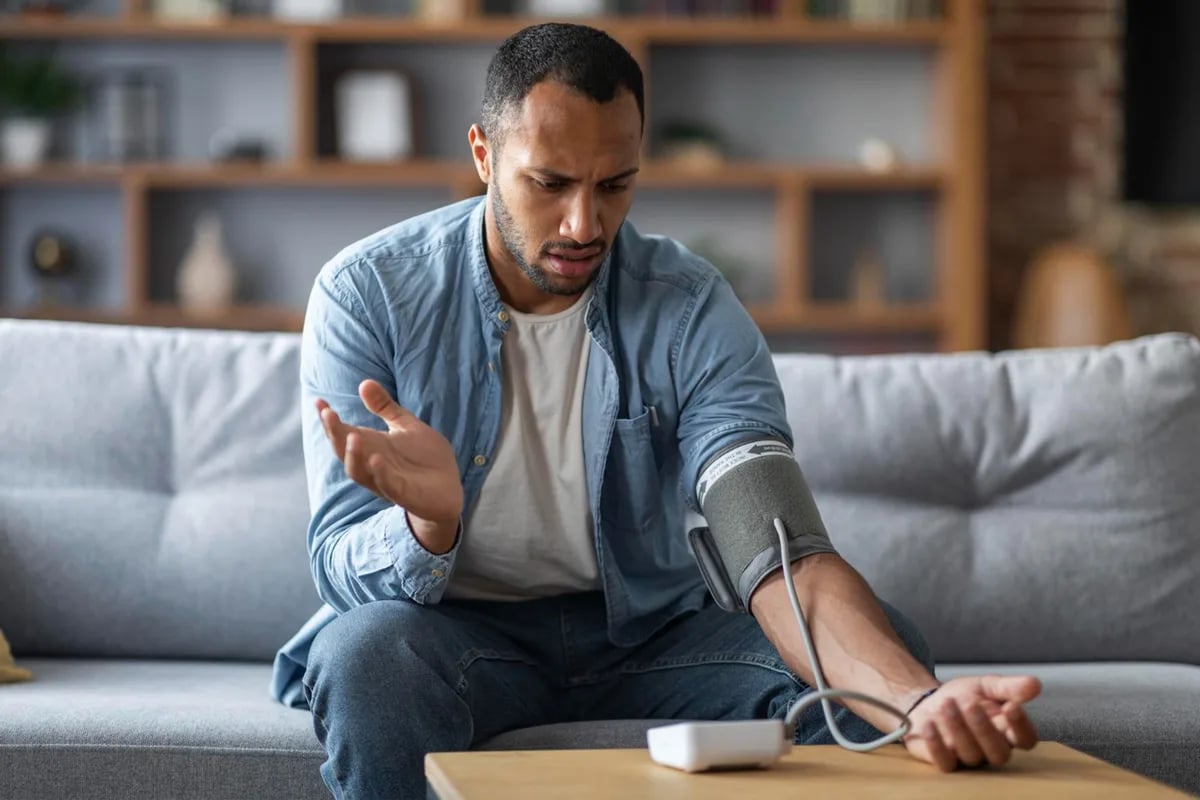
Your body position significantly affects readings. Crossing your legs can add 2-8 mmHg. Letting your arm dangle adds 10+ mmHg. Slouching without back support adds 5-10 mmHg. These are home blood pressure mistakes that compound quickly.
The correct position requires attention to detail. Your back should be fully supported against a chair. Keep your feet flat on the floor, uncrossed. Support your arm on a flat surface at heart level. Empty your bladder before measuring, a full bladder adds 10-15 mmHg.
Heart level positioning is critical. When your arm is below heart level, gravity causes blood to pool. This artificially increases the reading. When above heart level, readings are falsely low. Using a table at the right height eliminates this variable. A pillow or folded towel can help adjust arm height.
Many people measure while sitting on a couch or bed. These surfaces don't provide proper back support. Use a dining chair or office chair instead. The extra few minutes of setup pays off in accurate readings.
Mistake #4: Ignoring Timing and Lifestyle Factors
What you do before measuring matters greatly. Ignoring timing is one of the home blood pressure mistakes that causes inconsistent data. Follow the 30-minute rule for accurate readings.
Avoid caffeine for 30 minutes before measuring. Coffee, tea, and energy drinks raise pressure 5-10 mmHg. Skip nicotine, smoking causes immediate vessel constriction. Don't exercise right before; activity elevates pressure for 30-60 minutes. Avoid large meals and alcohol as well.
The American Heart Association recommends consistent timing each day. Measure in the morning before medications and coffee. Take evening readings before dinner. Consistency helps track trends rather than random fluctuations. Your doctor can interpret patterns more easily.
Temperature also affects readings. Cold environments cause blood vessels to constrict. This raises blood pressure temporarily. Measure in a comfortable, room-temperature setting. Avoid measuring right after coming inside from cold weather.
Mistake #5: Taking Only One Reading
Relying on a single measurement is a common home blood pressure mistake. Blood pressure changes from moment to moment. One reading may catch you at an atypical point. Healthcare guidelines recommend 2-3 readings spaced 1-2 minutes apart.
Here's the proper protocol. Take the first reading after 5 minutes of rest. Wait 1-2 minutes, then take a second. If readings differ by more than 5 mmHg, take a third. Record the average of the last two readings. The first is often higher due to initial anxiety.
Keep a log of your readings with dates and times. Note any unusual factors like missed medications or stress. This data helps your provider identify patterns. Many monitors sync with smartphone apps for easy tracking. Review your log before appointments to discuss trends.
Best Practices for Accurate Home Monitoring
Beyond avoiding the main home blood pressure mistakes, follow these additional tips. Choose an upper-arm monitor rather than wrist or finger devices. Upper-arm monitors are more accurate and consistent. They're less sensitive to positioning errors. Look for devices validated by STRIDE BP.
Have your monitor's accuracy checked annually. Compare it against a clinical device at your doctor's office. Replace batteries regularly, low batteries cause erratic readings. Store the monitor at room temperature. Avoid dropping or damaging the device. Most monitors last 5-10 years with proper care.
Remember that home monitoring doesn't replace professional care. Contact your provider if you consistently see readings above 180/120 mmHg. Seek immediate help with symptoms like chest pain or shortness of breath. Severe headache with high readings also warrants urgent attention. Don't make medication changes based solely on home readings.
Share your home readings with your healthcare team. Bring your log to every appointment. Your doctor can compare home and clinic readings. Together, you can develop the best treatment plan. Home monitoring empowers you to participate actively in your care.
Your Complete Home Blood Pressure Checklist
Use this checklist every time you measure. It helps you avoid home blood pressure mistakes consistently:
- No caffeine, nicotine, or exercise in the past 30 minutes
- Bladder emptied before sitting down
- Seated quietly for 5 minutes with deep breathing
- Back supported against a sturdy chair
- Feet flat on the floor, legs uncrossed
- Arm bare and supported at heart level
- Correct cuff size positioned above elbow
- Artery marker aligned with brachial artery
- Remain still and silent during measurement
- Take 2-3 readings, 1-2 minutes apart
- Record the average of your last two readings
- Note date, time, and any unusual factors
Following these guidelines eliminates common home blood pressure mistakes. You'll get readings that truly reflect your cardiovascular health. This accurate data empowers you and your healthcare team. Together, you can make the best decisions for long-term well-being.
Accurate blood pressure monitoring is a skill worth developing. With practice, proper technique becomes automatic. The few extra minutes of preparation lead to reliable data. Your health decisions depend on accurate information. Take the time to do it right every time.
Blood pressure control is one of the most effective ways to prevent heart disease and stroke. Proper monitoring supports this goal. By eliminating home blood pressure mistakes, you contribute to better health outcomes. Small changes in technique lead to big improvements in data quality.
Remember, consistency is key when avoiding home blood pressure mistakes. Develop a routine that you follow each time. The more consistent your technique, the more valuable your data becomes. Your healthcare provider will appreciate having reliable numbers to work with.
For more health monitoring tips, explore our health education resources. You can also speak with our pharmacy team about blood pressure management. We're here to help you take control of your cardiovascular health and live your healthiest life.
Frequently Asked Questions
Why is my blood pressure higher at home than at the doctor’s office?▼
Home readings are often higher due to technique issues like measuring too soon after caffeine, stress, or movement. Skipping the 5-minute rest period, talking during the test, or using the wrong cuff size can raise readings by 10 mmHg or more.
How long should I sit before taking my blood pressure at home?▼
Sit quietly for at least 5 minutes before pressing start. Make sure your back is supported, feet are flat on the floor, and your arm is resting at heart level to avoid falsely high results.
Is a wrist blood pressure monitor accurate?▼
Wrist monitors are more position-sensitive and can be inaccurate if not held exactly at heart level. For most people, a validated upper-arm monitor with the correct cuff size provides more reliable readings.
How many times should I check my blood pressure each time?▼
Take at least two readings, 1 minute apart. If the numbers differ significantly, take a third reading and use the average (often the last two) for the most accurate result.
Was this article helpful?